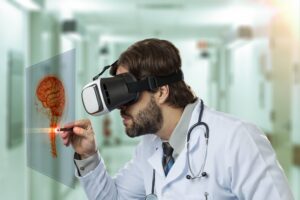
Medical imaging has always been central to diagnosis and treatment planning. With recent advances in artificial intelligence, AI radiology and imaging diagnostics are entering a new era. For doctors, clinics, and healthcare professionals, AI is no longer a future concept—it’s a current necessity. Through enhanced image interpretation, workflow automation, and precision-guided decision-making, AI is transforming medical imaging and clinical care delivery in substantial ways.
Enhancing Diagnostic Accuracy with AI Radiology
The accuracy of a diagnosis often hinges on the clarity and interpretation of medical images. AI-powered imaging systems can analyze thousands of scans in minutes, detecting patterns invisible to the human eye.
Key Benefits of AI Imaging Diagnostics
- Early Disease Detection: AI algorithms can identify abnormalities like tumors, microcalcifications, or lesions in CT and MRI scans much earlier than traditional methods.
- Quantitative Insights: With AI, radiologists can receive detailed measurements and analyses, such as tumor volume or density progression, which help in monitoring disease trajectory.
- Reduced Human Error: By acting as a second set of eyes, AI reduces false negatives and misdiagnoses, leading to safer, more reliable patient outcomes.
Clinics equipped with modern EMR software can sync AI imaging diagnostics directly into their records, ensuring seamless access to precise reports.
Streamlining Radiology Workflows in Smart Hospitals
Smart hospitals and tech-savvy clinics benefit immensely from AI-integrated imaging systems. These tools not only speed up processes but also improve accuracy and reduce the burden on radiologists.
AI Tools That Improve Efficiency
- Automated Segmentation: AI can outline organs or pathologies in seconds, which traditionally required extensive manual labor.
- Real-time Triage: In emergencies, AI systems can prioritize cases based on the severity detected in scans.
- Workflow Orchestration: AI can assign cases to radiologists based on their specialty, availability, and complexity of diagnosis.
Pairing these functions with clinic management software enhances hospital-wide coordination, from image acquisition to treatment planning.
Imaging Diagnostics and Personalized Medicine
Personalized care is increasingly emphasized in healthcare. AI plays a key role in customizing treatment based on a patient’s unique imaging profile.
AI for Individualized Treatment
- Patient-Centric Imaging Analysis: AI systems integrate imaging data with genetic, behavioral, and historical clinical information.
- Predictive Modeling: Algorithms forecast disease progression or likely treatment response, supporting preventative and precision care.
- Adaptive Treatment Plans: AI enables clinicians to adapt therapies in real-time based on evolving scan data.
Clinics implementing healthcare software gain an advantage in delivering AI-backed, personalized treatment plans efficiently.
Innovations in Specific Imaging Modalities
Each imaging modality stands to gain uniquely from AI innovation. From noise reduction to speed optimization, AI is redefining how each modality is used.
CT Scans
- Faster Image Reconstruction: AI reconstructs CT images quickly with reduced artifacts.
- Low-Dose Scanning: Patients benefit from lower radiation exposure with no loss in quality.
MRI
- Shorter Scan Times: AI accelerates image capture without compromising resolution.
- Artifact Removal: Image quality improves even with patient movement.
PET Scans
- Real-time Analysis: PET images become more interpretable with the help of AI.
- Radiotracer Optimization: Enhanced signal processing improves clarity and contrast.
Such innovations, when supported by clinic EMR systems, streamline the delivery of insights and clinical recommendations.
AI in Image-Guided Interventions and Surgery
Beyond diagnosis, AI is also transforming procedures.
Real-Time Surgical Assistance
- Augmented Imaging: AI overlays CT or MRI visuals during surgery to improve accuracy.
- Reduced Complications: Better visualization helps surgeons avoid critical structures.
Monitoring Post-Operative Recovery
- Recovery Tracking: AI monitors progress via scheduled imaging.
- Treatment Adjustment: Changes in scan data help clinicians adapt post-operative therapy.
These innovations also pair well with AI doctor tools that support fast clinical decision-making.
AI and Patient Engagement in Imaging Diagnostics
Patient engagement is central to modern care models. AI imaging tools empower both patients and providers.
Key Engagement Features
- Visual Reports: Patients receive annotated images and simplified explanations.
- Self-Monitoring: Wearable devices sync with imaging platforms for ongoing tracking.
- Interactive Portals: Integration with healthcare software allows patients to view and share imaging results easily.
These tools boost patient satisfaction and improve adherence to recommended treatments.
Challenges in AI Imaging Diagnostics
While promising, AI in radiology faces several challenges.
Technical and Ethical Considerations
- Data Quality: AI is only as good as the imaging data it learns from.
- Bias in Algorithms: Poorly trained models may show bias, especially across different demographics.
- Regulatory Compliance: Clinics must ensure compliance with GDPR, HIPAA, and local laws.
Integration Concerns
- System Compatibility: AI tools must integrate with existing clinic software.
- Training Requirements: Staff must be trained to interpret AI-generated reports confidently.
The Future of AI Radiology and Imaging Diagnostics
The coming years will bring more robust, accessible, and collaborative imaging tools.
Future Directions
- Multimodal Diagnostics: Combining ultrasound, CT, MRI, and lab data for holistic insight.
- AI-Driven Second Opinions: Remote interpretation supported by globally connected AI platforms.
- Smart Scheduling: Prioritizing imaging appointments based on urgency identified by AI.
These innovations will only thrive with robust clinic management systems and strong clinical leadership to guide ethical and effective implementation.
Conclusion: Embracing AI in Imaging for Smarter Healthcare
The rise of AI radiology and imaging diagnostics is redefining the standards for accurate diagnosis, faster workflows, and individualized patient care. For clinics and hospitals, leveraging these technologies through integrated EMR software and doctor clinic software is not just a competitive edge—it’s becoming a clinical imperative.
To stay ahead in a tech-driven medical world, explore how EasyClinic helps you harness AI imaging insights across your practice. Contact us today to discover how we support smarter imaging workflows and patient outcomes.