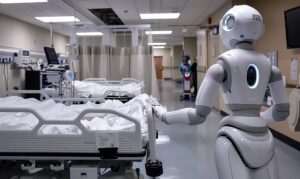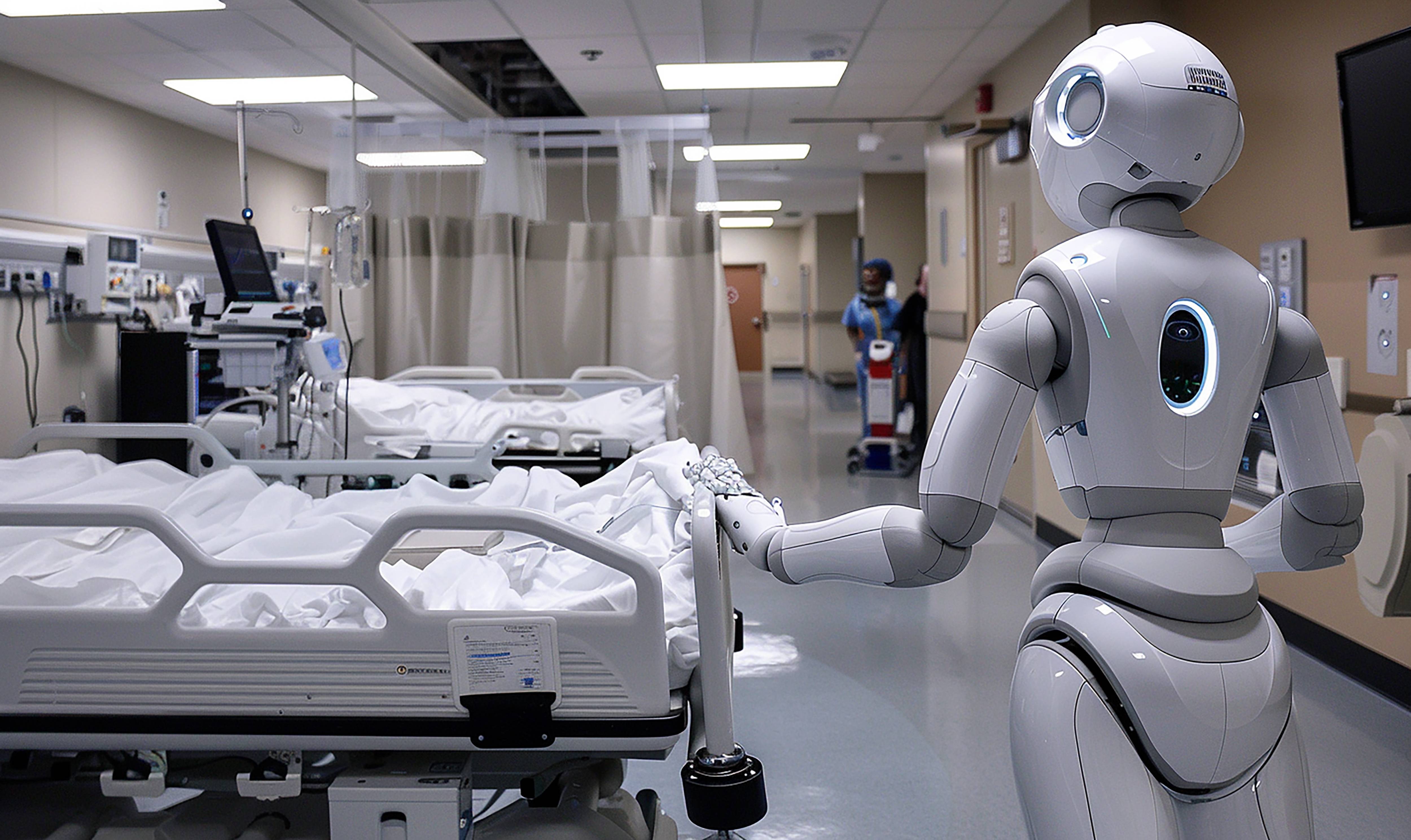
The headlines in 2026 are full of robots. At CES, humanoids folded laundry and dealt cards to show off human-like hands. In hospitals, wheeled robots glide down corridors delivering medicines and lab samples. A clinic owner reads all this and asks a fair question: is a robot coming to my clinic — and should I be worried, or investing? Then, in the very same month, another headline lands: a hospital quietly pulled fourteen robots that were meant to help nurses, because the experiment simply did not work. The truth about humanoid robots in healthcare is more interesting and far more useful to an everyday clinic than either the breathless hype or the backlash suggests.
This article is a clear-eyed guide to that reality. Physical AI and humanoid robots are advancing genuinely fast, and they will reshape parts of healthcare — but mostly in large hospitals, mostly for physical and logistical work, and mostly over years, not months. For a normal clinic in India right now, the far more important question is not which robot to buy, but what to automate today so your staff can focus on patients — and how to build the digital foundation that any future robotics will quietly depend on.
So let us separate the trend from the noise, and translate it into something a clinic can act on.
The Core Problem: Hype Distracts From the Real Opportunity
The problem is not that healthcare robots are fake — some are impressively real. The problem is that the hype pulls a clinic’s attention toward a question it cannot yet act on (“should we get a robot?”) and away from the one it can (“how do we stop drowning our staff in manual work?”). Both a hospital’s delivery robot and a clinic’s overworked front desk are trying to solve the same underlying problem: too much of a skilled human’s day is spent on repetitive, non-clinical tasks instead of patient care.
The distraction cuts both ways. Some owners dismiss the whole robotics conversation as science fiction irrelevant to them, and so ignore the very real, very available automation that could help their clinic today. Others get dazzled by humanoid robots and imagine that transformation requires exotic hardware that st clinics will not touch for years. Both miss the practical truth sitting in the middle: the work that robots do in hospitals — freeing humans from repetitive tasks — is work a clinic can start offloading right now, just with software rather than a physical machine.
So the real problem is not “Which robot should we buy?” For almost every everyday clinic, the honest answer is “none, yet.” The sharper question is: how do we free our people from the manual grind today, and get ready for whatever comes next — without chasing headlines?
Why the Humanoid Robots Trend Is Impossible to Ignore
Three forces are making physical robotics genuinely important, even if not yet for your clinic.
First, the technology has crossed a threshold. At CES 2026, physical AI and humanoids dominated the floor, with dexterous robotic hands and mobile assistants moving from lab demos toward real deployment. The capability curve is bending sharply upward.
Second, the money and the need are aligning. The healthcare humanoid robot sector is a market on track to more than quadruple by 2035, driven by ageing populations and chronic staff shortages. When demand for care outpaces the humans available to give it, automation of every kind becomes attractive.
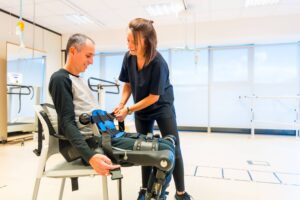
Third, early hospital results are real. Logistics robots delivering supplies have given nurses back meaningful time each shift, and robot-assisted rehabilitation has shown faster mobility recovery for some patients. These are not fantasies — they are working deployments. The trend behind healthcare robots is solid, even if the near-term relevance to a small clinic is not.
Rethinking the Problem: The Robot Your Clinic Actually Needs Today
The mistake is to equate “robotics” with “humanoid hardware.” In practice, the value a hospital gets from a robot is not the humanoid shape — it is the outcome: repetitive work taken off a skilled person’s plate so they can focus on patients. Framed that way, a clinic does not need a machine that walks. It needs that same outcome, delivered by the tool that is actually practical and affordable for a clinic: software automation.
The shift worth acting on in 2026 is therefore not buying humanoid robots; it is embracing the “software robot” already within reach — automating reminders, records, scheduling, billing, and follow-ups so staff stop doing by hand what a system can do instantly. And it is building the clean digital foundation that any future physical robotics would need anyway, because a robot is only as useful as the data and systems it plugs into. The reframe is simple: stop asking which robot to buy, and start automating the grind you already have — which helps now and makes you ready later.
How EasyClinic Fits Into the Humanoid Robots Era
The way EasyClinic fits this moment is by being the practical, available-now version of what all this robotics is ultimately for: giving skilled humans back to patients. It is not a humanoid, and it does not pretend to be. It is the software that quietly removes the repetitive load a clinic actually carries today.
In practice, that means the reminders, records, scheduling, billing, and follow-ups that would otherwise eat a team’s day are handled automatically, so staff spend their time on people rather than paperwork — the very same goal a hospital chases with a delivery robot, achieved in a way a clinic can afford. Just as importantly, doing this builds the clean, structured digital foundation that makes a clinic genuinely future-ready: whatever tools arrive next, they will run on good data and connected systems, not on paper and memory. Because it all lives in one clinic management software, a clinic gets the real benefit of automation now, and quietly becomes ready for whatever comes later.
The Recent Robotics Trends Worth a Clinic’s Attention
Here are the developments actually worth understanding this year — with an honest read on what each means for you.
1. Physical AI has gone mainstream. Humanoid robots and dexterous machines moved from novelty to serious industry focus in 2026. For clinics, this matters as direction of travel, not as a purchase order — the capabilities are real; the everyday clinical use cases are still emerging.
2. Robots are taking the non-clinical load — in hospitals. The clearest healthcare win so far is logistics: robots ferrying supplies, samples, and medicines so nurses reclaim time for care. It is a powerful idea, but one currently suited to large, complex facilities rather than a typical clinic.
3. A necessary reality check. Not every hospital robot programme has succeeded — some have been quietly withdrawn, and AI-driven tools have made errors that humans had to catch. This is not a reason to dismiss robotics, but a reason to adopt any automation with human oversight.
4. The clinic-ready robot is software. For everyday practices, the automation that pays off today is not physical at all: it is the system that handles admin, communication, and records automatically. This is where humanoid robots‘ underlying promise — freeing humans for care — is actually deliverable for a clinic right now.
5. Data readiness is the no-regrets move. Whatever the future holds, physical AI and clinical tools alike depend on clean, connected data. Building that foundation now is the one robotics-era investment that helps immediately and never goes to waste, whether or not healthcare robots ever roll through your door.
What Clinics Notice When They Act on This Sensibly
The change shows up not in a robot arriving, but in a calmer, more focused practice.
| Area | Chasing the hype | Acting practically in 2026 |
|---|---|---|
| Focus | “Which robot do we buy?” | “What can we automate now?” |
| Staff time | Lost to manual admin | Freed for patient care |
| Automation | Waiting for hardware | Delivered by software today |
| Patient attention | Squeezed by paperwork | Restored |
| Future-readiness | Paper and guesswork | Clean, connected data |
| Cost | Speculative and high | Affordable and immediate |
The numbers matter, but the shift owners describe most is simpler: they stopped worrying about robots and started freeing their staff.
How the Patient Experience Quietly Improves
Patients do not benefit from a robot that is not there — they benefit from staff who have time for them. When automation quietly absorbs the repetitive admin, the receptionist is less harried, the nurse is less rushed, and the doctor is more present. The near-term promise of the whole robotics movement — humans freed to do human work — reaches patients today through software long before any humanoid could deliver it in a clinic. And because a well-run digital clinic is more organised, patients experience fewer errors, smoother visits, and less waiting. The real lesson of the robotics era, for a patient, is not that a machine will care for them; it is that the humans caring for them will finally have the time to do it well.
Why EasyClinic Is Built for This Moment
Owners are rightly sceptical of both extremes — the hype that says a robot will transform their clinic tomorrow, and the cynicism that says none of this matters. The sensible middle is to capture the real, available benefit of automation now, while building toward the future calmly.
That is the lane EasyClinic is designed for. It is built for clinics in India, where humanoid robots are a distant prospect but overworked staff and manual processes are an everyday reality. By automating the repetitive work that consumes a clinic’s day and holding it all in one clinic management software, it delivers the outcome the robotics era is really promising — more human time for patients — without asking a clinic to buy hardware it does not need. And by putting a clinic’s data on a clean, connected footing, it quietly makes that clinic ready for whatever genuinely useful tools, physical or otherwise, arrive next. The goal is not to sell a robot fantasy. It is to give everyday clinics the real, grounded version of what everyone else is only promising.
10 FAQs Clinic Owners Actually Ask
1. Are humanoid robots really coming to clinics? Eventually, in some form — but slowly, and first to large hospitals. For an everyday clinic, a humanoid robot is not a near-term reality, and treating it as one is a distraction from far more useful steps you can take now.
2. Do I need to buy a robot to keep up? No. For almost every clinic today, the honest answer is that you do not need physical robots at all. You need to automate your admin and get your data organised — which delivers the real benefit far sooner and far cheaper.
3. What are healthcare robots actually used for right now? Mostly physical and logistical tasks in hospitals — delivering supplies and medicines, assisting rehabilitation, and supporting surgery. These are genuine uses, but they are suited to large, complex facilities rather than a typical clinic.
4. What does “physical AI” even mean? It refers to AI given a body — robots that can sense and act in the physical world, like humanoids and robotic hands. It was a major theme in 2026, but for clinics it currently matters more as a signal of direction than as a tool to adopt.
5. Didn’t some hospital robots fail? Yes, and that is important context. Some robot programmes have been withdrawn, and AI tools have made errors caught only by alert humans. It is a reminder to adopt any automation with human oversight, not blind faith.
6. So what can my clinic automate today? The repetitive, non-clinical work: appointment reminders, records, scheduling, billing, and follow-ups. This is the practical, affordable version of what robots do in hospitals — freeing your people from routine tasks.
7. Will automation replace my staff? No. The point is the opposite — to remove the drudgery so your skilled staff can spend more time on patients. Good automation supports people; it does not replace their judgement or care.
8. Is any of this relevant to a small clinic in India? The robots, not yet. The automation, absolutely. A small clinic feels manual overload most sharply and benefits most from software that handles it — and from being ready for the future without overspending.
9. How do I become “robot-ready” without buying robots? By getting your data clean and connected in a good clinic management software. Whatever tools arrive later will depend on that foundation, so building it now is the smartest, lowest-risk preparation you can make.
10. Where should a clinic start? Start by automating your biggest sources of manual work and moving off paper into one connected system. Capture the real benefit of the automation era now, and let the robotics headlines take care of themselves.
Conclusion
The most useful response to the robot headlines of 2026 is neither excitement nor dismissal — it is clarity. Humanoid robots in healthcare are real and advancing, but for everyday clinics they remain a distant, hospital-first prospect. Meanwhile, the outcome those robots promise — freeing skilled humans from repetitive work so they can care for patients — is available to your clinic today, through software rather than hardware. That is the practical translation of the entire trend: automate the grind now, and build the clean data foundation that makes you ready for whatever comes next.
Clinics that understand this stop watching the robotics race as spectators and start acting as participants — not by buying machines, but by freeing their people and organising their data. The result is not a futuristic clinic full of robots. It is a calmer, more human one, where staff have time for patients today, and the practice is quietly prepared for a tomorrow that will always reward those who got their foundations right.
Take the Next Step
If you would rather capture the real benefit of automation than chase robot headlines, see how EasyClinic frees your staff from manual work and puts your clinic’s data on a future-ready footing — and explore the platform built for everyday clinics when you are ready to begin.