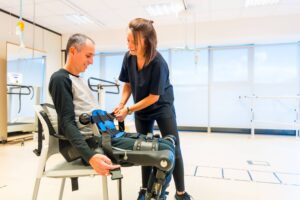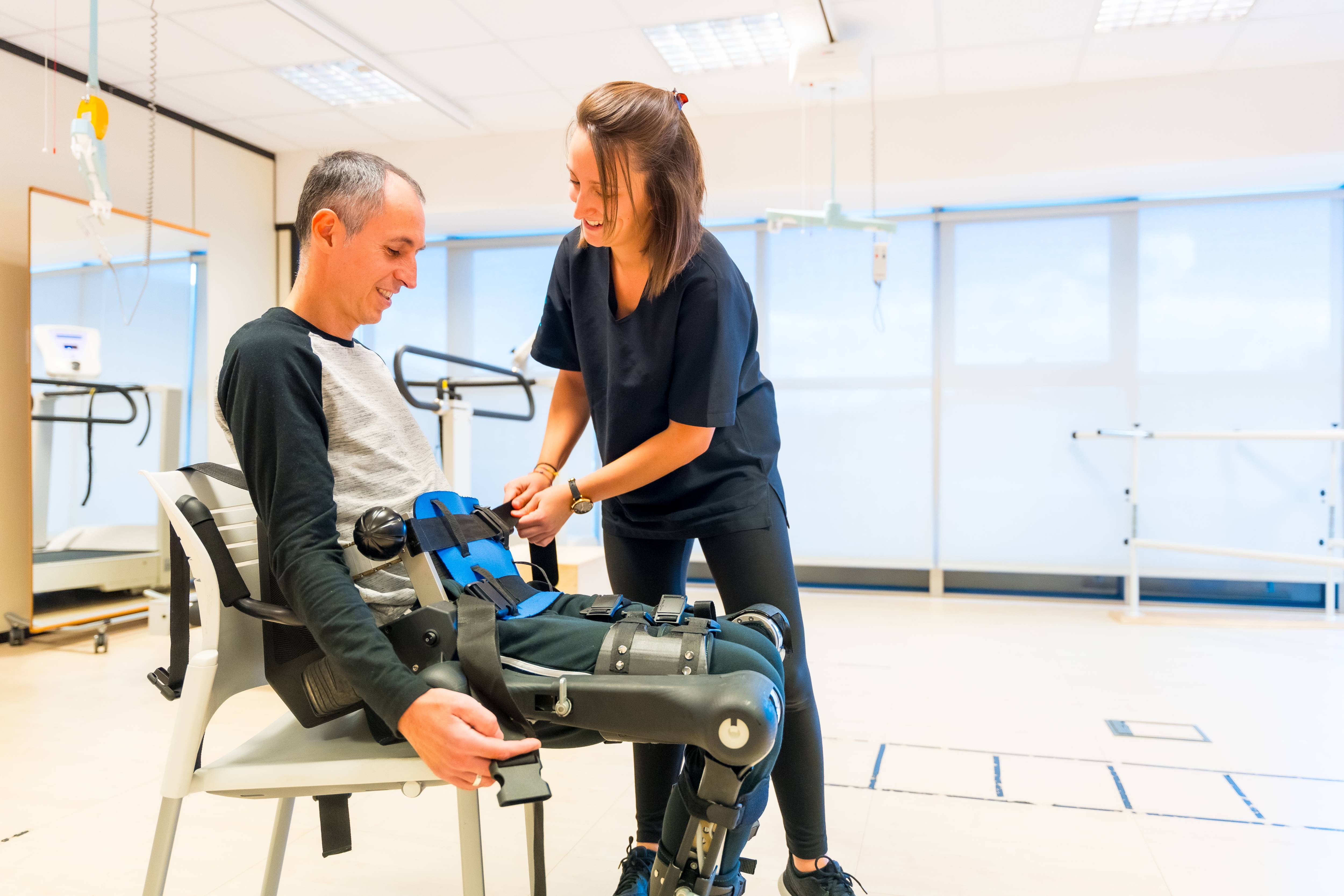
A stroke survivor sits in a physiotherapy clinic, lifting their weakened arm for the hundredth time. The therapist counts the repetitions, corrects the movement, and offers encouragement — but there is a hard limit to how many precise repetitions one tiring human can guide in a single session, and meaningful recovery depends on hundreds of them. Down the corridor of a large rehabilitation centre, another patient steps into a robotic exoskeleton, completing a thousand carefully guided gait cycles in the same span of time, the machine adjusting the difficulty up and down in real time to keep them exactly at the edge of their ability. Two versions of recovery — and 2026 is the year the difference between them started to matter for every clinic that helps people heal.
This is the shift that robotic rehabilitation and AI are driving in rehabilitation this year. Recovery has always depended on three things that are genuinely hard to deliver by hand: intensity, repetition, and precise, tracked progress over weeks. Robotics and AI are now filling exactly those gaps — enabling far more repetition, adapting to each patient in real time, extending therapy into the home, and measuring outcomes objectively. And while a full exoskeleton belongs to a large centre for now, the principles behind it are already within reach of ordinary rehabilitation clinics.
This article is about that shift — why conventional rehabilitation hits a ceiling, how AI and robotics are raising it, and how a normal clinic in India can deliver better recovery without overreaching or overspending.
The Core Problem Clinics Face
Rehabilitation works through repetition and intensity, and both are difficult to deliver consistently. A therapist can only guide so many precise movements before fatigue sets in — theirs and the patient’s — so a session rarely reaches the volume of repetition that drives real neuroplastic recovery. Worse, most of the actual work is supposed to happen at home, through prescribed exercises that patients routinely forget, perform incorrectly, or simply abandon. No one is watching, so no one knows.
The result is recovery that is often slower and less complete than it could be. Progress is hard to measure objectively, so clinics rely on subjective impressions rather than clear data, and patients — unable to see their own improvement — lose motivation and drift away before the course is finished. Add rising numbers of stroke, orthopaedic, and age-related cases, and a shortage of therapists to treat them, and the gap between the rehabilitation patients need and the rehabilitation they actually get keeps widening. Modern robotic rehabilitation and AI-assisted physical therapy exist to close precisely that gap.
So the real problem is not “Are our therapists skilled?” They usually are, deeply. It is sharper: how do we deliver the intensity, adherence, and measurable progress that recovery demands, when a human therapist and an unwatched home programme can only do so much? Answering that is where AI and robotics are now making a real difference.
Why This Problem Is Getting Worse
Three forces are widening the gap at once.
First, demand is climbing fast. Stroke, neurological conditions, orthopaedic injuries, and an ageing population are all increasing the need for rehabilitation, while the supply of trained therapists lags well behind. Each therapist must do more, and something has to give — usually the intensity and follow-through that recovery depends on.
Second, home adherence is a black hole. The exercises that matter most happen between visits, yet clinics have almost no visibility into whether they are done at all, let alone done correctly. A brilliant treatment plan that a patient ignores at home simply does not work, and no one finds out until progress stalls.
Third, progress goes unmeasured. Without objective tracking, it is hard to know what is working, hard to adjust, and hard to show patients the improvement that keeps them going. Recovery that cannot be seen is a recovery that patients abandon. These are the gaps that robotic rehabilitation and AI-driven therapy are built to fill.
Rethinking the Problem: Intensity, Adherence, and Evidence
The mistake is to picture rehabilitation technology as expensive robots that only big hospitals can afford, and to conclude it has nothing to offer an ordinary clinic. But the real lessons of the robotics revolution are not about hardware — they are about principles any clinic can apply: deliver more repetition, personalise the difficulty, extend therapy into the home, and measure everything.
Seen that way, the future of physiotherapy is not only exoskeletons. AI-driven robotic rehabilitation has shown it can cut recovery time substantially by maximising well-dosed repetition — and the same ideas translate into tools an everyday clinic can use: guided home-exercise programmes patients actually follow, tele-rehabilitation that reaches them between visits, and objective tracking of progress across a course of care. The reframe is simple: stop thinking “we cannot afford a robot,” and start delivering the intensity, adherence, and evidence that make robotic systems effective in the first place.
How EasyClinic Supports Modern Robotic Rehabilitation and Physiotherapy
The way EasyClinic fits this shift is honest and specific: it is not an exoskeleton or a motion-analysis camera, and it does not deliver the therapy. What it does is run the rehabilitation episode of care — the plans, the adherence, the tracking, and the follow-through that decide whether recovery actually happens.
In practice, that means a patient’s rehabilitation programme, session by session, lives in one place, with progress and outcomes tracked across the whole course rather than guessed at. Home-exercise plans and reminders reach the patient through the patient journey the clinic already uses, so adherence between visits stops being a black hole. Multi-session packages are scheduled and billed cleanly, and no appointment in a long course quietly slips. Because it all sits in one clinic management software, a physio clinic can deliver the intensity, follow-up, and measurable progress that modern recovery demands — with or without a robot in the room. This is what it looks like when the system supports rehabilitation instead of leaving it to memory and paper.
The Recent Robotic Rehabilitation Trends Worth a Clinic’s Attention
Here are the developments actually shaping recovery this year — with an honest read on what each means for an everyday clinic.
1. Robots deliver intensity humans cannot. Exoskeletons and end-effector devices let patients complete hundreds or thousands of guided repetitions per session, and AI-driven systems have cut post-stroke recovery time meaningfully. For most clinics, this is context, not a purchase — but it explains why intensity matters so much.
2. AI personalises in real time. Modern systems adjust difficulty continuously to keep patients at the optimal challenge for motor learning. The transferable lesson for any clinic is that well-dosed, individually-tuned exercise beats a generic sheet of instructions.
3. Tele-rehabilitation genuinely works. Evidence now shows home-based programmes matching clinic outcomes when they are well structured and followed. That makes guided, monitored home therapy one of the most practical upgrades a physio clinic can adopt right now.
4. Objective outcome tracking. Sensors and AI increasingly measure movement, strength, and function objectively, turning “you seem better” into clear, motivating data. Even without robots, tracking outcomes across a course is something every clinic can and should do.
5. Enhancement, not replacement. The strongest and most important theme: these technologies enhance conventional rehabilitation rather than replace it, and work best at the right time, dose, and objective, guided by a skilled therapist. The human remains the heart of physical therapy.
What Clinics Notice After Implementation
The change shows up over the course of care, in both outcomes and retention.
| Area of rehabilitation | The “leave it to the session” past | With AI-supported physio care |
|---|---|---|
| Repetition and intensity | Limited to the clinic visit | Extended through guided homework |
| Personalisation | A generic exercise sheet | Individually tuned and adjusted |
| Home adherence | Unknown and unmonitored | Prompted and followed up |
| Progress | Subjective impressions | Objectively tracked |
| Motivation | Fades without visible gains | Sustained by clear data |
| Course completion | Patients drift away | More finishes the programme |
The numbers matter, but the line clinics repeat most is simpler: more patients actually finished their recovery.
How the Patient Experience Quietly Improves
For patients, this is the difference between a recovery they endure and one they can see. When their programme is personalised and their home exercises are guided and gently followed up, they do the work that actually drives progress — and they feel it. Watching objective improvement, week over week, turns a demoralising slog into something motivating, which is often what keeps a patient going long enough to truly recover. Reaching them between visits, through therapy that extends into the home, means recovery no longer pauses the moment they leave the clinic. And because a skilled therapist remains firmly in charge, all of this feels like more attentive care, not less human care. The real promise of robotic rehabilitation and AI, for a patient, is not a machine — it is a fuller, faster, better-supported recovery and the motivation to see it through.
Why EasyClinic Is Built for This Moment
Owners of rehabilitation clinics know the truth others miss: the therapy is only as good as the follow-through, and follow-through is where most clinics quietly lose ground. The clinics that deliver real recovery pair skilled hands with a system that manages the whole course of care.
That is the lane EasyClinic is designed for. It is built for clinics in India, where demand for rehabilitation is rising sharply, home adherence is hard to police, and every unfinished course is a patient who did not fully recover. By holding each patient’s programme in one place, prompting and tracking home exercises, measuring progress across the course, and scheduling and billing multi-session packages cleanly — all inside one clinic management software — it delivers the intensity, adherence, and evidence that make modern physical therapy effective. It does not perform the therapy or replace the therapist, whose judgement remains central, and it handles patient data with DPDP-aligned care. The goal is not to put a robot in every clinic. It is to give every clinic the follow-through that makes recovery actually happen.
10 FAQs Clinic Owners Actually Ask
1. What is robotic rehabilitation, in plain terms? It is the use of robotic devices — like exoskeletons or end-effector machines — often guided by AI, to deliver high-repetition, precisely controlled rehabilitation exercises, especially after stroke or injury. It complements, rather than replaces, therapist-led care.
2. Does this technology replace physiotherapists? No. The evidence is clear that robotics and AI enhance conventional physiotherapy but do not replace it. A skilled therapist remains essential to assess, guide, and adjust treatment; the technology extends what they can achieve.
3. Does my clinic need to buy an exoskeleton to benefit? Not at all. Full robotic systems are still mainly for large centres. The practical benefits for an everyday clinic come from the same principles — personalised programmes, home-exercise adherence, tele-rehabilitation, and outcome tracking — which need no exoskeleton.
4. Does robotic rehabilitation actually work? For several conditions, particularly stroke recovery, the evidence for well-dosed robotic and AI-assisted therapy is genuinely strong. For others, it is more mixed. It works best at the right time and intensity, guided by a therapist — not as a guaranteed fix.
5. What is tele-rehabilitation, and is it effective? It is guided rehabilitation delivered remotely to the patient’s home. Well-structured home programmes have been shown to match clinic outcomes, making tele-rehabilitation one of the most practical and affordable upgrades a clinic can adopt.
6. How does this help with home-exercise adherence? By turning the home programme from an ignored paper sheet into something prompted, guided, and followed up. Since most recovery depends on between-visit work, improving adherence is often the single biggest lever on outcomes.
7. How do we track progress objectively? By recording outcomes consistently across the course of care in your clinic management software, improvement is measured rather than guessed. Clear, visible progress both guides treatment and keeps patients motivated to finish.
8. Which conditions benefit most? Stroke and neurological rehabilitation show the strongest evidence, along with many orthopaedic and post-surgical recoveries. The common thread is any condition where intensity, repetition, and adherence drive results.
9. Is this relevant to a small physio clinic in India? Very much. The robots may be aspirational, but managing programmes, adherence, and outcomes well is available now — and has an outsized effect where therapists are stretched and patients travel far.
10. Where should a clinic start? Start with the highest-impact, lowest-cost steps: structured home-exercise plans with reminders and objective outcome tracking across each course. Get adherence and evidence right first; the rest builds from there.
Conclusion
The robots capturing headlines in rehabilitation are real, and for stroke and neurological recovery, their impact is genuine. But the deepest lesson of robotic rehabilitation is not about hardware most clinics will never buy — it is about what makes recovery work: intensity, personalisation, adherence, and measured progress. Those are within reach of any physiotherapy clinic willing to extend therapy into the home and track outcomes properly, with a skilled therapist still leading the way.
Clinics that understand this stop seeing rehabilitation technology as an exoskeleton they cannot afford and start delivering the follow-through that actually drives recovery. The result is not a colder, more mechanical clinic. It is a more effective and more human one — where patients do the work that heals them, see the progress that motivates them, and finish the recovery they came for, whether or not a robot was ever in the room.
Take the Next Step
If your clinic wants patients to actually finish their recovery, see how EasyClinic manages rehabilitation programmes, home-exercise adherence, and outcome tracking in one connected system — and explore the platform built for everyday clinics when you are ready to begin.