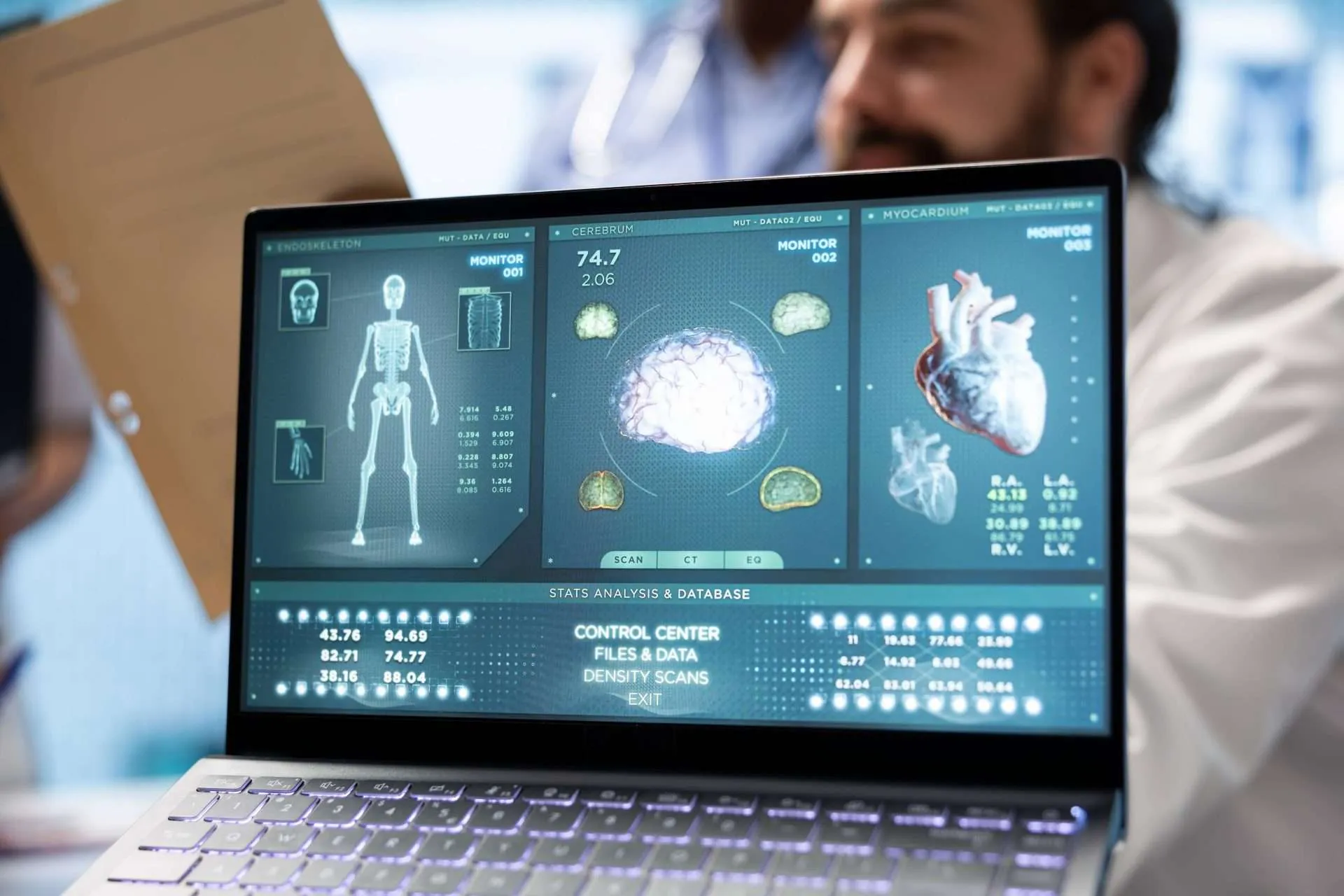
1. Introduction. Early detection of cardiovascular disease through AI-enhanced imaging and ECG interpretation
Every cardiologist in India knows the familiar scene. A patient arrives late, clutching chest pain reports and an ECG from weeks ago. By the time the doctor interprets the scan, orders new tests, and connects the dots, valuable time has already slipped away. For many heart patients, those delays decide life or death.
India faces a silent crisis. Cardiovascular disease is now the leading cause of death, claiming nearly three million lives annually. The tragedy is that a large share of these cases could have been prevented or managed better if diagnosed earlier. But heavy patient loads, delayed imaging reports, and manual ECG interpretation often overwhelm clinics.
This is where advanced AI tools for cardiology clinics are rewriting the story. AI doesn’t just speed up imaging or ECG reading — it acts like a second set of eyes, spotting subtle patterns that a tired human eye might miss. Imagine having an assistant that never forgets, never tyres, and flags risk instantly. That’s what AI-enhanced imaging and ECG interpretation now bring to Indian cardiology.
2. Continuous patient monitoring with AI-powered EMR integration
Heart disease doesn’t pause between clinic visits. A patient with heart failure can deteriorate overnight, and arrhythmias can strike when no doctor is around. Continuous monitoring has always been a dream for cardiologists — and now AI makes it possible.
By integrating remote devices with AI-powered EMR systems, clinics can track a patient’s vitals 24/7. ECG patches, smartwatches, and blood pressure monitors feed data into the record. AI then sifts through thousands of data points, spotting irregular heartbeats or sudden spikes before they become emergencies.
Instead of waiting for the next appointment, doctors receive real-time alerts. Patients feel safer knowing their clinic is watching over them even when they’re at home. Tricog Health in Bengaluru has shown how real-time ECG interpretation powered by AI can save lives in rural clinics where cardiologists are scarce.
For Indian doctors stretched thin, this is more than technology — it’s peace of mind.
3. Predictive analytics for risk scoring and treatment planning
Every cardiologist has faced the question: “Doctor, what are my chances?” Until now, answers have relied on general risk scores or experience. But AI allows for personalised, data-driven predictions.
Predictive analytics can scan years of patient history, lab results, imaging data, and even lifestyle factors. It then calculates risk with striking accuracy: the chance of heart failure progression, the likelihood of another heart attack, or which treatment plan will yield better survival.
Instead of one-size-fits-all treatment, patients receive care tailored to their unique profiles. Studies published in Nature (2025) show machine learning models consistently outperform traditional scoring systems in predicting heart disease outcomes.
For Indian clinics, predictive analytics is more than science — it is a chance to reassure worried families with clear, data-backed guidance.
4. Digital cardiology workflow software to reduce delays in reporting
Every extra day a report is delayed is a day a patient’s risk grows. Manual reporting chains, fragmented systems, and overloaded technicians often slow things down. AI-driven digital cardiology workflow software removes those bottlenecks.
Reports are generated automatically, routed to the right doctor instantly, and stored securely in one place. Preliminary AI interpretations mean cardiologists spend less time on clerical work and more time with patients.
In fact, Frontiers in Cardiovascular Medicine (2022) found AI-driven workflow tools cut reporting delays by nearly 40%. For Indian clinics juggling hundreds of ECGs and echos a day, that’s the difference between rushed consultations and confident, timely care.
5. Patient engagement via AI reminders, lifestyle tracking, and follow-up care
Doctors can’t follow every patient home, but AI tools come close. Most heart treatments fail not because they were wrong, but because patients forget medicines, skip follow-ups, or give up on lifestyle changes.
With AI-driven reminders and lifestyle tracking, clinics can bridge that gap. Patients receive simple nudges: “Time for your medication,” “Your blood pressure reading looks high — book a check-up,” or “Well done on reaching your walking goal this week.”
In one AHA Journal study, clinics using AI reminders saw 30% better treatment adherence. For India, where dropout rates after the first visit are high, these tools make patients feel guided and supported every step of the way.
6. Benefits of affordable, scalable AI solutions for Indian cardiology clinics
When Indian doctors hear “AI,” many immediately think “too expensive.” But the landscape has shifted. Today’s solutions are subscription-based, cloud-enabled, and built with affordability in mind.
Why affordability matters:
- AI reduces diagnostic errors, saving costs on repeat tests.
- Scalable pricing means small-town clinics can start small and grow.
- Offline-friendly modules keep working even with patchy internet.
- Localised datasets adapt AI for Indian patients, cutting global-model bias.
In short, AI isn’t a luxury anymore. It’s becoming a practical, cost-saving necessity.
7. Why EasyClinic is the best option for AI and Automation Software
Not all platforms are created equal. Consumer apps may track steps, and generic EMRs may log records, but cardiology needs more. This is where EasyClinic makes the difference.
Why cardiologists trust EasyClinic:
- Cardiology-ready workflows: ECG uploads, imaging data, and lab integrations.
- AI-powered insights: Predictive analytics that flag high-risk patients early.
- Unified ecosystem: One system for EMR, billing, scheduling, and AI reporting.
- Affordable for India: Flexible pricing that scales from solo clinics to hospital networks.
- Privacy-first: HIPAA-grade encryption and compliance with Indian regulations.
- Patient-friendly tools: Lifestyle tracking, reminders, and digital follow-ups.
Explore EasyClinic Features or review speciality setups like Aesthetic EMR Software. For those starting new units, the compliance guide is invaluable.
8. Internal links. AI Tool & Software category
Helpful EasyClinic resources for deeper exploration:
9. Challenges involved in recent markets
No transformation comes without hurdles. Clinics considering AI often face:
- Cost perception: Many assume AI is unaffordable. Subscription pricing makes it accessible.
- Algorithm bias: Global AI may not perform well for Indian patients. Local datasets like Tricog’s improve accuracy.
- Resistance from staff: Doctors fear being “replaced.” In reality, AI augments, not replaces.
- Connectivity gaps: Rural areas still lack stable internet. Offline-ready modules solve this.
- Privacy worries: Sensitive heart data must be protected. EasyClinic’s encrypted, role-based systems address this directly.
10. Case Studies: Real-World Success
Case Study 1: Tricog Health, India – Real-Time ECG Lifeline
A farmer in rural Karnataka felt chest pain but had no cardiologist nearby. His ECG was uploaded to Tricog’s AI system. Within minutes, the AI flagged a possible heart attack, and a remote doctor confirmed it. He received timely treatment and survived.
Takeaway: AI cardiology software saves lives even in resource-limited areas.
Case Study 2: Arterys Cardio DL – Imaging with Speed and Precision
A busy hospital in Mumbai adopted Arterys for cardiac MRI analysis. Reports that once took an hour now arrive in minutes, giving doctors more time to counsel patients.
Takeaway: Digital cardiology workflow tools reduce reporting delays and ease the doctor’s workload.
Case Study 3: KardiaMobile with KardiaAI – Patients Take Control
In Delhi, a middle-aged executive used KardiaMobile to monitor his heart rhythm at home. When the AI flagged atrial fibrillation, he alerted his doctor early and avoided complications.
Takeaway: AI-driven patient engagement empowers individuals while reducing clinic strain.
Conclusion
Heart disease in India is a growing epidemic, but it doesn’t have to be inevitable. With advanced AI tools for cardiology clinics, doctors can detect risks earlier, monitor patients continuously, personalise treatments, and keep people engaged in their care.
For Indian clinics, the challenge has always been balancing advanced care with affordability. EasyClinic bridges that gap, offering AI cardiology software that is secure, scalable, and designed for the realities of Indian healthcare.
The future of cardiology is not just about machines or humans alone. It is about humans and AI working together to save lives, reduce burnout, and give every patient a fighting chance. EasyClinic makes that future real today.