1. The Quiet AI Shift Endocrinology Clinics Can No Longer Ignore
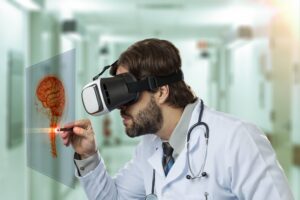
AI-powered clinics are now managing chronic diseases faster than manual workflows ever could. Clinical copilots are assisting doctors in real time. Intelligent agents continuously track patient data. Administrative work is being automated silently in the background.
Across India, endocrinology clinics are reaching a tipping point.
India is home to over 100 million people living with diabetes, thyroid disorders, metabolic syndromes, and hormonal imbalances. Endocrinologists are expected to manage complex, long-term cases while also handling growing patient volumes, compliance requirements, and digital expectations.
The reality is simple. Clinics that still rely on fragmented records and manual decision-making are falling behind.
This is where AI copilots for endocrinology clinics are beginning to redefine how care is delivered. AI-powered platforms like EasyClinic are no longer futuristic ideas. They are becoming practical clinical partners that support doctors, staff, and patients every single day.
2. What are Recent Robotic and AI Automation Trends in Endocrinology in 2026
Endocrinology is one of the fastest adopting specialities for AI-driven decision support because it depends heavily on longitudinal data, pattern recognition, and continuous monitoring.
Key AI and Automation Trends in Endocrinology Clinics
| AI Trend | What Is Changing in 2026 | Clinical Impact |
| AI Clinical Copilots | AI systems assist doctors during consultations | Faster and more accurate decisions |
| Predictive Analytics | AI predicts complications before symptoms worsen | Early intervention and reduced hospitalisation |
| AI Assisted Treatment Planning | Algorithms suggest personalised therapy paths | Improved outcomes for diabetes and thyroid care |
| Continuous Patient Monitoring | AI analyses long-term vitals and lab trends | Better chronic disease control |
| Intelligent Documentation | AI summarises clinical notes automatically | Reduced documentation burden |
| AI-Powered Patient Engagement | Copilots guide patients between visits | Better adherence and follow-up |
These trends are reshaping how endocrinologists work. Instead of reacting to problems, clinics are shifting toward predictive, proactive care.
3. Why Endocrinology Clinics in India Are Under Pressure Right Now
Endocrinology clinics face unique challenges that general practice clinics do not.
India is experiencing a sharp rise in lifestyle-related endocrine disorders. At the same time, the number of trained endocrinologists is not growing at the same pace. This creates a dangerous imbalance.
Many clinics are still managing 2025 patient volumes with systems designed more than a decade ago.
Common pressures include:
- Growing caseloads of chronic patients requiring lifelong follow-up
- Limited consultation time per patient
- Increasing documentation and compliance requirements
- Patients are demanding digital access, reminders, and continuity of care.
- Competition from digitally enabled clinics offering smarter experiences
AI-powered platforms like EasyClinic are emerging as a response to this pressure by modernising how clinics manage care, data, and workflows.
4. The Biggest Operational Problems Holding Endocrinology Clinics Back
Problem 1. Manual Scheduling and Overbooked Clinics
Appointments are often booked without visibility into patient complexity or follow-up needs. This leads to long wait times and rushed consultations.
Problem 2. Fragmented Patient Records
Lab reports, prescriptions, glucose logs, and hormonal history are scattered across files, systems, and devices. Doctors waste valuable time searching for information.
Problem 3. Administrative Overload
Endocrinologists spend hours documenting visits, reviewing historical data, and coordinating follow-ups instead of focusing on care.
Problem 4. Billing Errors and Revenue Leakage
Manual billing processes lead to missed charges, delayed payments, and reconciliation issues.
Problem 5. Lack of Real-Time Insights
Clinic owners lack dashboards that show patient trends, operational efficiency, or long-term outcomes.
These issues quietly erode care quality and clinician satisfaction.
5. Why AI Diagnostics and Robotics Are Exploding in Endocrinology Clinics in 2026
AI is thriving in endocrinology because the speciality depends on patterns rather than isolated events.
AI does not replace doctors. It replaces inefficiency.
Key drivers of adoption include:
- AI-assisted diagnostics that flag abnormal trends in lab values
- Predictive models that identify patients at risk of complications
- AI copilots that surface relevant history during consultations
- Workflow automation that reduces repetitive admin tasks
- Integration of wearable and remote monitoring data
AI-powered systems such as EasyClinic are designed to think ahead, not just store data. Clinics that adopt AI gain the ability to act earlier and manage patients more holistically.
Learn more about how AI-driven tools support clinics through AI-powered features available on the EasyClinic platform.
6. How AI-Powered EMR Software Solves These Problems
AI-powered endocrinology EMRs address operational pain points directly.
Problem to Solution Mapping
- Chaotic scheduling becomes intelligent appointment planning that balances complexity and availability.
- Scattered records become unified patient timelines with AI-summarised insights.
- Admin overload becomes automated documentation and reminders.
- Billing errors become AI-assisted audits that flag inconsistencies.
- Lack of insights becomes real-time dashboards for doctors and owners.
AI-powered clinic management platforms like EasyClinic transform EMRs from passive storage systems into active clinical assistants.
Clinics that invest in AI-powered EMR software gain efficiency without sacrificing care quality.
7. Real World Use Cases Clinics Can Relate To
Case 1. Multi-Speciality Clinic in Bengaluru
Problem: Doctors struggled to track long-term diabetic patients consistently
AI Adoption: Implemented AI-assisted EMR with predictive alerts
Result: Improved follow-up adherence and reduced complication rates
Case 2. Cardiology and Endocrinology Centre
Problem: Long consultation times and documentation delays
AI Adoption: Used clinical copilots for real-time note summarisation
Result: Doctors saved hours each week and improved patient engagement
Case 3. Urban Endocrinology Practice
Problem: Revenue leakage due to manual billing
AI Adoption: Integrated AI-assisted billing checks
Result: Improved cash flow and financial transparency
These outcomes are becoming common as clinics adopt AI-powered systems like EasyClinic.
8. What is Robotics, AI, and EMR: The Bigger Picture
Robotics and AI are often discussed as standalone innovations, but in real clinical environments, they only deliver value when connected through an intelligent operational layer. That layer is the AI-powered EMR and clinic management system.
In endocrinology, robotics, and AI generate enormous volumes of structured and unstructured data. This includes continuous glucose monitoring streams, lab diagnostics, imaging outputs, wearable sensor data, and post-procedure recovery metrics. Without a central intelligence system, this data remains fragmented and underutilised.
This is where AI-powered clinic management platforms like EasyClinic become critical.
How the Ecosystem Works Together
Robotics, AI analytics, and EMRs do not operate in silos. In a modern endocrinology clinic, they form a continuous intelligence loop.
Robotic and diagnostic systems generate precision data.
AI engines interpret patterns, risks, and anomalies.
EMR platforms operationalise insights into workflows, alerts, and decisions
An AI-powered EMR acts as the command centre where clinical intelligence becomes actionable care.
Why Robotics Alone Is Not Enough
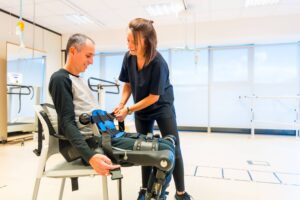
Robotic-assisted procedures for diabetic complications, such as vascular interventions or foot surgeries, are becoming more precise. However, precision in isolation does not guarantee better outcomes.
Without intelligent EMR integration:
- Surgical insights remain disconnected from long-term care plans
• Postoperative risks are not tracked longitudinally
• Complications surface too late
• Follow-up care becomes inconsistent
An AI-powered endocrinology EMR ensures robotic procedure data flows directly into patient timelines, enabling predictive monitoring and proactive follow-up.
AI Copilots Turn Robotic Data Into Clinical Intelligence
AI copilots embedded within EMR systems continuously analyse robotic and diagnostic data across visits. Instead of doctors manually reviewing reports, copilots surface what matters most.
Examples include:
- Highlighting patients at risk of post-surgical complications
• Flagging abnormal recovery patterns earlier than manual review
• Recommending follow-up timelines based on historical outcomes
• Supporting personalised treatment planning using longitudinal data
These capabilities are increasingly being delivered through AI-powered features integrated into modern clinic management systems.
The Operational Advantage for Clinics
Clinics that connect robotics, AI analytics, and EMR systems gain operational clarity that manual clinics simply cannot achieve.
With an AI-powered clinic management platform:
- Doctors spend less time interpreting raw data
• Staff spend less time coordinating care manually
• Patients experience smoother transitions between diagnosis, treatment, and follow-up
• Clinic owners gain visibility into outcomes, efficiency, and capacity
This is not about replacing clinical judgement. It is about amplifying it with intelligence.
Why EMR Is the Real Differentiator in 2026
Many clinics invest in advanced devices but overlook the system that connects everything. In 2026, competitive advantage does not come from owning the latest robotic tool. It comes from how intelligently a clinic uses the data that those tools generate.
An AI-powered EMR transforms robotics from a technical upgrade into a strategic advantage.
Platforms such as EasyClinic are increasingly positioned as the operational backbone that enables endocrinology clinics to scale precision care without increasing complexity.
Robotics without intelligent clinic management is incomplete.
AI without structured workflows is inefficient.
EMR without intelligence is outdated.
Together, they form the foundation of the next-generation endocrinology clinic.
9. What Clinics in India Must Do to Stay Competitive
Endocrinology clinics must act now.
Key steps include:
- Digitising patient workflows end-to-end
- Adopting AI for the first clinical decision support
- Preparing infrastructure for robotics and wearables
- Choosing scalable clinic management platforms
EasyClinic helps speciality clinics transition into AI-first operations without disruption, allowing clinics to modernise while continuing daily practice smoothly.
10. Cost, ROI, and Business Impact of AI Clinic Management
The cost of not adopting AI is growing every year.
Clinics without AI face:
- Lost time
- Missed revenue
- Clinician burnout
- Lower patient satisfaction
AI-powered clinic management delivers ROI through:
- Reduced admin hours
- Improved billing accuracy
- Higher patient retention
- Scalable operations
Explore transparent and scalable pricing options for AI-enabled clinic management with EasyClinic.
11. Be a Breakthrough Pioneer in AI-Driven Endocrinology Healthcare
Be a Breakthrough Pioneer in AI-Powered EMR Software for Endocrinology Clinics in India
The AI wave in speciality healthcare is already underway. Clinics that adapt early will define the future of chronic disease care.
AI agents and clinical copilots are reshaping how endocrinologists work, think, and care for patients.
Talk to EasyClinic to explore how AI-powered EMR and clinic management can transform your endocrinology practice.
12. Frequently Asked Questions
- What are AI copilots for endocrinology clinics?
They are intelligent assistants that support doctors with insights, documentation, and decision support. - Do AI copilots replace endocrinologists
No. They augment clinicians by reducing cognitive and administrative load. - Are AI agents safe for chronic disease care?
When aligned with clinical guidelines and governance frameworks, they enhance safety. - Can AI help manage diabetes patients better?
Yes. AI excels at tracking trends and predicting complications early. - How do AI agents improve patient adherence?
Through automated reminders, education, and continuous engagement. - Is AI-powered EMR expensive?
Modern platforms offer scalable pricing aligned with clinic size. - Can small clinics adopt AI copilots?
Yes. Cloud-based platforms make AI accessible to all clinic sizes. - How does AI integrate with wearables?
AI analyses wearable data and integrates it into patient records. - Is AI compliant with Indian healthcare regulations?
Leading platforms align with the NDHM and ABDM frameworks. - How quickly can clinics see ROI?
Most clinics experience measurable efficiency gains within months.
13. Conclusion: The Future Is Already Here
AI clinics are becoming the new standard. Clinical copilots are changing how doctors practice. Robotics and AI will continue to widen the gap between modern and outdated clinics.
The question is no longer if AI will reshape endocrinology. It is who will adapt first.
Explore the future of AI-powered healthcare with EasyClinic, learn more about its features, review pricing, or contact the team to begin your AI-first journey.