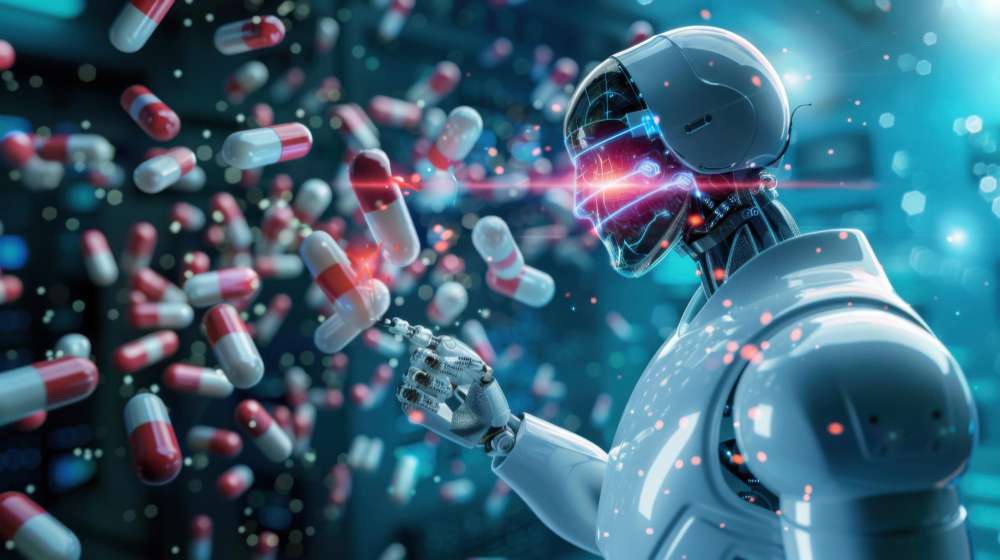
AI Drug Discovery is no longer a future concept.
It is actively reshaping how medicines are discovered, tested, and delivered across the world. As pharmaceutical innovation faces rising costs, longer development timelines, and increasing pressure to address rare and neglected diseases, artificial intelligence is emerging as the most powerful catalyst for change.
By combining machine learning, deep data analytics, and modern healthcare software, AI Drug Discovery enables researchers and clinicians to identify promising compounds faster, reduce trial failures, and bring life-saving treatments to patients sooner. When paired with AI-powered EMR platforms and clinic management platforms, this innovation bridges the gap between laboratory research and real-world clinical impact.
This blog explores how AI Drug Discovery is transforming pharmaceutical innovation, accelerating global health equity, and redefining the future of medicine.
What Is AI Drug Discovery and Why It Matters Today
AI Drug Discovery refers to the application of artificial intelligence technologies such as machine learning, deep learning, and natural language processing to every stage of drug development.
Unlike traditional trial-and-error approaches, AI Drug Discovery uses vast datasets to predict molecular behaviour, identify viable drug candidates, and anticipate safety risks before human trials begin.
Why AI Drug Discovery Is a Breakthrough
-
Analyses millions of chemical structures in hours instead of years
-
Reduces drug development costs by identifying failures early
-
Improves precision by matching drugs to disease pathways
-
Accelerates treatments for rare and neglected diseases
In a world facing pandemics, antimicrobial resistance, and rising chronic disease burdens, AI Drug Discovery and clinic management software is not optional. It is essential.
How AI Drug Discovery Accelerates the Drug Development Lifecycle
Traditional pharmaceutical development can take 10–15 years. AI Drug Discovery compresses this timeline dramatically by automating and optimising each phase.
How It Works Across the Pipeline
-
Target Identification: AI analyses disease biology to identify viable drug targets
-
Compound Screening: Millions of molecules are tested virtually
-
Lead Optimisation: AI predicts toxicity and efficacy
-
Clinical Trial Design: Algorithm models patient response and trial outcomes
When integrated with healthcare software and EMR systems, AI Drug Discovery ensures that insights flow seamlessly from research labs to clinics.
Why AI Drug Discovery Is Critical for Neglected and Rare Diseases
Many diseases affecting low- and middle-income populations are overlooked due to low commercial incentives. AI Drug Discovery changes this equation.
How AI Addresses Neglected Diseases
-
Identifies affordable treatment pathways
-
Enables drug repurposing for faster approvals
-
Models resistance patterns in infectious diseases
-
Reduces dependency on costly wet-lab experimentation
Diseases such as malaria, tuberculosis, leishmaniasis, and Chagas disease are now seeing renewed attention because AI Drug Discovery lowers both risk and cost.
Real-World Case Studies Proving AI Drug Discovery Works
AI Drug Discovery is already delivering tangible results across multiple disease areas.
Malaria Research
AI models have identified new antimalarial compounds currently advancing through preclinical validation.
Tuberculosis
Machine learning has predicted effective drug combinations for multidrug-resistant TB, reducing trial complexity.
Cancer Research
AI systems are uncovering novel oncology drug targets previously missed by conventional methods.
These breakthroughs demonstrate how AI Drug Discovery converts theoretical innovation into real patient impact.
How AI Drug Discovery Integrates with Healthcare Software and EMRs
AI Drug Discovery does not operate in isolation. Its true power emerges when connected to real-world clinical data.
Integration Benefits
-
EMR data improves predictive accuracy
-
Real-world outcomes refine AI models
-
Clinics contribute anonymised insights to research
-
Drug performance is monitored continuously
Modern clinic management software enables this feedback loop, creating a learning healthcare ecosystem.
What Makes AI Drug Discovery More Accurate Than Traditional Research
Traditional drug discovery relies heavily on manual testing and limited datasets. AI Drug Discovery leverages scale and pattern recognition.
Accuracy Advantages
-
Detects subtle molecular interactions
-
Identifies patient-specific response predictors
-
Reduces false positives in early research
-
Improves trial success rates
This precision is essential for developing safer, more effective medicines.
When AI Drug Discovery Impacts Clinical Practice Directly
The effects of AI Drug Discovery are already reaching clinicians.
Clinical Impacts
-
Faster access to innovative therapies
-
Improved treatment personalisation
-
Reduced adverse drug reactions
-
Better alignment between diagnosis and therapy
As AI-driven drugs reach the market faster, clinics equipped with advanced EMR will adopt them more effectively.
Why Ethics and Transparency Matter in AI Drug Discovery
Despite its promise, AI Drug Discovery raises ethical considerations that must be addressed responsibly.
Key Ethical Concerns
-
Bias in training data
-
Unequal access to AI-developed drugs
-
Patient data privacy
-
Over-automation without human oversight
Ethical AI Drug Discovery requires transparency, regulation, and strong clinical governance.
How Regulatory Frameworks Are Adapting to AI Drug Discovery
Global regulators are evolving to support innovation without compromising safety.
Regulatory Trends
-
AI validation standards for drug approval
-
Model explainability requirements
-
Cross-border regulatory collaboration
-
Innovation sandboxes for AI testing
These frameworks will define the pace of AI Drug Discovery adoption worldwide.
What the Future Holds for AI Drug Discovery
AI Drug Discovery is only at the beginning of its evolution.
Future Advancements
-
Fully autonomous drug design platforms
-
AI-guided personalised medicines
-
Real-time drug optimisation post-launch
-
Seamless integration with national health systems
As computing power and data availability grow, AI Drug Discovery will become the foundation of pharmaceutical innovation.
How AI Drug Discovery Is Reshaping Pharmaceutical Economics
One of the most overlooked advantages of AI Drug Discovery is its impact on the economics of drug development. Traditional pharmaceutical pipelines are notoriously expensive, with billions spent before a single drug reaches approval. AI fundamentally alters this cost structure.
AI Drug Discovery reduces financial risk by:
-
Eliminating weak drug candidates early through predictive modelling
-
Reducing failed late-stage clinical trials
-
Optimising molecule design before expensive lab synthesis
-
Shortening time-to-market, improving ROI
For pharmaceutical companies and research institutions, this means resources can be redirected toward innovation rather than damage control. For clinics and patients, it translates into faster access to effective therapies at more sustainable costs.
What Role Real-World Clinical Data Plays in AI Drug Discovery
AI Drug Discovery becomes exponentially more powerful when paired with real-world clinical data from EMR systems and healthcare software platforms. Clinical outcomes, adverse reactions, and treatment responses help refine AI models beyond theoretical assumptions.
Real-world data enables AI Drug Discovery to:
-
Validate drug performance outside controlled trials
-
Detect population-specific responses
-
Improve safety profiling post-approval
-
Support adaptive treatment guidelines
As clinics adopt digital EMRs and clinic management tools, they become contributors to pharmaceutical innovation, creating a continuous feedback loop between patient care and drug development.
How AI Drug Discovery Is Converging with Precision Medicine and Personalised Care
AI Drug Discovery is no longer operating in isolation from clinical practice. One of the most profound shifts happening in modern healthcare is the convergence of AI-driven pharmaceutical innovation with precision medicine. This convergence is redefining how drugs are designed, tested, prescribed, and continuously optimised for individual patients rather than broad population averages.
Traditionally, drugs were developed using a “one-size-fits-most” approach. Clinical trials focused on average responses, often overlooking genetic, metabolic, and environmental differences among patients. AI Drug Discovery changes this paradigm by analysing massive datasets that include genomics, proteomics, microbiome profiles, lifestyle factors, and real-world clinical outcomes. By correlating these variables, AI can identify which patient subgroups are most likely to benefit from specific drug compounds and at what dosage.
This has several transformative implications for healthcare systems:
-
Targeted drug design: AI Drug Discovery enables the creation of molecules optimised for specific genetic or molecular profiles, reducing adverse effects and improving efficacy.
-
Adaptive treatment planning: Drugs can be refined over time based on patient response data collected through EMRs and clinical software platforms.
-
Reduced trial-and-error prescribing: Clinicians can rely on AI-backed insights to select therapies with higher success probability for each patient.
-
Improved chronic disease management: Conditions like cancer, autoimmune disorders, and neurological diseases benefit significantly from personalised therapeutic strategies powered by AI Drug Discovery.
As precision medicine gains momentum, AI Drug Discovery becomes the engine that fuels it. Clinics equipped with digital health records and interoperable systems act as real-world data hubs, feeding anonymised insights back into pharmaceutical research. This creates a virtuous cycle where patient care improves drug innovation, and drug innovation continuously improves patient care.
In the coming years, the success of AI Drug Discovery will not be measured only by how fast new drugs are created, but by how precisely those drugs fit the unique biology of each patient. This shift marks a fundamental evolution in medicine—from reactive treatment to predictive, personalised, and proactive care.
Why AI Drug Discovery Will Define the Next Decade of Medicine
The next decade of healthcare will not be defined by isolated breakthroughs, but by systems that learn and improve continuously. AI Drug Discovery sits at the centre of this transformation.
It will define the future by:
-
Enabling precision medicine at scale
-
Supporting faster pandemic and outbreak response
-
Making drug development more inclusive and global
-
Aligning pharmaceutical innovation with clinical reality
As AI Drug Discovery matures, it will move from being a competitive advantage to a foundational requirement for pharmaceutical progress. Clinics, researchers, AI-based healthcare software, and health systems that align early will shape the next era of medicine rather than chase it.
How Clinics and Researchers Can Prepare for AI Drug Discovery
To benefit from AI Drug Discovery, healthcare organisations must invest strategically.
Preparation Strategies
-
Adopt interoperable EMR systems
-
Train clinicians in AI-assisted decision-making
-
Participate in ethical data-sharing initiatives
-
Build partnerships with AI research networks
Clinics that prepare today will lead tomorrow’s healthcare transformation.
Frequently Asked Questions on AI Drug Discovery
1. What is AI Drug Discovery in simple terms
AI Drug Discovery uses artificial intelligence to find, test, and improve medicines faster and more accurately.
2. How does AI Drug Discovery reduce development time
It automates compound screening and predicts outcomes before physical trials begin.
3. Is AI Drug Discovery safe for patients
Yes, when combined with rigorous clinical validation and regulatory oversight.
4. Can AI Drug Discovery help with rare diseases
Yes, it significantly lowers costs and risk for rare and neglected disease research.
5. How does AI Drug Discovery work with EMRs
EMRs provide real-world clinical data that improves AI prediction models.
6. Does AI Drug Discovery replace scientists
No, it augments human expertise and improves decision-making.
7. What data does AI Drug Discovery use
Genomic data, chemical libraries, clinical records, and research literature.
8. Are AI-developed drugs already approved
Yes, several AI-discovered drugs are in clinical trials and early approvals.
9. What are the biggest challenges in AI Drug Discovery
Data quality, bias, regulatory alignment, and infrastructure limitations.
10. Why is AI Drug Discovery important for global health
It accelerates access to affordable treatments and improves health equity.
Conclusion: AI Drug Discovery Is Redefining Medicine
AI Drug Discovery is revolutionising pharmaceutical innovation by turning data into cures, speed into survival, and insight into impact. When combined with modern healthcare software and clinic EMR systems, it creates a connected ecosystem where research, regulation, and real-world care evolve together.
For clinics, researchers, and healthcare leaders, embracing AI Drug Discovery is not just about innovation. It is about delivering better medicine to more people, faster, and more ethically than ever before. Contact EasyClinic.