Introduction
Women’s health in India has seen remarkable progress over the past decade, but challenges such as fertility disorders, late pregnancy risks, and gynaecological cancers still affect millions. Enter AI gynaecology equipment in India—a game-changer that combines artificial intelligence with advanced diagnostic and surgical tools.
From AI-powered ultrasound machines that can predict fetal anomalies earlier than the human eye to smart gynaecological diagnostic tools that assist in ovarian tumour detection, AI is reshaping how gynaecologists deliver care. These innovations are not just futuristic—they are already being used in India’s top hospitals and fertility centres.
In this guide, we’ll explore how AI in women’s health technology is redefining gynaecology, highlight real equipment examples, discuss costs, ROI, and provide actionable insights for clinics and hospitals aiming to adopt these solutions.
AI in Gynaecology: The Future of Women’s Health in India
Artificial intelligence is no longer limited to cardiology or radiology—it’s entering the sensitive and critical field of women’s health. AI in AIgynaecology equipment in India is playing a transformative role in:
- Pregnancy monitoring with AI-enabled ultrasounds.
- Fertility treatments, especially IVF, with embryo grading powered by machine learning.
- Cancer detection, using AI-supported imaging for ovarian and cervical cancers.Gynaecological surgeries, where AI supports robotic precision.
According to Frontiers in Medicine, AI can now assist in preterm labour prediction, cervical cancer diagnosis, and fetal echocardiography with accuracy levels comparable to those of experienced specialists. For a country like India, where patient volume is extremely high, this technology provides both efficiency and accuracy.
Real Examples: How AI is Transforming Gynaecology Surgeries
AI is not just in research papers—it is actively being used in Indian gynaecology clinics:
- AI in obstetric ultrasound: A 2025 study showed that AI-assisted POCUS (Point-of-Care Ultrasound) helps midwives in rural India capture reliable fetal scans, reducing dependency on urban specialists.
- AI for ovarian tumour detection: International multicenter studies confirm that AI-driven ultrasound can differentiate benign and malignant ovarian tumours with >90% accuracy. Indian hospitals have begun pilot projects in gynecologic oncology with this tech.
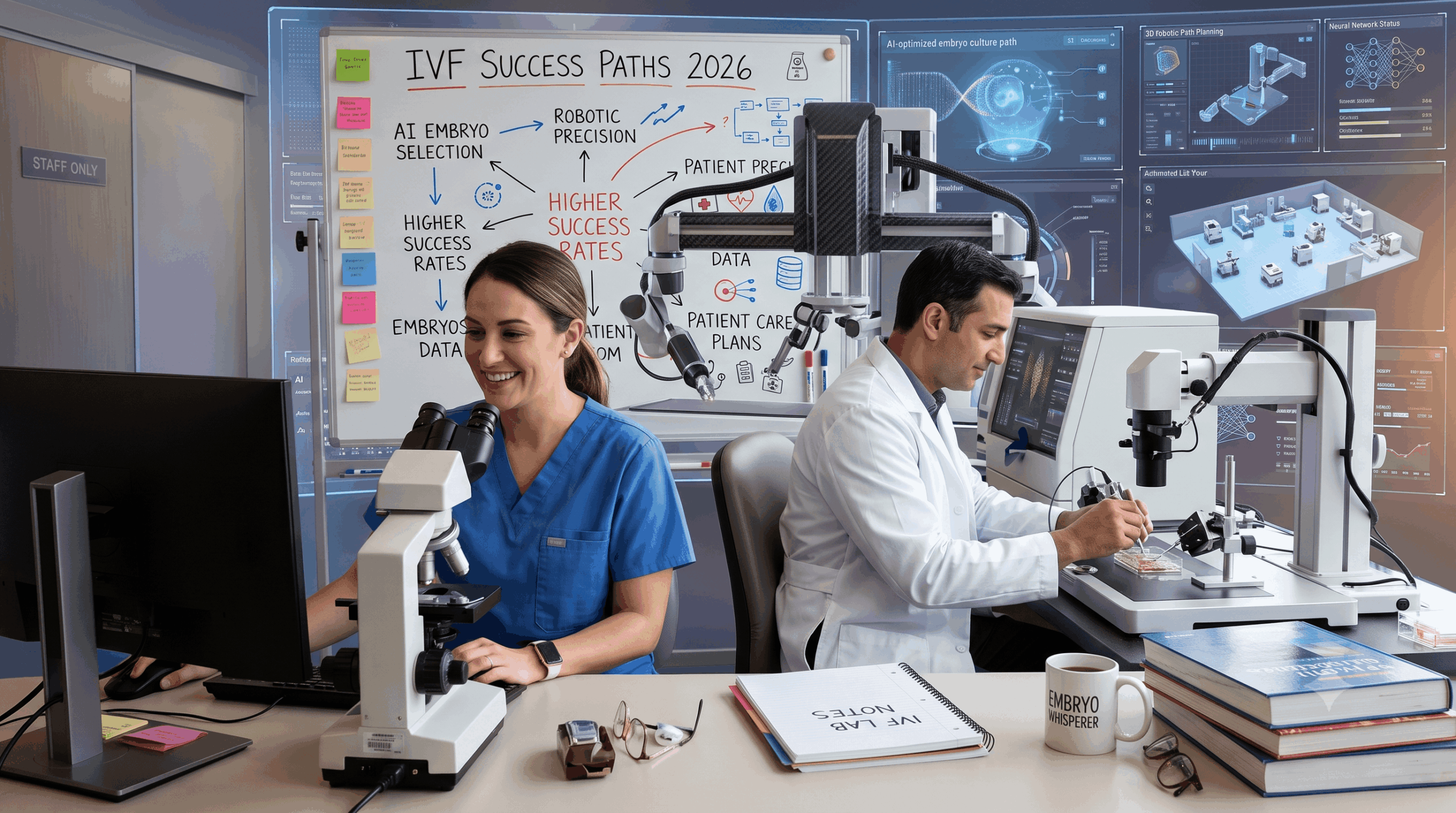
- AI in IVF labs: Fertility centres in Mumbai and Delhi are now using AI embryo selection models to predict implantation success rates, making IVF treatments more successful and cost-efficient.
- AI-assisted robotic gynecologic surgery: Robotic platforms like da Vinci systems, when integrated with AI, provide improved visualisation and precision for procedures like hysterectomies or endometriosis surgeries.
These examples prove that AI is not just futuristic—it’s already transforming surgeries and diagnostic workflows.
Other Advanced AI Technologies Used in Gynaecology
Alongside ultrasound and fertility tools, several smart gynaecology diagnostic tools are gaining traction in India:
- AI-based cervical cancer screening: Deep learning algorithms now analyse Pap smear and colposcopy images for early detection of pre-cancerous cells.
- AI in menstrual health apps: Apps integrated with AI predict ovulation cycles, fertility windows, and hormonal imbalance risks.
- MRI and CT with AI segmentation: Gynecologic oncology is benefiting from AI systems that automatically segment tumours and plan radiotherapy.
- AI for CTG (cardiotocography): Used for fetal monitoring during labour to detect abnormal patterns that may signal fetal distress.
This broad adoption highlights AI’s versatility across women’s health.
Top Brands and Providers for AI Gynaecology Equipment
Clinics and hospitals in India can now access both global and domestic brands:
- GE Healthcare – Voluson AI ultrasound systems, used for fetal heart anomaly detection and automated biometry.
- Siemens Healthineers – AI-enabled OB/GYN ultrasound platforms with automated ovarian follicle counting and fetal brain measurement.
- Philips Healthcare – Offers AI-integrated ultrasound that assists in maternal-fetal imaging with automated reporting.
- Allengers Medical Systems (India) – Known for AI-integrated imaging systems accessible at competitive Indian price points.
- Trivitron Healthcare (India) – Supplies AI-powered diagnostic solutions, including women’s health imaging devices.
For clinics looking for streamlined management of AI-assisted gynaecology workflows, EasyClinic offers EMR and diagnostic integration, ensuring that imaging data, patient histories, and treatment plans are managed on one platform.
Useful EasyClinic links:
Price Points and Service Contracts in India
Adopting AI in gynaecology comes with varied costs depending on equipment sophistication:
- AI ultrasound systems: ₹18 lakh – ₹65 lakh (e.g., GE Voluson AI series, Siemens AI-powered ultrasound).
- Portable AI POCUS probes: ₹2 lakh – ₹5 lakh (ideal for clinics in semi-urban/rural India).
- AI-integrated IVF software: Subscription-based, ₹3–6 lakh annually depending on patient volume.
- Robotic gynaecology surgery systems: ₹6–10 crore upfront, plus ₹20–40 lakh annual maintenance.
Most suppliers in India offer Annual Maintenance Contracts (AMC) or Comprehensive Service Contracts (CMC) to ensure uptime, which is vital for fertility clinics and maternity hospitals.
Patient Results & Treatment Experience with AI Tools
AI’s impact on patient outcomes is already measurable:
- Pregnancy safety: AI-based ultrasounds reduce human error, leading to earlier detection of anomalies and better prenatal interventions.
- IVF success rates: Clinics report a 15–20% increase in embryo implantation success when AI models are used for embryo grading.
- Gynecologic oncology: AI-driven tumour diagnostics help avoid unnecessary surgeries and improve treatment planning.
- Patient confidence: Women report greater trust in clinics that use AI tools, as they perceive them as “modern, accurate, and reliable.”
By improving both clinical accuracy and patient satisfaction, AI gynaecology equipment in India is redefining women’s healthcare experiences.
Challenges in the Current Market
Despite rapid adoption, several challenges remain:
- High costs: Many smaller clinics cannot afford advanced AI gynaecology equipment.
- Training gaps: Gynaecologists and technicians often lack training on AI software usage.
- Regulatory uncertainty: India is still building frameworks for AI-driven medical devices.
- Infrastructure limitations: Rural clinics may not have the bandwidth or digital infrastructure to support AI-enabled equipment.
However, as domestic brands and platforms like EasyClinic step in with affordable integration, these barriers are gradually reducing.
Best Practices & Pro Tips for Clinics
If your clinic is considering AI adoption, here are actionable steps:
- Start with scalable tools: Portable AI-enabled POCUS is a good entry point before investing in large ultrasound machines.
- Partner with trusted suppliers: Brands like GE, Siemens, and Indian providers (Trivitron, Allengers) offer reliable after-sales support.
- Integrate with EMRs: Using EasyClinic software ensures imaging results are directly fed into patient records.
- Train your staff: Allocate budget for hands-on training; AI tools are only as good as the people using them.
- Track ROI: Measure efficiency gains (reduced scan errors, faster IVF planning) to justify costs.
Case Studies: AI in Gynaecology in Action
Case Study 1: AI for Rural Pregnancy Care
A 2025 BioMed Central study showed how AI-enabled portable ultrasound probes in low-income Indian regions allowed midwives to conduct fetal scans without radiologists, improving early detection of high-risk pregnancies.
Case Study 2: Ovarian Tumour Detection
In a multicenter validation published in Nature Medicine, AI-driven ultrasound distinguished benign vs malignant ovarian lesions with 90%+ accuracy. Early adoption in Indian oncology clinics has shown reduced misdiagnosis rates.
Case Study 3: IVF Success in Delhi
An IVF clinic in Delhi adopted AI-based embryo grading. Within six months, implantation success rates improved by 18%, while reducing patient costs per cycle by eliminating multiple failed attempts.
Comparison Table: Global vs Indian AI Gynaecology Equipment
| Brand/Provider | Equipment Type | Price Range (₹) | Pros | Cons |
| GE Voluson AI | Ultrasound + AI | 30–65 lakh | Global benchmark, fetal anomaly detection | Expensive for small clinics |
| Siemens AI Ultrasound | OB/GYN imaging + reporting | 25–60 lakh | High automation, detailed analytics | Needs a skilled operator |
| Allengers Medical Sys. | AI-enabled imaging systems | 15–35 lakh | Affordable, Indian brand support | Limited advanced features |
| Trivitron Healthcare | AI-integrated diagnostic tools | 20–45 lakh | Wide product portfolio, domestic support | Less advanced than GE/Siemens |
| AI IVF Software | Embryo selection, IVF planning | 3–6 lakh (annual) | Improves success rates, scalable | Subscription-based recurring |
Conclusion
The rise of AI gynaecology equipment in India marks a defining moment in women’s healthcare. From AI in women’s health technology like pregnancy ultrasounds to smart gynaecology diagnostic tools for ovarian cancer and IVF, AI is transforming the way clinics operate and patients experience care.
For clinics and hospitals, the choice is clear: adopting AI now means delivering safer, faster, and more personalised care for women. For patients, it means higher IVF success, better pregnancy monitoring, and improved treatment outcomes.
The future of gynaecology in India is AI-driven, patient-centric, and accessible. Now is the time for clinics to invest, integrate, and lead this transformation.
???? Explore more about clinic technology integration with EasyClinic and see how your practice can embrace AI in gynaecology today.