A New Era for Eye Surgery in India
India is home to the largest blind population in the world, with cataract, glaucoma, and diabetic retinopathy leading the statistics. The increasing number of blind patients has forced patients to adapt to recent AI diagnostics methods. Traditional diagnostic and surgical methods, while effective, often struggle to keep pace with the sheer number of patients. This is where technology steps in. AI technology in eye surgery will be a big boon for the eye specialists as well as the patients, as these technologies are smart enough to identify eye defects beforehand, so that eye specialists can start the right medications and treatments before the spread of further infection.
The adoption of AI in eye surgery in India is no longer futuristic; it is a present-day reality, with many clinics already opting for it so that they can reduce hospital admissions. From diagnosing retinal diseases in seconds to guiding surgeons during complex cataract or refractive procedures, artificial intelligence is becoming a trusted partner for ophthalmologists to reduce the surgery time and curb infections before they spread. These big corporations have already started to use these technologies in a better way so that the risks of operations can be reduced with limited hospital admissions.
In this blog, we’ll explore how AI in ophthalmology is shaping surgical precision, diagnosis, pricing, patient outcomes, and what Indian clinics need to know before investing in these advanced solutions.
1. What Are Advanced AI Tools in Ophthalmology and Why They Matter
AI tools in ophthalmology are systems trained to analyse complex eye images, patient data, and surgical inputs to generate insights or assist surgeons in real-time. These tools are transforming the eye surgery procedure day by day with advancements such as automated disease detection, advanced surgical guidance, use of predictive analytics to understand the real eye condition of the patient and how things can shape up in the future. Thereby reducing the risks of corneal infections.
- Automated Disease Detection – Detecting early diabetic retinopathy, glaucoma, and macular degeneration from retinal OCT scans.
- Surgical Guidance – AI tools like Zeiss’ intraoperative platforms optimise incision planning in cataract surgery.
- Predictive Analytics – AI tools are highly capable in forecasting post-surgical complications in a better way, thereby setting up better expectations for the patients.
- Workflow Efficiency – Eye clinics will be able to handle more patients with faster efficiency rates.
For a country like India, where one ophthalmologist serves nearly 80,000 people, AI will ensure advanced treatments and surgeries, with maximum people getting vision post-surgeries. The eye transplantation surgery will be much easier and simpler with AI technology.
2. How AI Helps in Eye Surgery and Disease Diagnosis
In Surgery
- Cataract Surgery: AI algorithms guide lens selection and incision placement, reducing post-operative errors. Verily’s AI surgical planning tools and Zeiss intraoperative systems are prime examples.
- Refractive Surgery (LASIK/SMILE): AI-driven corneal mapping ensures better customisation and safety for the patients and gives an in-depth idea to the eye surgeons on where to exactly clear the infection spread.
- Retinal Surgery: AI-powered robotic systems like PRECEYES assist with delicate manoeuvres, such as treating macular holes or removing retinal membranes.
In Diagnosis
- DeepMind and Moorfields Eye Hospital’s AI demonstrated accuracy equal to specialists in detecting 50+ eye diseases using retinal OCT scans, which played a vital role in improving the efficiency of the specialists, with higher chances of operation success.
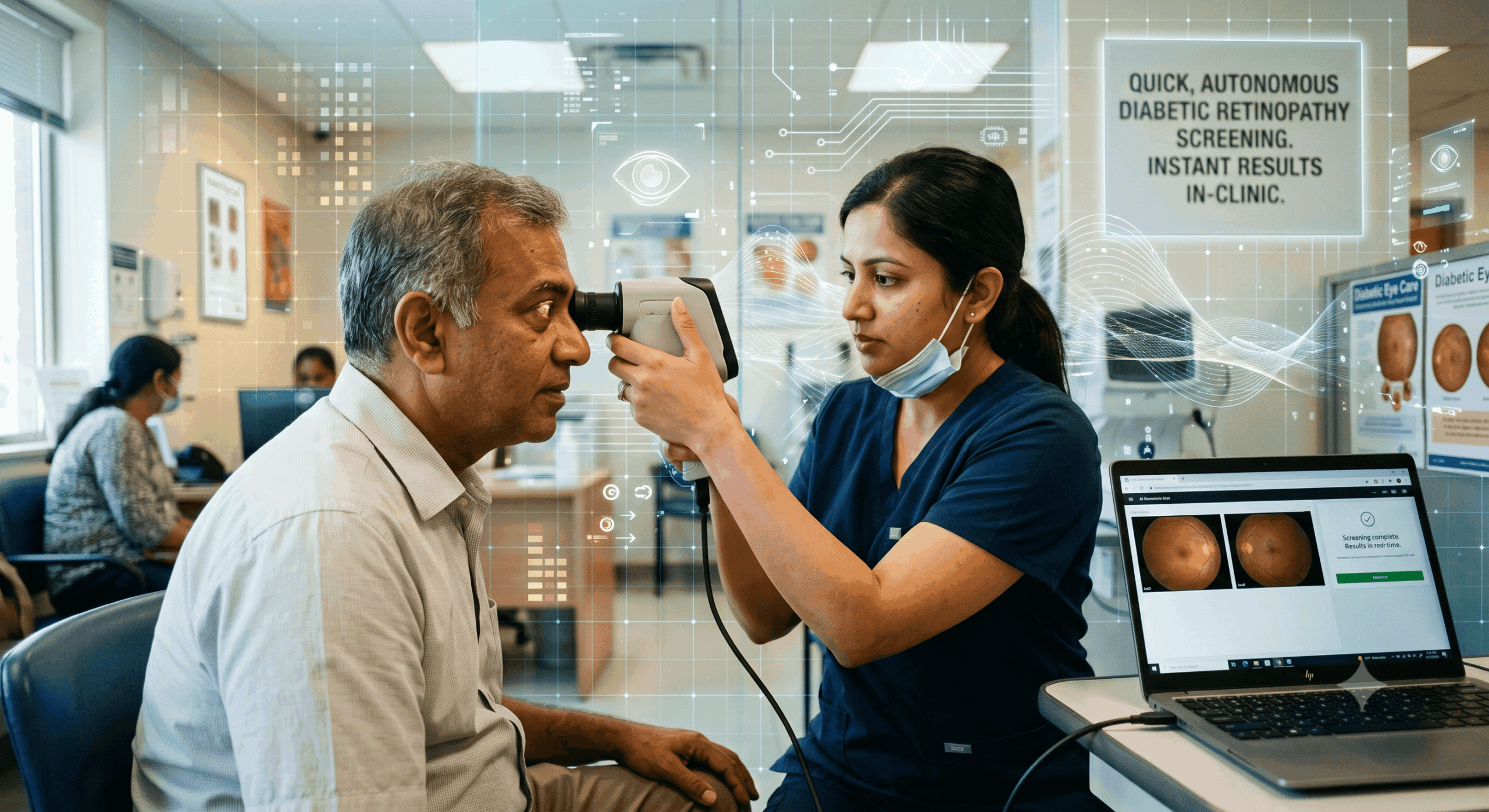
- Indian Initiatives like Aravind Eye Care’s Nayana project use AI to screen for diabetic retinopathy and cataracts in rural populations, thereby giving a brief idea to the eye surgeons on where exactly the infection areas are and where they can be controlled for better surgery success.
By bridging diagnostic gaps, AI makes ophthalmology more proactive than ever before, with advanced laser eye precision surgery clubbed with AR/VR, 3D/4D models. These tools give an in-depth view of the eye with an accurate diagnosis.
3. Other Recent AI Technologies Used in Eye Surgery
AI’s role is expanding across multiple sub-specialities:
- AI in Glaucoma Management: Continuous monitoring of optic nerve health with predictive algorithms and analytics, which plays a vital role in helping glaucoma patients.
- Tele-Ophthalmology with AI: Remote eye screening tools with AI interpretation for rural clinics.
- AI-Enhanced Imaging: OCT devices with AI layers that highlight abnormalities instantly.
- AI in Corneal Surgery: Predicts healing outcomes and reduces refractive surprises post-surgery.
- Robotics + AI: Microsurgery platforms combining precision robotics with AI visual guidance for safer, faster outcomes.
These innovations are not only cutting-edge but also highly relevant for India’s volume-driven eye care sector.
4. Top Brands and Providers of AI Ophthalmology Tools
International Leaders
- Google DeepMind & Moorfields Eye Hospital – AI model for retinal OCT scans, detecting multiple eye conditions in a single go. These retinal OCT scans play a vital role for the eye specialists to handle multiple operations.
- Verily Life Sciences (Alphabet) – AI-assisted cataract surgical planning.
- Zeiss Ophthalmology – AI-based intraoperative guidance systems for cataract and refractive surgeries.
- PRECEYES – AI-powered robotic microsurgery system for retinal procedures.
Indian Providers & Initiatives
- Aravind Eye Care (Nayana AI project) – Scalable diabetic retinopathy screening.
- Forus Health – Affordable AI-enabled screening devices for rural India.
- Niramai & Startups – Exploring AI in ocular imaging and screening at scale.
For Indian clinics, combining global expertise with local innovations provides a balance of affordability and cutting-edge technology.
5. Price Points and Service Contracts in India
The cost of adopting AI in ophthalmology depends on whether it’s diagnostic AI software, imaging devices, or surgical robotics.
| AI Tool / System | Use Case | Price in India (Approx.) | AMC/Service Costs |
| AI-powered Retinal Screening (Forus, Nayana) | Rural & diabetic screening | ₹5 – 15 Lakh | ₹1 – 2 Lakh/year |
| AI-enabled OCT Imaging (Zeiss, Topcon) | Retinal & glaucoma | ₹25 – 50 Lakh | ₹3 – 5 Lakh/year |
| AI Cataract Surgical Planning (Verily, Zeiss) | Intraoperative assistance | ₹80 Lakh – 1.5 Crore | ₹7 – 10 Lakh/year |
| Robotic Microsurgery (PRECEYES) | Retinal surgery | ₹2.5 – 4 Crore | ₹20 – 25 Lakh/year |
Tip for Clinics: Leasing models and pay-per-use agreements are becoming common in India, making AI adoption easier without heavy upfront investments.
6. Patient Results & Treatment Experience
For patients, AI in eye surgery in India translates into:
- Earlier Detection: Conditions like diabetic retinopathy can be caught years before symptoms.
- Safer Surgeries: AI reduces complications by improving surgical planning.
- Faster Recovery: Customised treatments based on AI insights often mean shorter recovery times.
- Confidence & Trust: Knowing their surgeon is supported by AI enhances patient trust.
At Aravind Eye Care, the use of AI screening tools has already improved early detection rates of diabetic retinopathy in underserved communities, reducing the risk of blindness.
7. Internal Resource for Clinics
For clinics planning to adopt AI technologies, seamless integration with EMR and management systems is essential. Explore:
- EasyClinic Features
- EasyClinic Pricing
- Aesthetic EMR Software
- How to Legally Set Up a Clinic in India
EasyClinic ensures data from AI tools flows directly into patient management workflows, enabling smoother operations.
8. Challenges in the Indian Market
Despite the promise, several challenges exist:
- High Costs: AI-enabled devices remain expensive for smaller clinics.
- Regulatory Clarity: AI medical device approvals in India are still evolving.
- Training Needs: Doctors and technicians require specialised training.
- Patient Awareness: Some patients may hesitate to trust AI-assisted procedures.
- Rural Connectivity Issues: Tele-ophthalmology solutions depend on strong internet access.
Overcoming these hurdles requires public-private partnerships, subsidies, and continued education for both patients and providers.
9. Best Practices & Pro Tips for Clinics
- Start small with AI diagnostic tools before investing in surgical robotics.
- Use AI screening for high-volume conditions like diabetic retinopathy and cataracts.
- Integrate with EMRs like EasyClinic to centralise data.
- Explore government schemes or partnerships for financial support.
- Offer patient education campaigns to build trust in AI-driven care.
10. Case Studies & Real-World Examples
- DeepMind + Moorfields Hospital (UK): AI matched specialists in accuracy for over 50 eye conditions, now influencing adoption in India.
- Aravind Eye Care (India): AI-enabled screening in rural villages, thousands of patients diagnosed early.
- Zeiss AI Cataract Planning: Reduced surgical complications and optimised lens selection in high-risk patients.
- PRECEYES Robotic Surgery: First retinal surgeries in Europe showed extreme precision, with pilots being considered in Asia, including India.
These examples demonstrate that AI is not experimental anymore—it’s being applied successfully across the globe and locally.
Conclusion: The Future of AI in Ophthalmology in India
The integration of AI in eye surgery in India is reshaping the way ophthalmologists diagnose and treat patients. From artificial intelligence in eye disease diagnosis to AI-assisted cataract and retinal surgeries, the transformation is already underway.
For clinics, the benefits are clear: improved accuracy, efficiency, and patient trust. While challenges like cost and training remain, the ROI and life-saving potential are undeniable.
Adopting these tools early can give Indian clinics a competitive edge while delivering world-class care. By pairing AI systems with platforms like EasyClinic, clinics can ensure smoother workflows, compliance, and sustainable growth.
If you’re exploring AI adoption in your ophthalmology practice, now is the time. Start with diagnostic AI tools, integrate them into your EMR, and scale gradually towards advanced surgical AI systems. The future of ophthalmology in India is intelligent, precise, and powered by AI.