AI In Healthcare: The Future Of Medical Transformation
Artificial Intelligence (AI) is no longer a futuristic concept in medicine; in fact, today it’s a reality with so many doctors, hospitals, and clinics using it today deliver quicker results to the patients, thereby reducing surgery costs for the patients and less treatment time for the doctors. These AI software are highly capable of detecting any abnormalities beforehand, thereby helping the doctors to give advanced medications to reduce the disease complications or chances of ICU, Operation, or Surgery. Today, it is actively shaping how doctors diagnose, how clinics manage patient records, and how hospitals deliver care. From AI-powered imaging analysis to predictive analytics, technology is enabling medical teams to achieve faster, more accurate, and more patient-centred outcomes.
Recent studies highlight the scope: AI-enabled solutions can potentially save global healthcare systems over $150 billion annually by 2026 through efficiency gains, early disease detection, and workflow automation. Thereby saving time for the doctors and patients. Early disease detection will play a vital role in saving patients’ lives. In fact, AI and robotics will play a vital role in boosting life expectancy in our country by 3-4 years. For India, with its massive patient volumes and doctor shortages, the opportunity is even more transformative.
In this blog, we will cover how AI in healthcare for doctors and clinics will be highly beneficial for the doctors and clinics with concrete examples of real-world tools, patient outcomes, costs, and providers, including how platforms like EasyClinic fit into this digital ecosystem.
1. How Doctors and Clinics Are Using AI Today?
AI is no longer a “luxury” for big corporate hospitals; it is increasingly accessible to small and mid-sized clinics, helping doctors save time, cut costs, and improve accuracy. Here’s a closer look at where AI is being used:
a) AI in Diagnostics
One of the most important applications of AI is in diagnostics, where speed and accuracy can mean the difference between life and death. With the usage of AI in diagnostics, the detection of diseases has become easier and simpler, with error-free diagnostic reports.
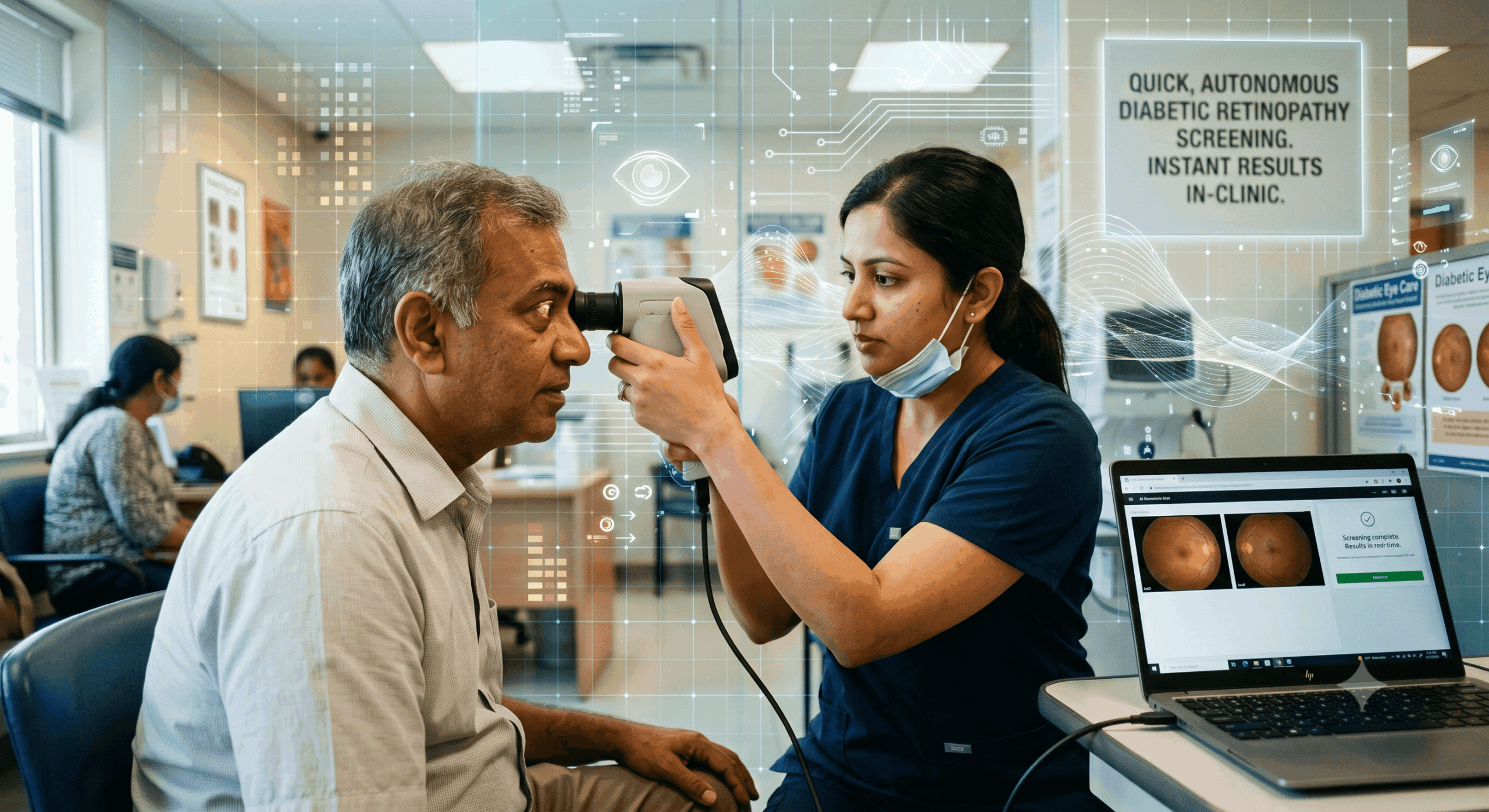
- LV Prasad Eye Institute, Hyderabad: Doctors validated an AI-enabled smartphone-based fundus camera for glaucoma screening. It achieved 92% accuracy, 91.4% sensitivity, and 94.1% specificity, proving how accessible tools can make high-quality screening possible even in smaller towns (Times of India).
- Qure.ai’s AI for Radiology: Already deployed in multiple Indian states, Qure.ai’s AI detects tuberculosis and brain injuries in chest and head scans. It is speeding up reporting in rural areas where radiologists are scarce.
b) AI for Clinical Documentation
Documentation is often the biggest burden for doctors. AI now handles this task seamlessly by generating auto-discharge summaries, treatment plan suggestions, prescription automation, and treatment plan suggestions.
- Apollo Hospitals uses AI to auto-generate discharge summaries, suggest treatment plans, and automate prescriptions, saving doctors 2–3 hours daily (Reuters).
- Sunoh.ai transcribes patient-doctor conversations in real time, producing SOAP-format notes ready to upload into the EMR. This means doctors spend more time talking to patients, not typing on a screen.
c) AI in Patient Monitoring
Wearable devices and AI-enabled monitors are being adopted by urban clinics and speciality hospitals to track ECG data 24/7, alert doctors in case of abnormalities and AI-powered apps are playing a vital role in tracking chemotherapy side effects and notifying doctors when needed.
- AI-enabled cardiac patches track ECG data 24/7 and alert doctors about dangerous arrhythmias before they occur.
- In oncology, AI-powered monitoring apps help track chemotherapy side effects and notify doctors when intervention is needed.
d) AI for Patient Communication
AI chatbots and virtual assistants are making healthcare more accessible.
- Oncology chatbot in Gujarat (SSG Hospital, Vadodara): A trilingual AI chatbot helps cancer patients with appointment booking, treatment guidance, and post-care instructions, making hospital systems easier to navigate.
- Clinics across metros now deploy AI-enabled chat systems for answering FAQs, sending reminders, and guiding patients on pre-surgery preparation.
e) AI in Clinical Decision-Making
Doctors still make the final call, but AI tools support them with evidence-based suggestions.
- A review in PMC confirms AI aids in detecting anomalies in scans, predicting patient outcomes, and refining differential diagnoses.
- AI in dermatology apps, for example, can detect early signs of skin cancer with up to 95% accuracy, enabling faster referrals to specialists.
f) AI in Administrative Workflows
AI is streamlining clinic operations:
- Appointment scheduling based on historical data.
- Predictive analytics for patient no-shows.
- Automated insurance verification and billing error detection.
Key Takeaway: Doctors and clinics use AI across diagnostics, decision-making, documentation, patient engagement, and even back-office operations—making healthcare more accurate, efficient, and patient-focused.
2. Concrete Examples of AI Tools in Practice
a) Diagnostic Imaging
AI algorithms analyse X-rays, CT scans, and MRIs with remarkable accuracy.
- Aidoc, for example, flags urgent abnormalities such as brain bleeds, helping radiologists prioritise cases.
- In India, AI is being piloted in tuberculosis detection through chest X-rays, reducing delays in rural areas.
b) Clinical Documentation
- Tools like Sunoh.ai convert doctor-patient conversations into structured medical notes.
- Generative AI research has shown that SOAP notes and discharge summaries can be created directly from audio transcripts—cutting clinician workload significantly.
- Automated AI medical scribes are now widely used, helping reduce burnout by handling repetitive documentation.
c) Patient Communication
- AI-driven chatbots and virtual assistants help clinics handle routine inquiries, book appointments, and guide patients through pre- and post-surgery care.
- The Gujarat oncology chatbot is a prime case of improving access in multilingual communities.
d) Predictive Analytics
- Hospitals are using AI to predict patient readmissions, antibiotic resistance, and even the likelihood of complications after surgery.
- Predictive tools help clinicians intervene early, reducing costs and improving outcomes.
3. Advanced AI Technologies in Healthcare
Beyond common applications, advanced AI is pushing boundaries:
- AI in clinical decision-making: A review published in PMC shows AI aids doctors by flagging anomalies in imaging, predicting treatment outcomes, and refining differential diagnoses.
- AI for triage: AI chatbots and decision engines, like those piloted in Indian telemedicine startups, prioritise emergency cases and direct routine ones to nurse practitioners.
- AI for EMRs: Platforms such as EasyClinic integrate AI to analyse patient records, highlight red flags, and recommend next steps, giving doctors a real-time decision support system.
- Global innovation: The World Economic Forum notes AI is already assisting in fracture detection, early cancer screenings, and large-scale triage in underserved regions.
4. Top Brands and Providers for AI Tools and Software
The AI healthcare ecosystem includes both global giants and specialised startups.
Global Providers
- Aidoc – Imaging AI for radiology and emergency departments.
- IBM Watson Health – Oncology and clinical data analysis.
- Philips IntelliSpace AI – Workflow-integrated diagnostic imaging.
Indian and Local Providers
- HealthRay – AI-enabled EMR and dashboards.
- Niramai – Thermal AI for breast cancer screening.
- Qure.ai – AI imaging for chest and brain scans, deployed in India’s TB programs.
EasyClinic – AI for Everyday Clinics
EasyClinic is designed specifically for clinics and private practitioners in India. Its AI-driven EMR and workflow solutions include:
- AI-powered patient records.
- Smart documentation and compliance tools.
- Affordable pricing models suited to small clinics.
- Integrated EMR for aesthetics, dental, and ophthalmology.
EasyClinic is proof that AI tools are not just for hospitals—they are being built for small and mid-sized clinics too, ensuring wider adoption.
5. Price Points and Service Contracts
The cost of AI in healthcare varies significantly:
| AI Tool | Price Range (India) | Service Model |
| AI Imaging Software (Aidoc, Qure.ai) | ₹4–6 lakh per year | Subscription, cloud updates |
| AI EMR Systems (EasyClinic, HealthRay) | ₹2,000–₹10,000 per month | SaaS subscription |
| AI Chatbots & Virtual Assistants | ₹1–2 lakh annually | AMC + customization |
| AI Medical Scribes (Sunoh.ai) | ₹3,000–₹7,000/month/doctor | Subscription-based |
| AI Diagnostic Devices (AI stethoscope) | ₹40,000–₹1.2 lakh/device | Warranty + AMC |
Tip for clinics: Most providers offer SaaS models, reducing upfront investment. Service contracts typically include updates, support, and compliance upgrades.
6. Patient Results and Treatment Experience
AI is reshaping how patients experience healthcare:
- Faster diagnosis: NHS stroke trials show AI can improve recovery rates from 16% to 48% by reducing delays.
- Personalised care: Oncology chatbots in Gujarat allow patients to get instructions in their own language, improving adherence.
- More trust in care: Patients report higher satisfaction when AI-driven imaging is used, as doctors can explain results with more confidence.
- Convenience: Same-day summaries, faster discharge, and less waiting time are all results of AI in workflows.
For clinics, these outcomes build loyalty, reduce complaints, and attract new patients.
7. Challenges in the Current Market
While promising, AI adoption comes with hurdles:
- Cost barriers: Smaller clinics hesitate due to perceived high costs.
- Training gaps: Doctors need hands-on training to trust AI suggestions.
- Data privacy: Patient data handling must meet legal compliance.
- Trust issues: Patients and clinicians alike remain cautious about AI making “life-and-death” decisions.
Solutions:
- Affordable SaaS models (like EasyClinic).
- Awareness campaigns about AI’s role as an assistant, not a replacement.
- Strong regulatory frameworks to protect patient data.
8. Best Practices for Clinics Adopting AI
- Start small: Begin with AI EMR systems or diagnostic support, then expand.
- Vendor partnerships: Choose providers who offer training and AMC support.
- Integrate AI gradually: Avoid overwhelming staff—introduce features step by step.
- Use AI for decision support: Position AI as an assistant, not as a replacement for clinical judgment.
- Leverage internal systems: Sync AI with EasyClinic EMR to centralise patient data.
9. Case Studies of AI in Healthcare
Case Study 1: Apollo Hospitals, India
- Problem: High patient loads meant doctors spent up to 50% of their time on paperwork.
- AI Solution: Apollo implemented AI systems to generate discharge summaries, draft treatment plans, and manage antibiotic stewardship.
- Impact: Doctors saved 2–3 hours per day, increasing patient-facing time and improving satisfaction scores.
Case Study 2: LV Prasad Eye Institute, Hyderabad
- Problem: Glaucoma detection is often missed in rural screenings due to a lack of ophthalmologists.
- AI Solution: AI-enabled fundus cameras with smartphone integration.
- Impact: Achieved 92% diagnostic accuracy, with the ability to screen hundreds of patients daily, expanding reach to underserved regions.
Case Study 3: NHS Stroke Units, UK
- Problem: Delayed diagnosis of strokes led to poorer recovery.
- AI Solution: AI-assisted CT scan analysis cut diagnosis time by over one hour.
- Impact: Recovery rates tripled, improving patient quality of life dramatically.
Case Study 4: Gujarat Oncology Chatbot
- Problem: Language barriers limited patient engagement in oncology care.
- AI Solution: Multilingual AI chatbot for treatment guidance and appointment management.
- Impact: Improved adherence, reduced patient confusion, and cut down nurse time spent on repetitive instructions.
Case Study 5: Qure.ai for TB Screening
- Problem: Lack of radiologists in rural areas delays TB detection.
- AI Solution: Qure.ai’s chest X-ray AI deployed in mobile vans and primary health centres.
- Impact: Thousands of TB cases identified earlier, reducing transmission and treatment delays.
Case Study 6: Sunoh.ai for Documentation
- Problem: Doctors are spending excessive time typing notes.
- AI Solution: AI-powered transcription and summarisation tool integrated into EMRs.
- Impact: Reduced average consultation documentation time from 12 minutes to under 2 minutes.
Comparison Table: AI vs Traditional Healthcare Approaches
| Aspect | Traditional | AI-Enabled |
| Diagnosis | Manual, slower | Faster, higher accuracy |
| Documentation | Manual typing | AI transcription & notes |
| Patient Support | Limited, in-person only | 24/7 chatbots, multilingual |
| Cost Efficiency | High repeat costs | Long-term savings |
| Clinical Decision | Doctor-only | Doctor + AI decision support |
Conclusion: The Future of AI in Healthcare for Doctors and Clinics
The adoption of AI in healthcare for doctors and clinics is no longer optional—it is a necessity. From diagnosing diseases faster to reducing burnout among clinicians, AI is delivering measurable improvements across the ecosystem.
Whether it’s AI tools for medical practice like Sunoh.ai, AI in clinical decision-making with Aidoc or Qure.ai, or integrated EMR solutions like EasyClinic, the evidence is clear: AI helps doctors focus on what matters most—patients.
The journey is just beginning, but clinics that embrace AI today will be tomorrow’s leaders in patient care.
Ready to explore practical AI adoption for your clinic? Discover EasyClinic Features and Pricing to see how your practice can integrate AI seamlessly.