The Digital Future of Orthodontics
Orthodontics has always been about precision, moving teeth into the right position to create healthier bites and confident smiles with the use of braces and other treatments. But achieving this precision has traditionally required multiple appointments, manual impressions, and years of incremental adjustments, which was highly time-consuming and took years to adjust the tooth alignment issue. That’s now changing with AI in orthodontics in India, with faster diagnosis and treatments that can reduce the treatment time with more precision. With that, the tooth alignment can be made more perfect and highly accurate, which wasn’t possible earlier.
Artificial Intelligence is streamlining orthodontic workflows, enabling AI-powered dental aligners, real-time smile simulations, and diagnostic imaging support that’s far faster and more accurate than traditional methods. With India’s growing middle-class demand for cosmetic dentistry and clear aligners, AI adoption in orthodontics is not just a global trend; it’s a local necessity. These latest AI inventions have made orthodontic treatments much easier with far higher accuracy, as the advanced diagnostic machines play a vital role in detecting tooth alignment issues at a faster rate, with minor issues in alignment that can be rectified before treatment.
This blog explores how doctors and clinics in India are already using AI for orthodontics, real-world case examples, technology providers, cost models, and patient outcomes—while also showing where solutions like EasyClinic fit into this transformation.
1. How Doctors and Clinics Are Using AI Today for Orthodontic Treatments
Dentists and orthodontists in India are increasingly leveraging AI in three core areas: diagnosis, treatment planning, and patient engagement. The recent advancements include an AI-powered aligner, AI smile design, and AI in decision support. These advanced machines and software can easily detect tooth pattern recognition algorithms with movement strategies and result predictions. The new AI tool, named AI in smile design, plays a vital role in producing smile reviews on patient smartphones, thereby giving dentists a clearer analysis.
- AI-powered aligner planning: A 2022 review notes how AI’s pattern recognition algorithms can design tooth movement strategies for clear aligners, predicting stages and results (ResearchGate).
- AI in smile design: Invisalign’s SmileView AI simulation produces near-instant smile previews on patient smartphones, helping doctors improve case acceptance (Nature).
- AI for cephalometric analysis: Indian clinics using AI software can automatically detect cephalometric landmarks, reducing analysis time from 30 minutes to under 5 minutes.
- AI in decision support: Journals highlight how AI assists in deciding whether orthodontic cases require extraction or even orthognathic surgery (Journal of Dental Research).
In short, Indian orthodontists are now using AI not just for cosmetic aligner cases but also for complex skeletal corrections and long-term treatment monitoring.
2. Real Concrete Examples of AI in Orthodontic Treatments
AI in orthodontics isn’t theoretical—it’s already integrated into practice globally and in India.
- Invisalign’s AI-powered aligners: Align Technology uses AI to map millions of cases worldwide. Indian Invisalign providers can now show accurate smile predictions before patients commit.
- SoftSmile Aligner Design Software: This AI-powered in-house platform helps orthodontists stage tooth movements, use a virtual articulator, and reduce reliance on third-party labs.
- MDPI Clinical Review: Studies show AI supports airway evaluation, cervical vertebrae maturation, and extraction planning, providing educational and clinical decision-making support for Indian dentists.
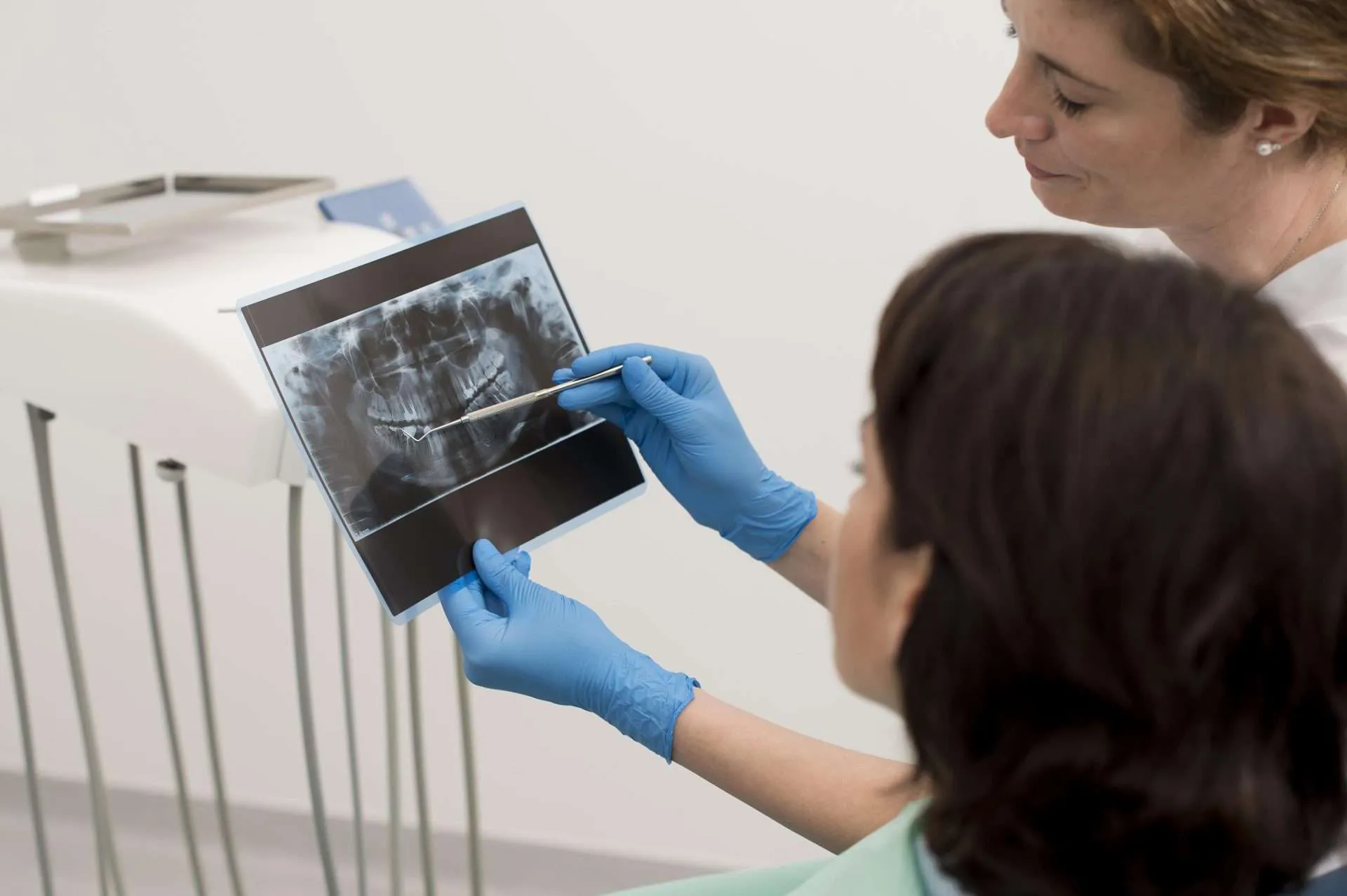
- CNN-powered orthodontic imaging: Convolutional Neural Networks (CNNs) are being used to detect landmarks and malocclusions on CBCT scans, increasing accuracy and reducing manual labour (arXiv).
These examples highlight that AI-powered dental aligners and smile simulations aren’t just futuristic—they are reshaping Indian orthodontic practice today.
3. Other Advanced AI Technologies Being Used in Orthodontics
Beyond aligners and smile simulations, other AI technologies are entering orthodontics:
- AI in CBCT Analysis: Reviews confirm AI can segment teeth, map airways, and classify malocclusions. This reduces diagnostic delays and improves planning in crowded clinics.
- 3D Bioprinting + AI: Emerging tools integrate AI-driven design with 3D printing for surgical guides and orthodontic appliances.
- AI in remote monitoring: Some aligner companies are piloting AI-driven photo monitoring apps where patients upload selfies and the AI checks treatment progress, alerting doctors if the aligner fit is off.
- Educational AI tools: Orthodontic residents use AI-powered simulation platforms to practice treatment planning on virtual patients.
These advancements reduce chair time, improve accuracy, and make orthodontics more patient-friendly.
4. Top Brands and Providers for AI Tools & Software
Several global and local providers are leading AI in orthodontics:
- Align Technology (Invisalign): Pioneers in AI-powered smile simulations and aligner planning.
- SoftSmile: In-house aligner design software that automates staging and tooth positioning.
- Planmeca & 3Shape: Provide AI-driven CBCT analysis and intraoral scanning solutions.
- Qure.ai: While known for radiology, Qure.ai’s algorithms are being adapted for dental imaging in India.
EasyClinic – AI for Everyday Clinics
Platforms like EasyClinic are critical for Indian clinics adopting AI. EasyClinic provides:
- AI-powered EMR integration for orthodontics and aesthetic practices.
- Affordable subscription pricing for small to mid-sized dental clinics.
- Compliance and workflow management so orthodontists can focus on patient care while meeting regulatory standards.
5. Price Points and Service Contracts
AI orthodontic technology varies in cost depending on the scope:
| AI Tool | Price (India) | Service Model |
| Invisalign AI-powered aligners | ₹1.5–3.5 lakh per case | Pay-per-case model |
| SoftSmile in-house software | ₹1–2 lakh per year | Subscription license |
| CBCT AI diagnostic add-ons | ₹3–5 lakh | Software module + AMC |
| AI smile simulation apps | ₹50,000–₹1 lakh | SaaS subscription |
| EasyClinic EMR with AI | ₹2,000–₹10,000/month | Cloud-based SaaS |
Clinics should assess ROI carefully, but most find AI tools boost case acceptance rates and reduce chair time—offsetting the cost quickly.
6. Patient Results & Treatment Experience with AI Tools
Patients are experiencing noticeable benefits from AI in orthodontics:
- Faster treatment planning: Digital scans and AI simulations cut waiting time for aligner delivery.
- Higher trust in outcomes: Smile simulations help patients visualise results, boosting confidence in treatment.
- Remote progress monitoring: AI-powered apps reduce unnecessary clinic visits.
- Better results: A clinical audit of Invisalign’s SmileView tool showed high consistency between predicted and actual post-treatment smiles, especially in smile width and buccal corridor (Nature).
For patients in India, balancing busy lifestyles, the AI-driven orthodontic experience feels faster, smarter, and personalised.
7. Internal Links: AI in Healthcare Category
Orthodontics is part of the broader story of AI in medicine. For a deeper dive, readers can explore related insights in the AI in Healthcare section on EasyClinic.
8. Challenges in the Recent Orthodontic AI Market
Adopting AI in orthodontics in India comes with challenges:
- High cost: AI-powered aligners like Invisalign remain premium options compared to braces.
- Training gaps: Dentists must learn to interpret AI-driven cephalometric or CBCT outputs.
- Data privacy: Patient scans and photos require strict compliance.
- Scepticism: Some patients worry AI may “replace” human doctors rather than assist them.
Solutions include:
- Wider use of in-house software like SoftSmile to cut costs.
- AI adoption in affordable SaaS models via EasyClinic.
- Patient education campaigns emphasising AI as a support, not a substitute, for orthodontists.
9. Case Studies and Examples
Case Study 1: Invisalign SmileView in India
- Scenario: Invisalign providers offered patients instant AI smile simulations.
- Result: Case acceptance rates increased by 30% as patients could visualise outcomes before committing.
Case Study 2: SoftSmile in a Delhi Orthodontic Clinic
- Scenario: Clinic adopted SoftSmile to design in-house aligners.
- Result: Cut outsourcing costs by 40% and reduced aligner turnaround time by two weeks.
Case Study 3: AI in CBCT Analysis at a Mumbai Practice
- Scenario: An Orthodontist used an AI add-on for CBCT scans.
- Result: Automated airway mapping and malocclusion classification reduced planning time from 40 minutes to 10 minutes.
Case Study 4: EasyClinic Adoption in a Multi-Speciality Dental Centre
- Scenario: A Bangalore clinic integrated EasyClinic’s AI EMR for orthodontic workflows.
- Result: Unified patient records, faster compliance, and smoother aligner treatment monitoring.
Comparison Table: Traditional vs AI in Orthodontics
| Aspect | Traditional Orthodontics | AI-Powered Orthodontics |
| Treatment Planning | Manual impressions, longer time | Digital scans + AI staging |
| Smile Simulation | Conceptual, limited visualisation | Instant AI-powered previews |
| Patient Monitoring | Frequent in-person visits | Remote AI monitoring via apps |
| Cost Efficiency | Higher lab and manpower costs | ROI via faster acceptance + reduced chair time |
| Accuracy | Dependent on experience | Consistent, AI-driven precision |
The Future of AI in Orthodontics in India
The adoption of AI in orthodontics in India is accelerating. From AI-powered dental aligners to artificial intelligence in smile design, clinics are finding that these tools improve precision, patient experience, and profitability.
Solutions like Invisalign and SoftSmile lead globally, but platforms like EasyClinic make AI workflows practical and affordable for everyday Indian clinics. By embracing AI now, orthodontists can meet patient demand for faster, more aesthetic, and more personalised treatments.
Ready to modernise your dental clinic? Explore EasyClinic Pricing and EasyClinic Features to integrate AI into your orthodontic practice.