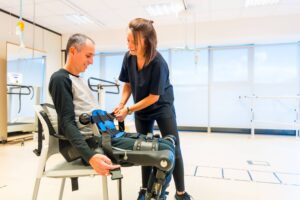
Orthopedic care is a specialized field that requires precise diagnostics, personalized treatment plans, and continuous monitoring of patient progress. With the integration of AI in Orthopedic EMR, healthcare providers can now deliver enhanced bone health care like never before. From custom examination forms to detailed growth & progress charts, orthopedic EMR solutions are revolutionizing how bone and joint conditions are diagnosed, managed, and treated. In this blog, we’ll explore how AI is transforming orthopedic EMR systems, the benefits it brings, and why it’s a game-changer for bone health care.
The Challenges in Traditional Orthopedic Care
Orthopedic specialists often face significant challenges when managing bone and joint conditions:
- Complex Data Management: Orthopedic care involves tracking a wide range of data, including imaging results, physical therapy progress, and surgical histories. Managing this manually is time-consuming and prone to errors.
- Delayed Diagnoses: Without real-time insights, identifying critical conditions like fractures or osteoporosis can be delayed, impacting patient outcomes.
- Inefficient Documentation: Traditional EMR systems lack specialized tools for orthopedics, leading to inefficient workflows and incomplete patient records.
- Limited Personalization: Generic treatment plans may not address the unique needs of each patient, reducing the effectiveness of care.
These challenges highlight the need for smarter, more efficient solutions—enter AI in Orthopedic EMR.
How AI in Orthopedic EMR Enhances Bone Health Care
AI-powered orthopedic EMR software is designed to address these challenges head-on. Here’s how it’s making a difference:
1. Custom Examination Forms
AI enables the creation of custom examination forms tailored to specific orthopedic conditions. Whether it’s a knee injury or spinal deformity, these forms ensure that all relevant data is captured accurately and efficiently.
2. Growth & Progress Charts
With growth & progress charts, orthopedic specialists can track patient recovery over time. AI analyzes data from physical therapy sessions, imaging results, and patient feedback to provide a comprehensive view of progress.
3. Real-Time Diagnostics
AI algorithms can analyze imaging results, such as X-rays and MRIs, in real time. This helps identify fractures, degenerative conditions, or abnormalities that might be missed by the human eye.
4. Personalized Treatment Plans
By analyzing patient history, lifestyle factors, and treatment responses, AI helps create tailored treatment plans that improve outcomes and enhance patient satisfaction.
Benefits of AI in Orthopedic EMR
The integration of AI in Orthopedic EMR offers numerous benefits for both healthcare providers and patients:
Improved Diagnostic Accuracy
AI’s ability to analyze complex data sets ensures more accurate diagnoses, reducing the likelihood of errors and misdiagnoses.
Enhanced Efficiency
Automating data entry and administrative tasks frees up orthopedic specialists to focus on patient care, improving overall clinic efficiency.
Better Patient Outcomes
With real-time insights and personalized treatment plans, patients receive timely and effective care, leading to improved health outcomes.
Streamlined Workflows
AI-powered tools simplify tasks like documentation, data entry, and reporting, allowing orthopedic specialists to work more efficiently.
Real-World Impact: AI in Action
Imagine an orthopedic clinic struggling to manage the high volume of patient data from imaging results, physical therapy sessions, and surgical histories. Manual documentation was time-consuming, and critical findings were sometimes overlooked.
After implementing AI in Orthopedic EMR, the clinic saw a dramatic transformation. The AI system analyzed imaging results in real time, flagged abnormalities, and provided actionable insights to orthopedic specialists. Custom examination forms ensured that all relevant data was captured accurately, while growth & progress charts tracked patient recovery over time.
For example, the AI system detected early signs of osteoporosis in a patient during a routine check-up, enabling timely intervention and preventing potential complications.
The Future of AI in Orthopedic EMR
The potential of AI in Orthopedic EMR is vast. Future advancements may include predictive analytics to forecast bone health risks, AI-driven imaging tools for more precise diagnostics, and virtual assistants to support orthopedic specialists during procedures.
As AI technology evolves, it will play an even greater role in delivering enhanced bone health care, ensuring that patients receive the best possible treatment tailored to their unique needs.
Conclusion
AI in Orthopedic EMR is transforming the way bone health care is delivered. By leveraging advanced tools like custom examination forms and growth & progress charts, orthopedic specialists can provide more accurate diagnoses, personalized treatment plans, and timely interventions.
For clinics looking to enhance their orthopedic care, adopting Orthopedic EMR Solutions powered by AI is no longer optional—it’s essential. Easy Clinic, a leading provider of AI-driven EMR solutions, offers cutting-edge tools designed to streamline workflows, improve diagnostics, and deliver enhanced bone health care.
Discover how Easy Clinic can revolutionize your orthopedic practice today—because every step toward better bone health matters.
Learn more about Easy Clinic’s AI-powered Orthopedic EMR here.
Explore how AI enhances diagnostics in orthopedics.
See how AI streamlines workflows for orthopedic specialists.