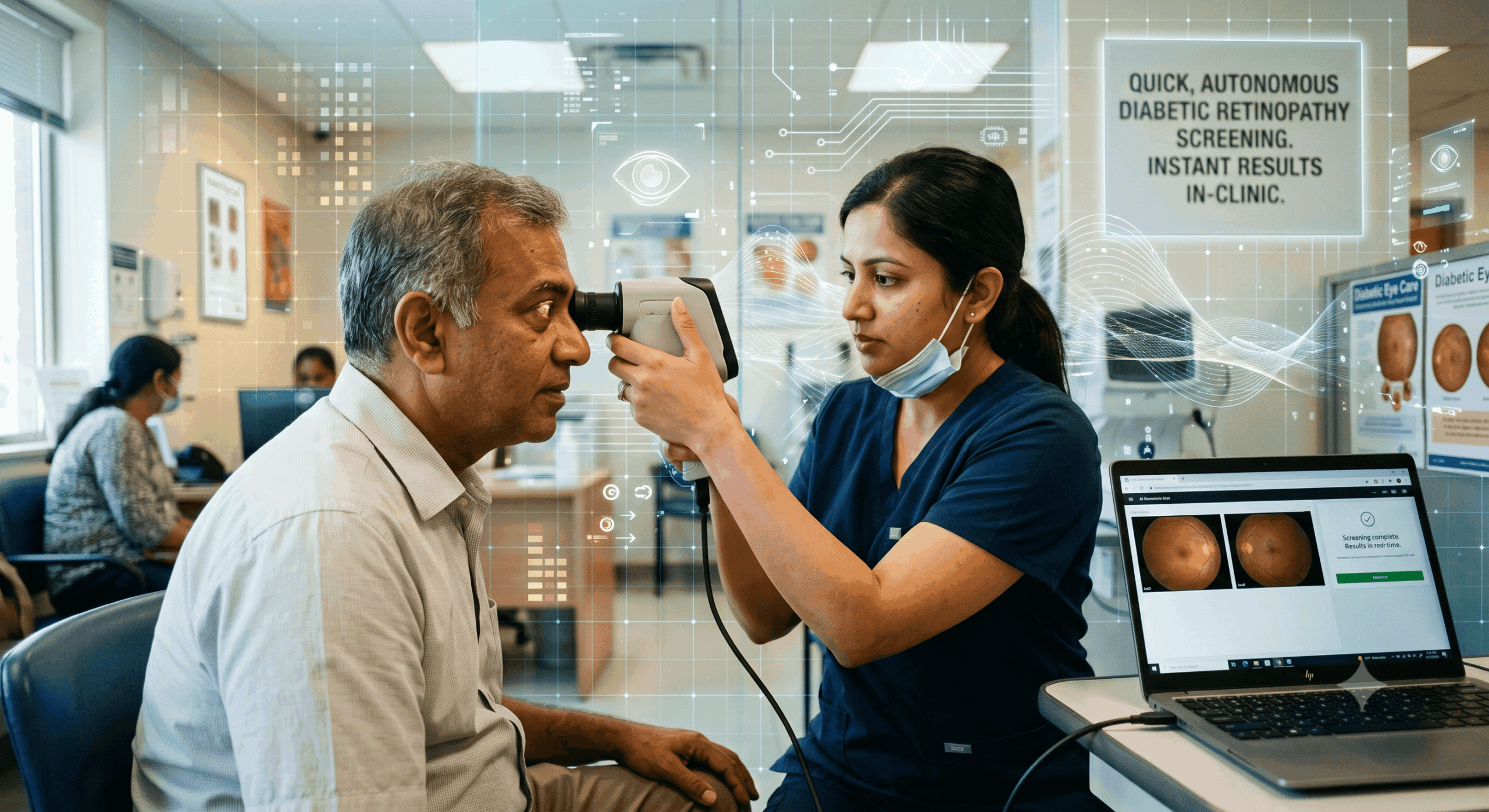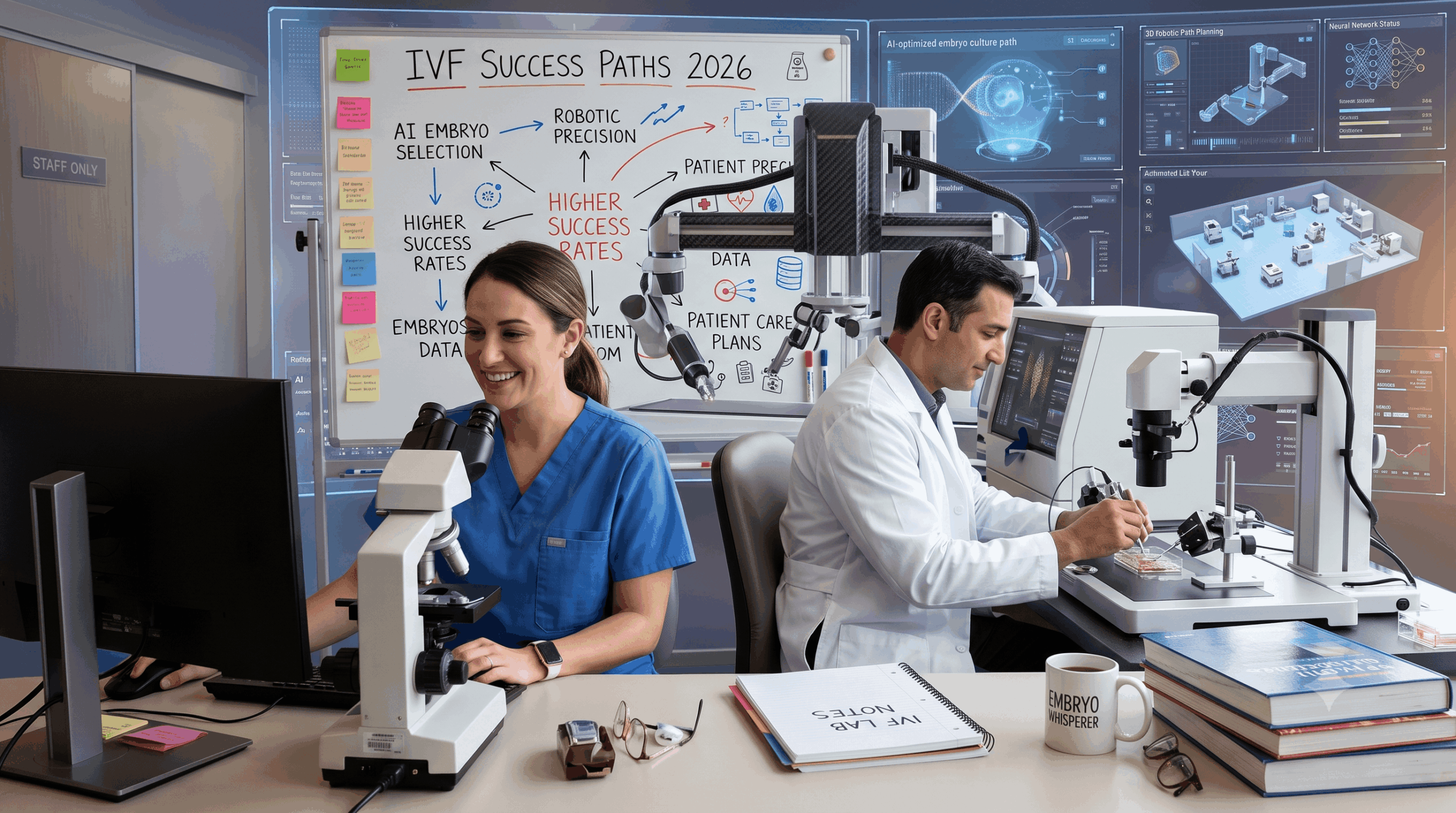
A patient walks into a clinic in India with persistent stomach discomfort. Another patient is waiting for an X-ray after a small fall. A third patient has come for an eye screening because of diabetes. In each case, the doctor is not only looking for what is obvious. They are looking for what can be easily missed. This is where AI medical imaging is becoming a powerful co-pilot for doctors and clinics.
Across radiology, ophthalmology, gastroenterology, and oncology, AI medical imaging is helping clinicians review scans, flag suspicious patterns, prioritise urgent cases, and support faster decisions. Recent studies and reviews show AI is increasingly used as a secondary reader in clinical imaging workflows, often improving efficiency and helping doctors detect subtle findings earlier. (Nature)
For clinics in India, the question is no longer whether imaging will become more intelligent. The question is how quickly clinics can build digital workflows that allow AI medical imaging to work safely, responsibly, and practically.
What The Core Problem Clinics Face
The biggest problem in diagnostic imaging is not that doctors miss things casually. It is that modern clinics generate more images, more reports, more patient records, and more follow-ups than ever before.
A radiologist may review dozens of scans in a day. An ophthalmologist may compare retinal images across multiple visits. A gastroenterologist may examine endoscopy footage where a tiny polyp can matter. A general physician may need imaging reports quickly to decide the next step.
Without organised workflows, clinics face:
- Delayed reporting
- Missed follow-ups
- Scattered diagnostic history
- Poor connection between imaging, EMR, and prescriptions
- Repeated patient calls for report status
- Heavy doctor workload
- Limited time for deeper review
- Difficulty comparing past and current images
This is why AI medical imaging matters. It does not replace doctors. It helps doctors manage complexity with more support.
Why This Problem Is Getting Worse
Diagnostic demand is rising in India. More patients are being screened for diabetes related eye disease, cancer, fractures, gastrointestinal conditions, and chronic illnesses. India’s AI in the medical diagnostics market was reported at USD 12.87 million in 2024 and is projected to reach USD 44.87 million by 2030, showing strong adoption momentum. (Yahoo Finance)
At the same time, global evidence shows AI in clinical imaging is moving from theory to real-world use. A systematic review found AI was commonly used as a secondary reader, worklist organiser, or alerting tool in imaging workflows. (Nature)
This makes AI diagnostic imaging important for clinics that want faster, more organised, and more reliable diagnostic workflows.
Rethinking The Problem
The wrong question is, “Can AI replace doctors?”
The better question is, “Can AI help doctors notice what they might otherwise miss under pressure?”
AI medical imaging works best as a clinical co-pilot. It can flag suspicious areas, support image prioritisation, and help doctors review complex visual data with more structure.
But the doctor remains central.
AI can highlight. The doctor interprets.
AI can support triage. The doctor decides.
AI can speed workflows. The clinic must still maintain patient trust, documentation, and follow-up.
This is why AI-assisted diagnostics should be part of a connected clinic system, not a standalone tool.
AI Medical Imaging Across Specialities
| Specialty | AI Imaging Use Case | Clinic Impact |
| Radiology | X-ray, CT, MRI, fracture, cancer, lung, breast imaging support | Faster review and better prioritisation |
| Ophthalmology | Retinal scans, diabetic retinopathy, and glaucoma risk support | Earlier screening and better follow-up |
| Gastroenterology | Endoscopy and colonoscopy polyp detection support | Better visibility during procedures |
| Oncology | Tumour detection, radiomics, and monitoring support | More structured diagnostic review |
| General clinics | Report coordination and imaging-linked EMR workflows | Better continuity between doctor and patient |
How AI Co-Pilots Are Helping Doctors Detect Disease Earlier
AI medical imaging is transforming the way doctors review diagnostic scans by acting as an intelligent clinical co-pilot rather than a replacement for medical expertise. Modern clinics generate thousands of medical images every month, including X-rays, CT scans, MRIs, retinal photographs, mammograms, and endoscopy videos. Reviewing this growing volume of data can be challenging, especially in busy healthcare environments. AI-powered systems help doctors identify subtle patterns, prioritise suspicious findings, and support faster clinical decision-making.
Earlier Detection of Hidden Abnormalities
AI systems can analyse medical images in seconds and highlight areas that deserve closer review. While doctors remain responsible for diagnosis and treatment decisions, AI provides an additional layer of support that reduces the likelihood of overlooking small but important findings.
- Detects tiny fractures that may be difficult to identify during busy reporting sessions
• Flags suspicious lung nodules and early chest abnormalities on imaging studies
• Identifies subtle breast tissue changes that may require additional evaluation
• Highlights potential neurological abnormalities for further clinical review
• Assists specialists by drawing attention to areas that may warrant closer examination
Supporting Radiologists with Faster Image Review
Radiologists often review hundreds of studies every day. AI in radiology helps streamline this process by prioritising cases and identifying potentially urgent findings, allowing doctors to focus their expertise where it is needed most.
- Prioritises high-risk imaging studies for faster review
• Assists with fracture detection on X-rays and trauma imaging
• Supports identification of abnormalities in CT and MRI scans
• Helps reduce reporting delays during peak workload periods
• Improves workflow efficiency without replacing radiologist oversight
Improving Early Eye Disease Screening
In ophthalmology, many serious eye conditions progress silently before symptoms become noticeable. Medical imaging AI can help eye specialists detect warning signs earlier through advanced retinal image analysis.
- Assists in diabetic retinopathy screening programs
• Supports early identification of glaucoma-related changes
• Helps detect signs of macular degeneration at earlier stages
• Flags retinal abnormalities requiring specialist attention
• Enables more proactive patient monitoring and follow-up planning
Enhancing Detection During Endoscopy Procedures
Gastroenterologists rely heavily on visual inspection during endoscopic examinations. AI-powered imaging tools can analyse live video streams and provide real-time support during procedures.
- Highlights possible polyps during colonoscopy examinations
• Identifies suspicious tissue patterns requiring further assessment
• Assists doctors in maintaining consistent observation throughout procedures
• Supports more structured examination workflows
• Helps improve confidence when reviewing large amounts of visual information
Comparing Historical and Current Imaging Data
One of the most valuable capabilities of AI-assisted diagnostics is the ability to compare previous and current imaging studies. This helps doctors identify disease progression and treatment response more efficiently.
- Tracks changes across multiple patient visits
• Highlights progression of chronic diseases over time
• Supports monitoring of post-treatment recovery and outcomes
• Helps identify subtle differences that may otherwise be overlooked
• Improves continuity of care through better historical analysis
Creating Faster Clinical Workflows
The benefits of AI extend beyond image interpretation. When connected to platforms such as EasyClinic, imaging findings become part of a complete patient care workflow.
- Connects imaging results with digital patient records
• Supports structured clinical documentation and reporting
• Improves communication between specialists and referring doctors
• Enables faster follow-up scheduling and patient management
• Creates a more organised diagnostic and treatment journey
Helping Clinics Deliver More Proactive Care
The ultimate goal of AI medical imaging is not simply faster reporting. It is helping doctors identify potential health concerns earlier so patients can receive timely evaluation and treatment.
- Supports earlier disease detection opportunities
• Helps prioritise patients who may need urgent attention
• Improves diagnostic confidence through additional review support
• Enables more informed clinical decision making
• Strengthens patient trust through faster and more organised care delivery
As healthcare becomes increasingly data-driven, AI co-pilots are emerging as valuable partners for clinicians. By helping doctors detect subtle abnormalities earlier, organise imaging workflows more effectively, and connect diagnostic insights with patient records, AI medical imaging is enhancing the quality and efficiency of care while keeping doctors firmly at the centre of every clinical decision.
How EasyClinic Solves This In Practice
EasyClinic helps clinics build the digital foundation needed for modern diagnostics. AI medical imaging becomes more useful when imaging findings are connected to patient records, appointments, prescriptions, billing, and follow-ups.
Imagine a patient undergoing retinal screening. The image is reviewed, the doctor records findings, the prescription is updated, billing is completed, and the follow-up is scheduled. When the patient returns, the clinic can compare the previous history instead of starting from zero.
This is where EasyClinic features support the practical side of medical imaging AI.
EasyClinic helps clinics manage:
- Digital patient records
- Appointments
- Prescriptions
- Billing workflows
- Follow ups
- Diagnostic history
- Team coordination
- Clinic analytics
A clinic does not need disconnected AI tools. It needs connected workflows where doctors, staff, reports, and patient data move together.
Practical Wow Use Cases
1. The Small Fracture That Looks Harmless
A patient comes in after a fall. The X-ray looks mostly normal at first glance, but a small fracture line may be easy to overlook during a busy day. AI object detection in radiology is being studied across X-ray, MRI, CT, and ultrasound to assist diagnosis and treatment planning. (MDPI)
2. The Diabetic Patient Who Needs Eye Screening
Diabetic retinopathy can progress quietly. AI medical imaging can support retinal screening by helping flag early signs that need attention. This is especially useful in India, where screening volume can be high.
3. The Colonoscopy Where A Tiny Polyp Matters
In gastroenterology, AI-assisted endoscopy can help highlight suspicious areas during visual examination. For clinics, this supports the doctor by adding another layer of attention.
4. The Breast Screening That Needs A Second Reader
AI has shown promise as a second reader in breast screening. A large German screening study reported higher cancer detection when AI-assisted radiologists reviewed mammograms, without increasing false positives in that analysis. (The Guardian)
5. The Clinic Owner Who Cannot Track Diagnostic Delays
A clinic may be busy, but the owner may not know where delays happen. Is it appointment scheduling, report review, billing, doctor review, or follow-up? Connected systems help reveal bottlenecks.
What Clinics Notice After Implementation
When clinics use AI medical imaging with connected workflows, the improvement is felt across the clinic.
Doctors get better support for image review. Staff can track reports more clearly. Patients receive faster updates. Follow-ups become easier. Clinic owners gain better visibility into diagnostic flow.
Clinics may notice:
- Faster diagnostic coordination
- Better image linked to patient history
- Reduced report status confusion
- Stronger follow-up discipline
- Improved doctor confidence
- More organised patient journeys
- Better staff coordination
- More scalable diagnostic workflows
Patient Experience Transformation
Patients may not understand the full technology behind AI diagnostic imaging, but they feel the difference.
They feel it when the clinic explains findings clearly. They feel it when reports are not lost. They feel it when old images and records are available. They feel it when follow-ups are planned properly.
AI medical imaging improves patient experience by supporting:
- Faster answers
- Clearer explanations
- Earlier detection support
- Better continuity
- Less anxiety during report waiting
- More trust in the clinic process
Why EasyClinic Is Built For This Problem
EasyClinic is built for clinics that want AI-powered operations without making daily work complicated.
AI medical imaging needs more than image analysis. It needs patient context, EMR history, doctor notes, prescriptions, billing, and follow-up workflows. EasyClinic helps connect those pieces into one practical clinic system.
For radiology-linked clinics, ophthalmology clinics, gastroenterology practices, diagnostic centres, and multi-speciality clinics, EasyClinic supports the operational layer behind smarter diagnostics.
Clinics can explore EasyClinic, review its clinic management features, or plan implementation through the pricing page.
Responsible Use of AI-Assisted Diagnostics
AI must be used carefully in healthcare. A 2025 review on AI-driven diagnostics highlights risks such as technical limitations, ethics, unclear accountability, and the need for integrated solutions to reduce misdiagnosis risk. (Frontiers)
Clinics should use AI-assisted diagnostics with:
- Doctor oversight
- Clear documentation
- Patient privacy protection
- Validated tools
- Staff training
- Human review before decisions
- Clear escalation pathways
The safest model is simple: AI supports, doctors decide.
Frequently Asked Questions
1. What is AI medical imaging?
AI medical imaging uses artificial intelligence to support the review, analysis, prioritisation, and interpretation of medical images such as X-rays, CT scans, MRIs, retinal scans, and endoscopy images.
2. Does AI medical imaging replace doctors?
No. AI medical imaging supports doctors by flagging possible findings and improving workflow, but clinical decisions remain with qualified healthcare professionals.
3. What is AI diagnostic imaging?
AI diagnostic imaging refers to AI tools that help identify patterns or abnormalities in diagnostic images to support faster and more structured review.
4. How is AI in radiology used?
AI in radiology can support detection, triage, image prioritisation, reporting assistance, and workflow management across modalities like X-ray, CT, MRI, and ultrasound.
5. What is AI-assisted diagnostics?
AI-assisted diagnostics means using AI tools to support doctors in reviewing clinical data, images, and patterns while keeping doctors responsible for final interpretation.
6. Can medical imaging AI reduce diagnostic errors?
Medical imaging AI may help reduce some errors by acting as a second reader and flagging subtle patterns, but it must be validated and used with human oversight.
7. Is AI medical imaging useful for Indian clinics?
Yes. Indian clinics can benefit from AI medical imaging through faster reporting workflows, better screening support, and more organised diagnostic follow-ups.
8. How does EasyClinic support imaging workflows?
EasyClinic supports imaging-related workflows by helping clinics manage patient records, appointments, prescriptions, billing, follow-ups, and diagnostic history.
9. Which specialities benefit from AI medical imaging?
Radiology, ophthalmology, gastroenterology, oncology, orthopaedics, and diagnostic centres can benefit from AI-supported imaging workflows.
10. Where can clinics explore EasyClinic?
Clinics can visit EasyClinic, explore features, or review pricing for implementation planning.
Conclusion
AI medical imaging is changing how doctors detect disease earlier, review complex images, and manage diagnostic workload. It is becoming especially relevant in radiology, ophthalmology, gastroenterology, oncology, and diagnostic care.
But the future is not AI replacing doctors. The future is doctors working with intelligent co-pilots that help flag risks, organise workflows, and improve diagnostic confidence.
For clinics in India, AI medical imaging will only deliver real value when connected to strong EMR, appointments, prescriptions, billing, follow-ups, and patient communication.
EasyClinic helps clinics build that connected foundation. To prepare your clinic for smarter diagnostic workflows, explore EasyClinic and its complete clinic management features.