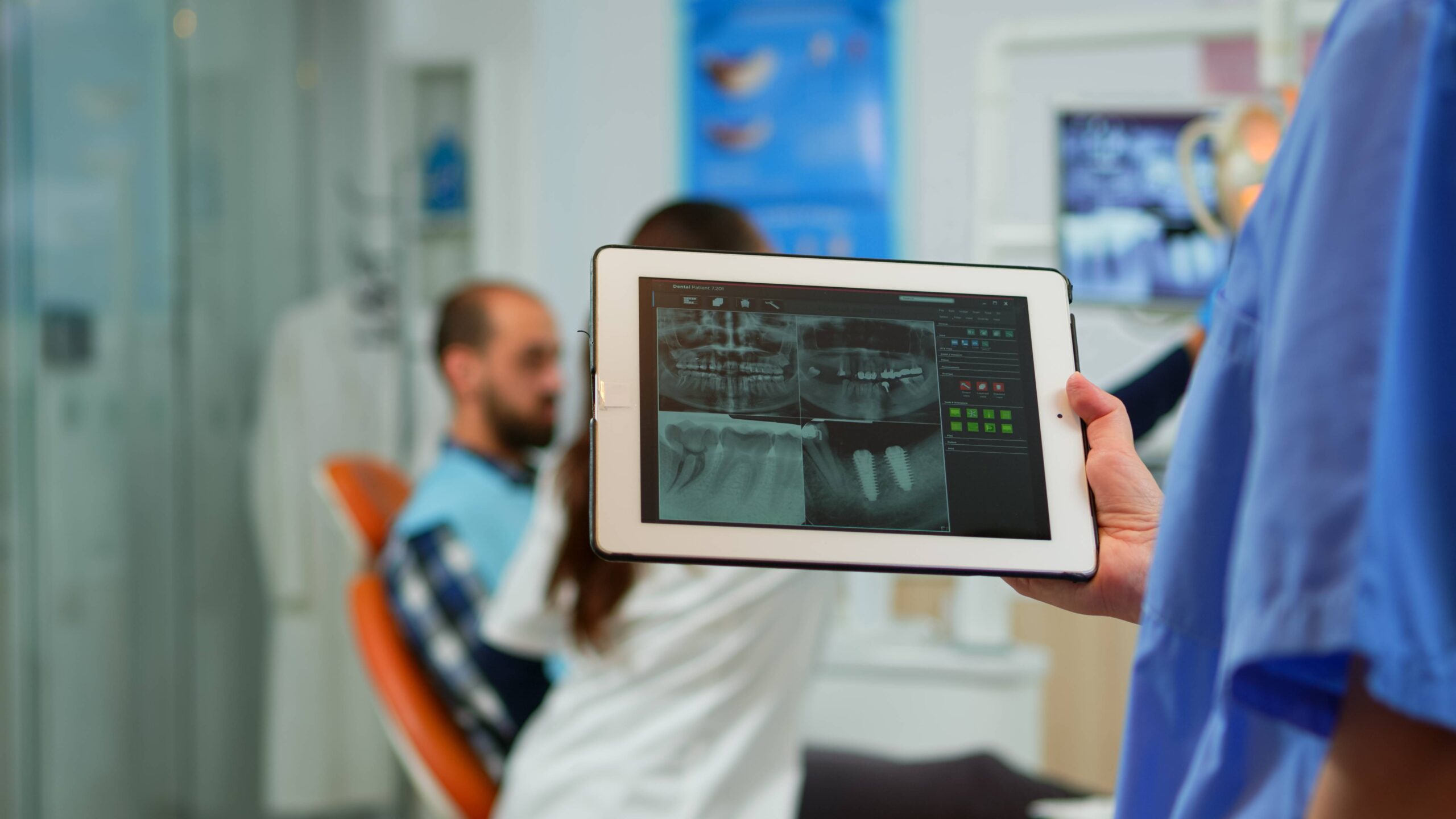
A returning patient sits down, and the doctor opens her file. On the screen is everything and nothing at once: a scanned lab report from last year, a prescription typed into one field, a free-text note buried three visits back, an allergy mentioned once and never flagged again. The record holds the whole story, yet in the six minutes before the consultation begins, it tells the doctor almost nothing useful. He scrolls, squints, and reconstructs the history from memory and guesswork.
This is the quiet failure of most digital records today. Clinics spent years moving off paper, only to end up with a digital filing cabinet — searchable in theory, unreadable in practice. The defining shift of 2026 is that AI medical records are finally turning that cabinet into something that actually thinks: a system that reads its own contents, summarises a patient’s history in seconds, surfaces what matters, and carries the record with the patient wherever they go.
This article is about that shift — how the medical record itself is becoming intelligent, what that changes for a busy clinic, and how a normal practice in India can get there without ripping out everything it runs on.
The Core Problem Clinics Face
The problem is not that clinics lack data. It is that the data does not work for them. A typical patient record is a pile of entries — notes, prescriptions, lab values, scanned documents — stored in different formats, written in different styles, scattered across visits. It is a record of what happened, but not a tool for deciding what happens next.
The cost of this shows up in the consultation room every single day. Doctors spend an extraordinary share of their time wrestling with records rather than patients: studies consistently find clinicians spend close to two hours on documentation and record work for every hour of direct care, and a large majority say this overflow pushes their work into the evening or into their homes. The record that was meant to save time has become one of the biggest consumers of it.
And because the information is unstructured and hard to scan, important things slip through — an allergy missed, a worsening trend unnoticed, a screening overdue, a test repeated because no one could find the earlier result. The record holds the answer; it just cannot hand it over fast enough. That gap between stored data and usable insight is exactly what AI medical records are built to close.
Why This Problem Is Getting Worse
Three forces are sharpening this at the same time.
First, the volume of health data is exploding. Healthcare data is growing by roughly a third every year, driven by digital diagnostics, remote monitoring, and richer documentation. A human reviewer simply cannot read, connect, and act on that much information in a short consultation. More data without more intelligence just means a deeper haystack.
Second, India is digitising fast, from a low base. By recent estimates, fewer than 15% of Indian hospitals had fully digitised record systems, yet the country now has hundreds of millions of ABHA health IDs linked to digital records under the Ayushman Bharat Digital Mission, and the EHR market is growing at around 21% a year. Clinics are being pulled into a national, interoperable system whether they feel ready or not.
Third, expectations are rising on every side. Patients expect continuity and not to repeat their story at every visit. The national digital health framework expects structured, shareable, standards-based records. And doctors, already stretched, expect their software to reduce work rather than add to it. A passive digital cabinet meets none of these. Modern EMR systems, powered by AI, are being built precisely to meet all three.
Rethinking the Problem: From Storage to Intelligence
The old measure of success was simple: have you gone digital? Have you stopped using paper? In 2026, that question is settled and no longer interesting. Storing a record is table stakes. The question that now separates a thriving clinic from a struggling one is sharper: Does your record actually think?
The shift is from the EMR as a place where information goes to die to AI medical records as an active participant in care. Modern EMR systems no longer just store the chart; they read it. Instead of the doctor mining the file, the file briefs the doctor. Instead of structuring data by hand, the system structures it from the natural flow of the visit. Instead of the record sitting in one clinic’s silo, it travels with the patient through consent-based, interoperable exchange. The reframe is simple: stop thinking of the record as a cabinet to fill, and start treating it as a colleague that has already read the whole chart.
How EasyClinic Brings AI Medical Records Into Daily Practice
The way EasyClinic approaches this is not to bolt an AI feature onto an old database and call it smart. It is to capture clinical information as structured, usable data from the start, so the record is intelligent by design rather than searched in desperation later.
Run that six-minute scramble again with the right setup. The moment the doctor opens the file, a concise summary of the patient’s history is already waiting — key conditions, current medications, allergies, recent trends, and what was decided last time. New notes form as structured data from the consultation rather than as free text to be deciphered later. And because the record is built to standards-based, ABHA-linked exchange, the patient’s wider history can be pulled in with consent instead of being guessed at. This is what an ABDM-aligned EMR looks like when intelligence sits inside the clinic management software rather than beside it.
The Recent AI Medical Records Trends Worth Your Attention
Here are the developments actually changing what a record can do this year.
- The record that writes itself. The biggest reduction in documentation burden comes from capturing the visit as it happens and turning it into a structured note automatically, with the clinician reviewing and signing rather than typing. Ambient documentation has been associated in peer-reviewed studies with less time in notes, lower cognitive load, and reduced burnout — the record builds itself while the doctor stays with the patient.
- The thirty-second history summary. Instead of scrolling through years of entries, the doctor gets an instant, plain-language summary of the patient’s journey — conditions, medications, key results, and the last plan. This single capability gives back the most precious thing in a busy OPD: time to actually look at the patient.
- The record that flags what matters. Drawing on the full longitudinal history rather than a single visit, AI EMR software can surface the things humans miss under time pressure — a possible drug interaction, a worsening trend across visits, an overdue follow-up or screening. It does not make the decision; it makes sure the doctor sees what they need to decide well.
- Records that follow the patient. Under the national digital health stack, records built to FHIR standards and linked to a patient’s ABHA can be shared across providers with consent. That means fewer repeated tests, fewer dangerous gaps, and a fuller picture — the record stops being trapped in one clinic and starts serving the patient’s whole journey.
- Records you can simply ask. The newest interfaces let a clinician query the chart in natural language — asking for the last HbA1c, or every note about a symptom — and get an answer in seconds instead of a scroll. The record becomes something you converse with, not something you excavate.
What Clinics Notice After Implementation
The change shows up within weeks, in both the numbers and the calm of the consultation.
| Area of clinic life | The “digital cabinet” is past | With AI medical records |
| Reading a patient’s history | Scroll, squint, reconstruct | Instant summary on opening the file |
| Note creation | Typed free text after hours | Structured notes were formed during the visit |
| Catching risks | Depends on memory under pressure | Interactions and trends surfaced automatically |
| Finding a past result | Hunt across visits and PDFs | Asked in plain language, answered in seconds |
| Sharing records | Faxed, scanned, or repeated tests | Consent-based exchange via ABHA |
| Doctor time | Two hours of records per hour of care | Hours returned to patients |
The statistics matter, but the line doctors repeat most is simpler: for the first time, the record is working for them instead of the other way around.
How the Patient Experience Quietly Improves
Patients never see the record, but they feel its intelligence. They stop having to repeat their full story at every visit, because the system already knows it. They avoid the cost and delay of a test that was done last month somewhere else, because the result can be pulled in with their consent. Their care feels safer because allergies and interactions are flagged rather than forgotten. And the consultation feels more human, because the doctor is looking at them rather than mining a file. The deepest benefit of AI medical records is continuity — the sense that the clinic remembers you, sees the whole picture, and is building on it rather than starting from scratch each time.
Why EasyClinic Is Built for This Problem
Owners are rightly wary of bolt-on AI that never touches the actual record and leaves a fresh data mess behind. The clinics that benefit choose intelligence built into the record itself, tuned for Indian reality.
That is the lane EasyClinic is designed for. It is built for clinics in India navigating the move to digital, structured, ABDM-aligned records — supporting ABHA-linked identity, standards-based documentation, secure cloud access, and multi-branch operations from a single dashboard. As an AI EMR software, it treats the record as part of the clinic management software rather than a disconnected archive, with role-based access and DPDP-aligned data handling so patient trust is protected. The goal is not a more complicated system to feed. It is a record that finally gives back more than it takes — affordable and practical even for a small, busy practice that cannot run an IT department.
10 FAQs Clinic Owners Actually Ask
- What exactly are AI medical records? They are digital patient records made intelligent — the system structures notes automatically, summarises history, flags risks, and answers questions, rather than just storing information for someone to dig through.
- What is the difference between EMR and EHR? An EMR is the digital chart within one provider’s system; an EHR is designed to be shared across providers for a fuller, portable view. Modern EMR systems increasingly support both.
- Does this replace the doctor’s judgment? No. AI surfaces summaries, trends, and possible risks, but the clinician decides. Good systems are built to support decisions and require review, not to override clinical judgement.
- Is patient data safe? Reputable platforms use role-based access, secure cloud infrastructure, and DPDP-aligned data handling. Under the national framework, sharing is consent-based and logged. Always confirm a provider’s security practices.
- How does this connect to ABDM and ABHA? AI EMR software built to FHIR standards can link records to a patient’s ABHA and exchange them across providers with consent, which is the foundation of India’s interoperable digital health system.
- We are a small clinic. Is this overkill for us? No. Smaller clinics often gain the most because they lack the staff to manually reconcile and review records. Intelligence built into the record does that work automatically.
- Will AI documentation be accurate? It is strong but not infallible — it can miss what is not said aloud, so clinician review remains essential. The right workflow keeps a human signing off on every note.
- How fast will we see a difference? Most clinics notice faster history review, quicker note-taking, and fewer missed details within the first few weeks of moving to an intelligent clinic management software, not after months.
- Will it work across our branches? Yes. A cloud-based system lets clinics with multiple locations manage records from one central dashboard, with the same intelligence everywhere.
- Where should a clinic start? Start with structured capture and history summaries — the features that save time immediately. Then add risk flagging and ABHA-based exchange as your digital footing grows.
Conclusion
For years, going digital was the goal, and the reward was a cabinet full of files no one had time to read. The real transformation of 2026 is not that records are digital — it is that they are finally intelligent. AI medical records read themselves, brief the doctor, flag the danger, and follow the patient, turning a passive archive into an active partner in care.
Clinics that understand this stop measuring success by whether they have gone paperless and start asking whether their record actually thinks. The result is not a colder, more technical practice. It is a sharper, safer, more human one — where the doctor spends less time decoding the past and more time treating the person in front of them.
Take the Next Step
If your clinic is ready for a record that works for you instead of against you, see how EasyClinic brings intelligent, ABDM-aligned documentation into one system — and explore its EMR software for India when you are ready to begin.