Introduction: When Bones Break, Time Matters
AI software for orthopaedic clinics is very much needed because every orthopaedic doctor in India knows this moment too well — a patient walks in with a fractured wrist after a road accident, holding an X-ray that’s barely legible. There’s panic in their eyes, confusion in their family’s faces, and a sense of urgency that can’t wait for slow systems or delayed diagnoses.
In many clinics, the reality is still painfully traditional. Piles of patient files clutter the desk. X-rays are reviewed manually under fluorescent lights. Surgery plans are drawn on paper. In the middle of this chaos, even the best doctors lose precious time.
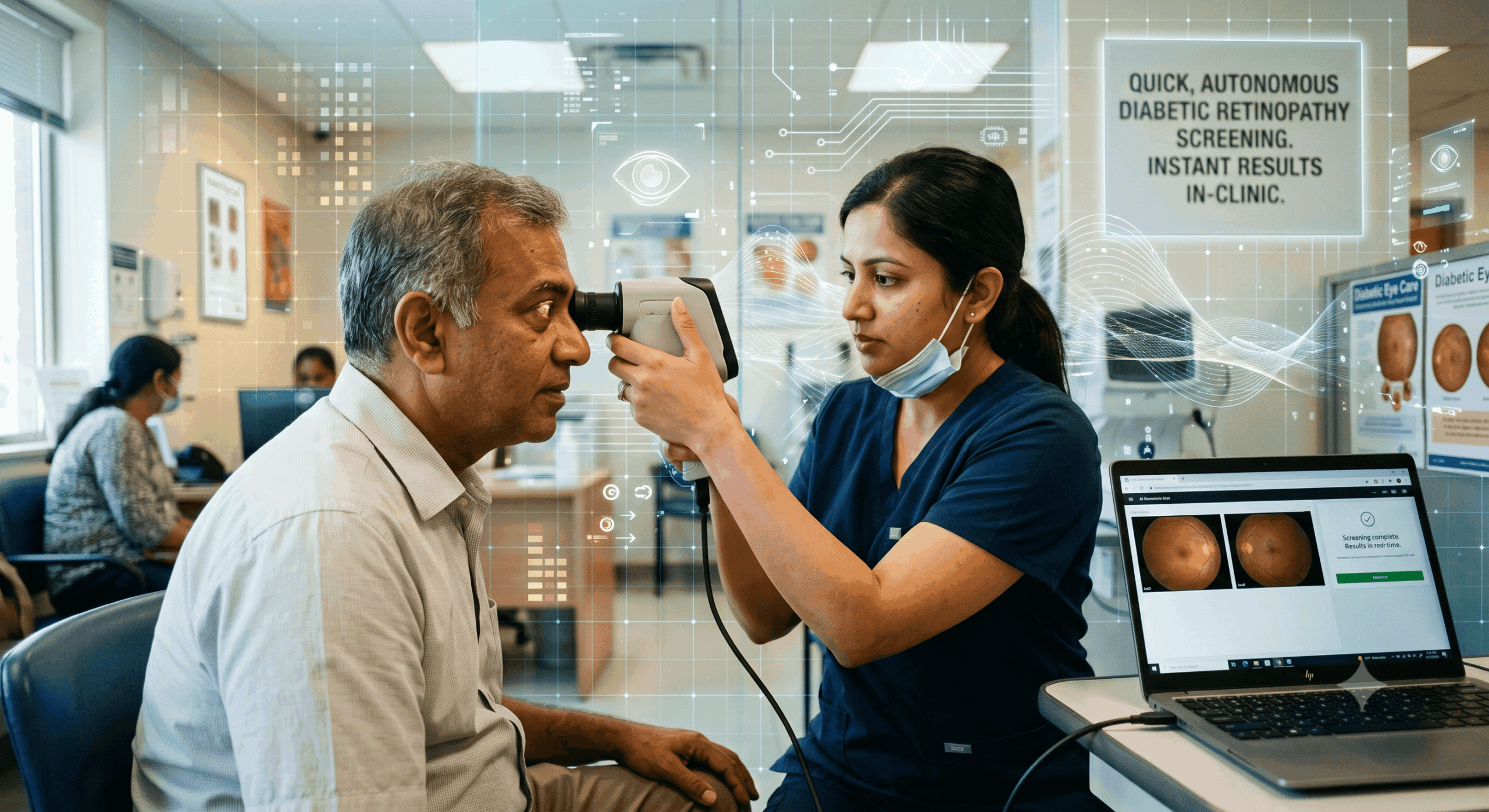
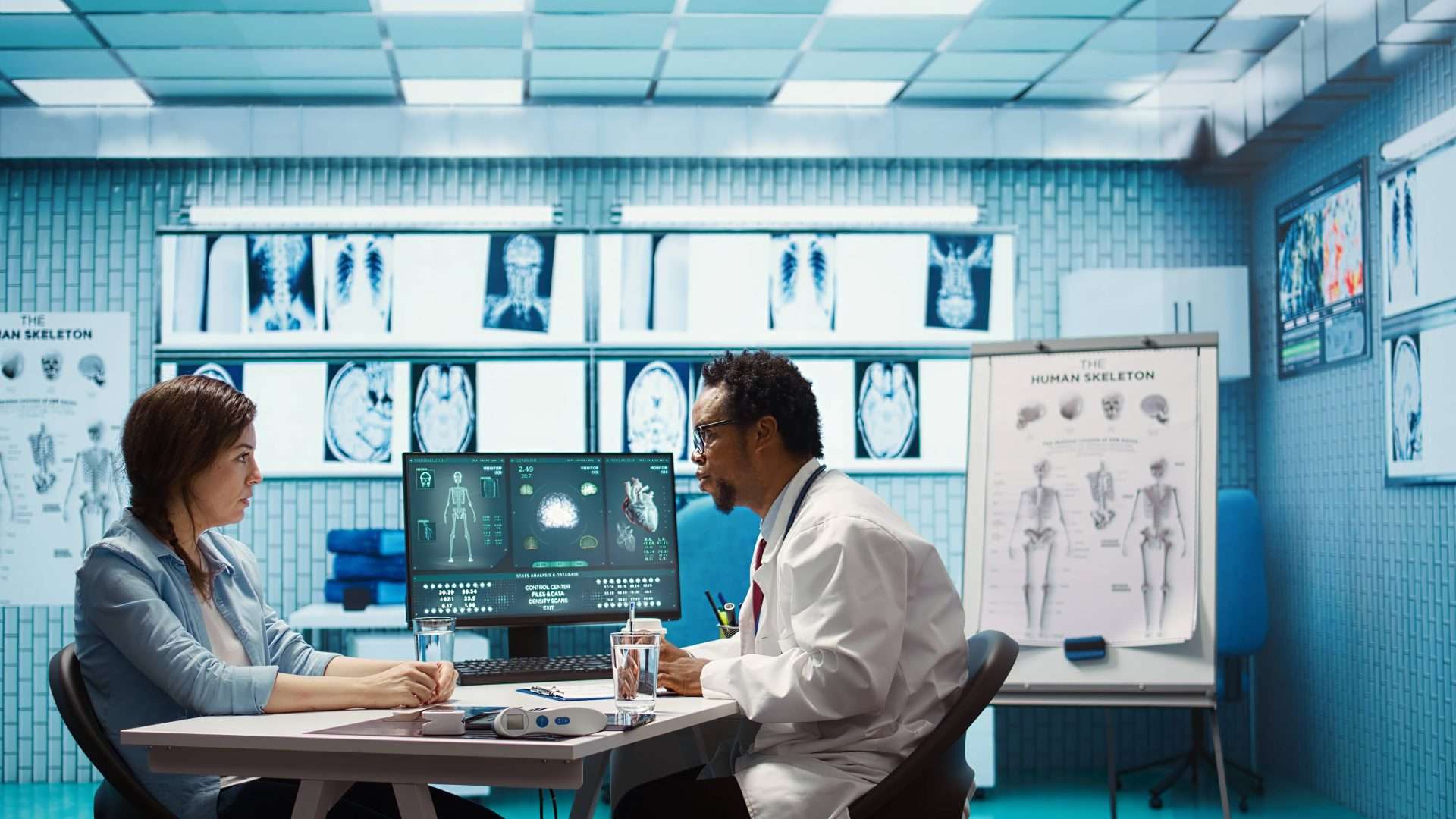
Now imagine an anorthopaedic clinic where an AI software system scans the patient’s X-ray within seconds, highlights the fracture, predicts possible complications, and automatically uploads the findings into the patient’s EMR. The doctor doesn’t need to juggle between folders or repeat the same explanations — instead, they focus on what truly matters: care, confidence, and precision.
This is not science fiction anymore. Across India, orthopaedic clinics are slowly embracing AI software for orthopaedic clinics, changing the way they diagnose fractures, plan surgeries, and manage patient recovery.
What Exactly is AI Software for Orthopaedic Clinics?
At its heart, AI software is like a silent assistant that never tires. It looks at thousands of orthopaedic X-rays, CT scans, and MRI images — learning, recognising, and predicting. Over time, it becomes better at spotting even the smallest fractures or bone misalignments that the human eye might overlook.
In a typical Indian orthopaedic workflow, where doctors see dozens of patients in a single day, these tools become lifesavers. They can:
- Read and interpret X-rays instantly.
- Suggest the best treatment options based on prior outcomes.
- Track each patient’s recovery journey.
- Generate summaries and bills automatically.
Think of it as a bridge between medical expertise and technology. The doctor remains in control, but the AI ensures no detail slips through the cracks.
The Human Side of Orthopaedic AI
To understand its value, let’s talk about a renowned doctor who runs a small orthopaedic clinic in Pune. His clinic sees nearly 40 patients daily, many with recurring injuries or chronic pain. Before adopting AI software, doctors often worked late into the night, cross-checking reports, writing summaries, and calling patients for follow-ups.
After integrating EasyClinic’s digital platform, his workflow changed overnight. “It’s like having another doctor beside me,” he explains. “I can diagnose fractures faster, track recovery without guesswork, and my staff spends less time on paperwork.”
What used to feel like an endless routine now feels purposeful again.
That’s the emotional shift AI brings — it gives doctors time back to connect with their patients.
Why Indian Clinics Need This Shift?
India’s orthopaedic system is under constant pressure. Every year, millions of people suffer from bone fractures or joint injuries due to accidents, sports, or ageing. But the infrastructure hasn’t caught up.
- Most small and mid-sized clinics still rely on manual paperwork.
- Diagnostic errors delay treatments, especially in rural areas.
- Patients often lose their files or forget follow-up schedules.
Government programs like the National Digital Health Mission (NDHM) and Ayushman Bharat Digital Mission are encouraging digitisation, but true transformation comes when clinics adopt intelligent systems — not just digital record-keeping, but AI-powered care.
AI doesn’t only make things faster; it makes them fairer. It brings world-class accuracy to clinics that once depended solely on overworked radiologists or technicians.
How AI Tools Actually Work in Orthopaedics?
Imagine this sequence inside a modern orthopaedic clinic:
- A patient’s X-ray is uploaded.
- Within seconds, the AI detects a hairline fracture that wasn’t visible at first glance.
- The system highlights the area, assigns a confidence score, and suggests next steps.
- The doctor reviews, confirms, and creates a treatment plan with guided notes.
- As the patient heals, the AI tracks recovery progress and alerts the clinic if results deviate from the expected pattern.
Behind the scenes, the same software keeps the clinic’s operations running — managing appointments, generating bills, tracking surgical inventory, and sending reminders for physiotherapy follow-ups.
This is the quiet revolution happening inside Indian Orthopaedics.
Benefits that Go Beyond the Screen
For Doctors
- Speed: Quick fracture detection means faster treatment.
- Accuracy: AI highlights what human fatigue might miss.
- Ease: Automated notes and billing simplify the entire workflow.
For Patients
- Transparency: Patients can actually see what’s wrong and how it’s improving.
- Confidence: Visual predictions and follow-up alerts build trust.
- Continuity: Records are digital — no lost prescriptions or X-rays.
For Clinics
- Efficiency: Everything, from registration to rehab tracking, flows in one system.
- Scalability: Whether it’s a single doctor or a 10-bed clinic, AI grows with you.
When patients feel seen and doctors feel supported, that’s when real healthcare begins.
The EasyClinic Advantage
While global orthopaedic AI systems often cost a fortune, EasyClinic was designed with Indian clinics in mind — affordable, intuitive, and compliant with national healthcare regulations.
With EasyClinic’s features:
- Clinics can store every patient file digitally.
- Imaging results automatically sync with EMRs.
- Staff get reminders for follow-ups and physiotherapy sessions.
- Doctors receive insights into treatment performance over time.
Its affordability means even a small-town orthopaedic practice can access technology once reserved for large hospitals. EasyClinic’s pricing is transparent, flexible, and scales as your clinic grows.
The Emotional Impact: Patients Feel the Change
Consider Meera, a 62-year-old woman from Jaipur who underwent a knee replacement. After surgery, her clinic used AI tracking through EasyClinic to monitor her physiotherapy progress. The system compared her daily exercises with expected recovery curves and alerted her doctor when her mobility dropped.
Meera received a call the same day. A minor post-op infection was caught early, and her recovery continued smoothly.
“I didn’t feel like just another case,” she said. “It felt like my doctor was walking with me through recovery.”
That’s what technology should do — not replace care, but humanise it.
Cost & Accessibility in India
Contrary to what many assume, AI doesn’t have to be expensive. Global AI-based orthopaedic tools can cost ₹60,000 to ₹1,00,000 per month, but Indian SaaS-based models like EasyClinic cost a fraction of that.
- Clinics can start with basic EMR and automation modules.
- Add AI-assisted imaging and predictive analysis later.
- Pay only for what they use — no hidden costs.
This modular approach allows small clinics in cities like Nagpur or Coimbatore to grow into fully AI-enabled centres without breaking the bank.
Overcoming the Common Challenges
Connectivity issues: In smaller towns, unreliable internet can hinder cloud software. EasyClinic’s hybrid model works offline and syncs automatically later.
Staff hesitation: EasyClinic’s training modules make onboarding smooth, even for non-technical staff.
Data privacy: Built with HIPAA-grade encryption, it meets both global and Indian compliance standards.
The result? A system that feels like it belongs — not imported, but adapted for India’s realities.
The Future: Smarter Bones, Smarter Clinics
AI’s role in orthopaedics is only just beginning. Soon, systems will:
- Predict fracture risks before they happen.
- Analyse patient gait through wearable sensors.
- Assist robotic surgeries with real-time precision.
- Automate physiotherapy tracking through motion capture cameras.
EasyClinic is already preparing for this future, blending AI, telemedicine, and mobile EMR into one unified ecosystem. For Indian clinics, this means staying at the forefront of innovation — not as followers, but as leaders.
Comparing Global and Local Alternatives
| Software | Key Features | Pros | Cons | Price (Monthly) |
| Global App | 3D Imaging, Surgical Simulation | Advanced, robust tools | Very costly, not localised | ₹80,000+ |
| Local App | EMR + Billing + X-ray upload | Simple, low-cost | Limited AI analytics | ₹10,000–₹20,000 |
| EasyClinic | AI Imaging, EMR, Billing, Rehab Tracking | Affordable, India-focused, NDHM | Needs initial staff training | Flexible SaaS plans |
Conclusion: The Heart of Orthopaedic AI is Still Human
At the end of the day, AI is not about replacing doctors or patients — it’s about bringing them closer. It turns uncertainty into confidence, guesswork into guidance, and routine check-ups into meaningful connections.
Orthopaedic care is entering a new chapter. Clinics that embrace AI software for orthopaedic clinics today will not just save time — they’ll save lives. They’ll assure every patient that their care is precise, proactive, and personal.
To explore how AI can transform your clinic, visit EasyClinic, check its features, explore pricing, or learn how to set up your clinic legally.
Because the future of orthopaedics isn’t just about technology — it’s about bringing compassion and precision together, one patient at a time.