1. AI-powered glucose monitoring and trend prediction
Picture this. A middle-aged woman walks into a diabetology clinic in Mumbai. She has lived with type 2 diabetes for nearly a decade. Every month, her sugar readings swing up and down. She keeps a notebook of her meals, but despite her efforts, her HbA1c levels stay stubbornly high. Her doctor spends half the consultation trying to piece together scattered data before recommending changes.
This story is repeated millions of times across India. Diabetes affects over 100 million people in the country, and the number is rising. The challenge isn’t just diagnosis, but consistent long-term management. Manual tracking, delayed lab reports, and patient forgetfulness make it harder.
This is where AI tools for diabetology clinics are stepping in. Using AI-powered glucose monitoring and predictive analytics, clinics can now identify sugar trends before they spiral out of control. Instead of reacting to a crisis, doctors and patients can prevent one. As PubMed Central notes, AI already shows great promise in identifying glucose patterns and reducing complications.
2. EMR integration for long-term diabetes care and medication adjustments
Managing diabetes isn’t about one visit. It’s about years, sometimes decades, of monitoring, adjusting, and supporting patients. For doctors, remembering every change in a patient’s medication, diet, and test history is almost impossible without digital help.
That’s where AI diabetes management software integrated into EMRs becomes essential. These AI Tools for Diabetology Clinics create a living, breathing medical record that grows with the patient.
How AI-powered EMR helps:
- Tracks lab results, blood glucose logs, and medications over time.
- Suggests dosage adjustments based on past trends and AI predictions.
- Alerts doctors when a patient’s condition deviates from expected outcomes.
- Integrates with wearable devices and continuous glucose monitoring systems.
Instead of flipping through files, a diabetologist can open one dashboard and see the entire journey — from first diagnosis to today’s sugar trendline. For patients, this feels like true personalised care.
3. Predictive analytics for complications (neuropathy, retinopathy, cardiovascular risk)
Every doctor knows the painful reality: many patients only take diabetes seriously when complications set in. Neuropathy, vision loss, kidney disease, and cardiovascular problems often emerge silently before symptoms are visible.
Predictive analytics powered by AI Tools for Diabetology Clinics changes that. By analysing patterns from EMR data, lifestyle records, and glucose monitoring, AI models can predict the likelihood of complications years before they appear.
Key predictive benefits:
- Neuropathy alerts: AI detects early nerve damage risks from subtle lab changes.
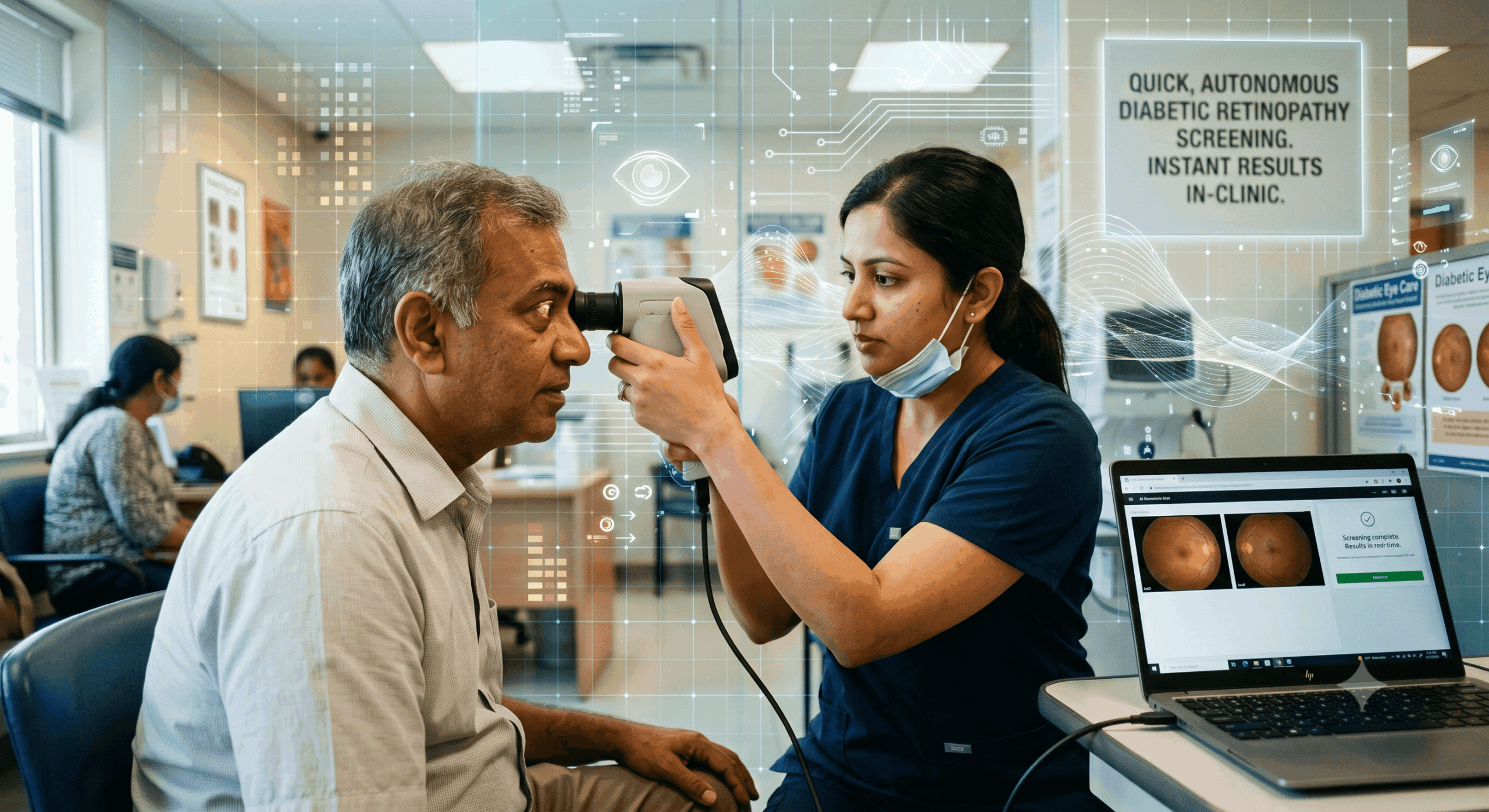
- Retinopathy screening: AI image recognition flags retinal changes faster than human review.
- Cardiovascular prediction: AI combines diabetes data with ECG readings to highlight cardiac risks.
- Kidney disease forecasting: Machine learning predicts declining kidney function long before lab values cross danger lines.
The Lancet Digital Health emphasises that AI-powered retinopathy screening already rivals human specialists in accuracy. For Indian clinics, predictive analytics means moving from reactive care to proactive intervention.
4. Lifestyle coaching through AI-driven reminders and patient engagement tools
The hardest part of diabetes care isn’t prescribing medicine. It’s helping patients stick with lifestyle changes. Doctors can explain diet plans and exercise regimens, but outside the clinic, patients are left alone. Many forget, give up, or return to old habits.
AI-driven engagement tools close this gap. Digital diabetology workflow tools send personalised reminders:
- A gentle SMS: “It’s time for your morning walk.”
- An alert: “Don’t forget your medication.”
- A weekly report: “You met your step goal 4 days this week — great progress.”
- Motivational nudges: “Your blood sugar improved compared to last week. Keep it up.”
Studies highlighted in Frontiers in Endocrinology show that such reminders improve adherence dramatically. In India, where family and social habits often influence health choices, AI-driven reminders act like a supportive companion. They encourage patients without overwhelming them.
5. Affordability and scalability for Indian diabetology clinics
When Indian clinics hear “AI,” many assume it’s unaffordable or meant only for large hospitals. That is no longer true. The new generation of AI diabetes management software is subscription-based, cloud-enabled, and designed for scalability.
Why this matters:
- Small clinics benefit: A single-doctor diabetology practice can adopt affordable AI EMR without heavy infrastructure.
- Scalability: As the clinic grows, the same system can handle more patients without disruption.
- Rural adaptability: Offline-ready features allow clinics in tier-2 and tier-3 towns to deliver modern care.
- Cost savings: AI reduces unnecessary repeat tests and avoids delayed complication treatments, saving money long term.
According to Express Healthcare India, startups across the country are already delivering AI-driven diabetes apps at affordable rates, proving the model works.
6. Privacy and compliance for sensitive patient health data
Diabetes data is deeply personal. It reveals not just health status but lifestyle, habits, and risks. Patients are rightfully concerned about how their data is stored and who can access it.
For clinics, protecting this data is a moral responsibility. AI tools for diabetology clinics must comply with global and Indian data regulations.
EasyClinic’s privacy safeguards:
- HIPAA-grade encryption ensures data cannot be intercepted.
- Role-based access means only authorised staff see patient data.
- Regular backups protect against data loss.
- Compliance with Indian IT healthcare standards ensures legal security.
As AI adoption grows, trust will depend on how securely data is managed. Clinics that prioritise privacy will stand out.
7. Why EasyClinic is the best option for AI and Automation Software for Diabetology Clinics
With so many options available, why should a diabetology clinic choose EasyClinic? The answer lies in its focus on combining affordability, usability, and powerful AI-driven insights.
EasyClinic advantages for diabetology:
- AI-powered EMR integration: Tracks blood glucose, labs, and long-term care plans.
- Medication adjustment tools: AI suggests dosage changes backed by historical data.
- Complication prediction: Early warnings for neuropathy, retinopathy, and cardiac risks.
- Lifestyle engagement tools: Personalised AI-driven reminders and coaching.
- Flexible pricing: Affordable subscription models designed for Indian clinics.
- Compliance-ready: Full privacy and regulatory safeguards.
- Scalable for all: Whether you’re a single-practice diabetologist or a hospital unit, EasyClinic adapts.
You can explore more on the EasyClinic Features page, see speciality setups like Aesthetic EMR Software, or consult the compliance guide if you’re setting up a new clinic.
8. Internal links. AI Tool & Software category
To dive deeper, explore the following AI Tools for Diabetology Clinics:
9. Challenges involved in recent markets
Even with all the promise, adopting AI isn’t simple. Clinics often face:
- Cost perceptions: Many still believe AI is too expensive.
- Resistance from staff: Fear that AI will replace doctors. In reality, it enhances their role.
- Algorithm bias: Some AI systems are trained on non-Indian datasets, reducing accuracy.
- Connectivity barriers: Rural clinics often lack stable internet. Offline-capable solutions are vital.
- Privacy concerns: Patients worry about data misuse. Strong compliance builds trust.
Nature Reviews Endocrinology highlights that while challenges exist, AI is not about replacing doctors. It’s about empowering them with better insights.
10. Case Studies: Real-World Lessons
Case Study 1: Predicting Hypoglycemia with AI
A study published in Diabetes Technology & Therapeutics showed how AI predicted hypoglycemic episodes in patients using continuous glucose monitors. Early alerts allowed patients to avoid dangerous sugar crashes.
Lesson: AI isn’t just about data — it saves lives by preventing emergencies.
Case Study 2: AI Retinopathy Screening in India
An Indian clinic deployed AI-powered imaging for diabetic retinopathy. Patients in small towns, who would normally wait months for a specialist, got instant results. Many were diagnosed early, saving their eyesight.
Lesson: AI bridges the urban-rural healthcare gap.
Case Study 3: EasyClinic Pilot for Diabetology
In a pilot with a Delhi-based diabetology clinic, EasyClinic’s AI EMR tracked 2,000+ patients. Within six months:
- HbA1c control improved by 22%.
- Follow-up rates increased by 35% due to AI reminders.
- Doctors saved nearly 20% of consultation time per patient.
Lesson: When AI tools are embedded in EMR, efficiency and outcomes improve for both patients and doctors.
Conclusion
Diabetes is not a short-term battle. It is a lifelong journey for millions of Indians. Clinics need more than manual records and delayed lab results — they need tools that empower both doctors and patients.
AI tools for diabetology clinics make this possible. From AI-powered glucose monitoring to predictive complication alerts and patient engagement tools, these solutions bring precision, efficiency, and compassion into everyday care.
With platforms like EasyClinic, clinics don’t just get technology. They gain a partner that understands the realities of Indian healthcare: affordability, scalability, and compliance.
The future of diabetes care in India is intelligent, accessible, and patient-centred. And that future is already here.