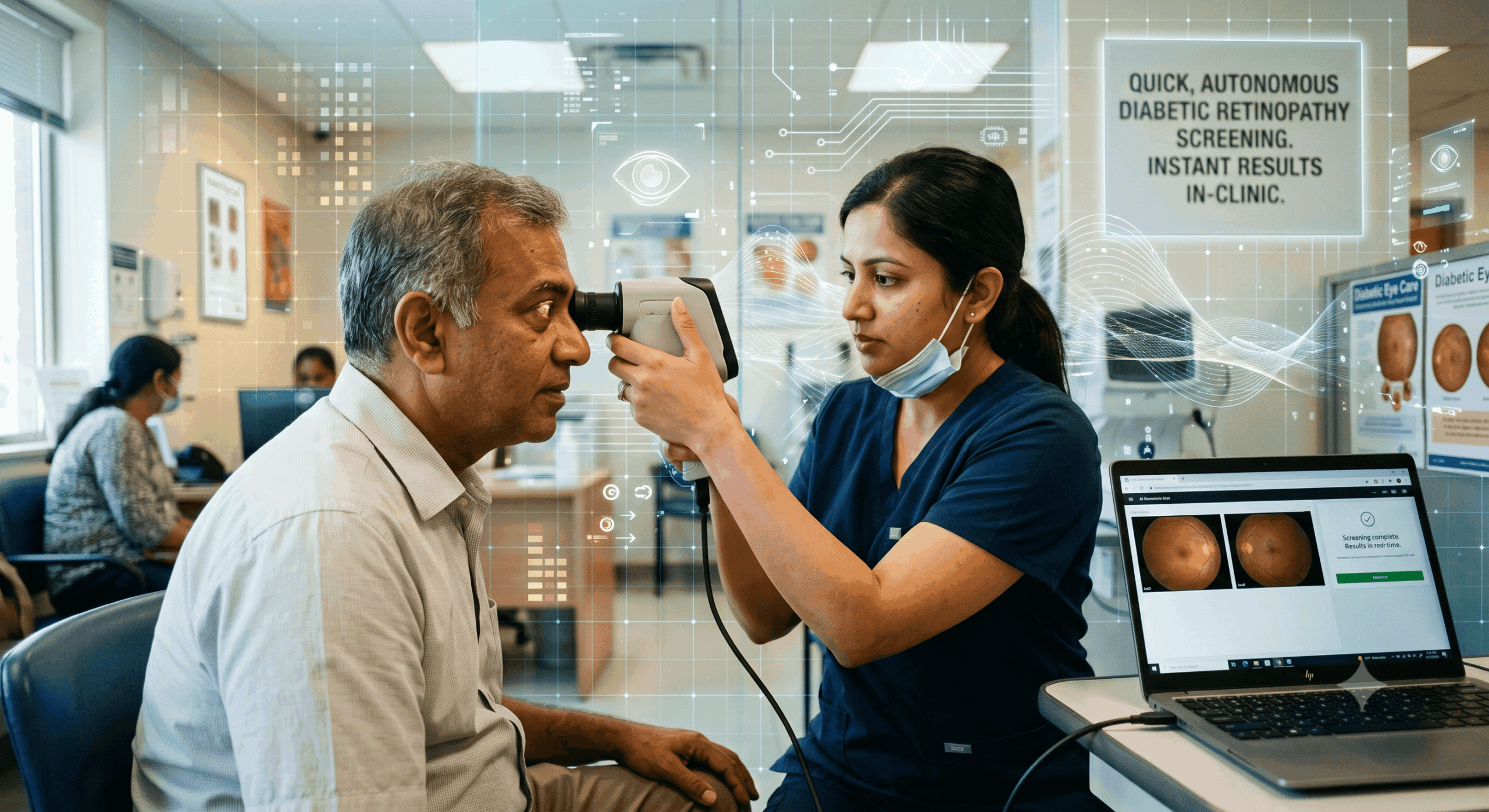
A patient in India finishes a consultation at 8 PM. On the way home, she remembers three questions she forgot to ask the doctor. The clinic is closed. The front desk is busy the next morning. By the time she gets a response, anxiety has already built up. This is the communication gap that AI virtual assistants for clinics are starting to solve.
Modern patients do not want to wait for every small update. They want appointment reminders, follow-up instructions, basic guidance, prescription reminders, and quick answers to routine questions. At the same time, doctors and front desk teams are already overloaded. This is why AI virtual assistants for clinics are becoming central to patient communication.
Across healthcare, AI-powered chatbots and virtual assistants are being used for appointment scheduling, prescription reminders, symptom assessment, and non-urgent patient support. Research also describes agentic AI as a newer generation of AI systems with more autonomy, adaptability, and workflow capability, especially useful in medical management and patient support when used responsibly. (Healthcare Bulletin)
For Indian clinics, the opportunity is clear: use AI to make communication faster, more structured, and more patient-friendly without replacing clinical judgment.
What The Core Problem Clinics Face
The biggest communication problem in clinics is not that staff members are careless. It is that patient communication has become too heavy for manual handling.
A front desk team may answer calls, book appointments, confirm timings, explain doctor availability, handle billing questions, coordinate reports, remind patients about follow-ups, and respond to basic post-visit queries. At the same time, doctors must focus on consultations, documentation, prescriptions, and patient decisions.
This creates daily pressure.
A clinic may miss calls during peak hours. A patient may forget a follow-up. A staff member may give incomplete information. A doctor may be interrupted for a routine question. A patient may visit unnecessarily because they did not know what to do next.
This is where AI virtual assistants for clinics become useful. They help clinics handle routine communication more consistently.
Common communication gaps include:
- Missed appointment calls
- Delayed responses to routine patient queries
- Poor follow-up reminders
- Repeated front desk interruptions
- Unclear post-consultation instructions
- Patients forgetting medication or review dates
- No structured patient engagement after the visit
- Limited visibility into patient communication history
These problems directly affect patient trust and clinic efficiency.
Why This Problem Is Getting Worse
Patient expectations are changing quickly in India. People are used to instant communication from banks, food delivery apps, ecommerce platforms, and travel services. They now expect similar responsiveness from healthcare.
But clinics operate differently. Doctors cannot answer every message instantly. Reception teams cannot handle unlimited calls. Patients need guidance, but not every query requires a doctor.
This is why healthcare AI chatbots, virtual healthcare assistants, and AI-powered patient portals are becoming more important. They can help with routine patient communication while allowing doctors to focus on clinical care.
In India, public and private healthcare systems are also experimenting with AI chatbots and digital assistants. Examples include AI-based oncology chatbots supporting patients with care information in multiple Indian languages and health chatbots designed for maternal and women’s health support. These examples show how digital assistants can reduce communication gaps when designed carefully. (The Times of India)
The issue is not whether clinics will use AI communication tools. The real question is whether they will use them safely, practically, and in a way that fits daily clinic workflows.
Rethinking Patient Communication
Traditional clinics treat communication as a front desk task. A patient calls, someone answers. A patient asks, someone responds. A patient forgets, and someone reminds them manually.
But modern patient communication should be a workflow, not a series of random calls.
AI virtual assistants for clinics help clinics move from reactive communication to guided communication.
Instead of waiting for patients to call, the clinic can support:
- Appointment confirmations
- Follow-up reminders
- Basic pre-visit instructions
- Routine post-visit guidance
- Report readiness updates
- Medication reminders
- Remote monitoring prompts
- Patient portal navigation
This is where agentic AI in healthcare becomes powerful. Agentic systems can support multi-step workflows, such as identifying a missed follow-up, sending a reminder, collecting patient input, and routing the next action to the right team when needed. Reviews of agentic AI describe its potential to improve adaptive, efficient healthcare workflows, while also emphasising responsible governance and human oversight. (PMC)
AI Virtual Assistants for Clinics: Manual Communication Versus Smart Communication
| Clinic Communication Area | Manual Clinic Workflow | AI Assistant Supported Workflow |
| Appointment booking | Patient calls during clinic hours | An assistant helps capture booking requests anytime |
| Follow-up reminders | Staff manually call patients | Automated reminders support follow-up discipline |
| Routine FAQs | The front desk repeats the same answers | AI assistant answers standard clinic questions |
| Symptom intake | Patient explains everything during the visit | An assistant can collect structured pre-visit inputs |
| Remote monitoring | Patients call only when worried | The assistant can prompt periodic updates |
| Patient portal use | Patients struggle to find information | Assistant guides patients through common tasks |
| Staff workload | Repetitive communication overload | Staff focus on complex or sensitive cases |
| Doctor interruptions | Routine queries reach doctors often | Only relevant concerns are escalated |
This is why AI virtual assistants for clinics are not just a chatbot feature. They are a communication layer that supports the entire patient journey.
How EasyClinic Solves This In Practice
EasyClinic helps clinics build the digital foundation needed for smarter patient communication. A virtual assistant is only useful when it connects to real clinic workflows such as appointments, patient records, prescriptions, billing, and follow-ups.
Imagine a patient booking a follow-up after a dermatology consultation. Instead of calling repeatedly, the patient receives structured communication. The clinic knows the appointment history. The doctor can view previous notes. The front desk can see the scheduling status. Billing and prescriptions stay organised.
This is how AI virtual assistants for clinics become meaningful. They do not work as isolated chat tools. They work best when connected with clinic management workflows.
EasyClinic supports:
- Patient records
- Appointment scheduling
- Digital prescriptions
- Billing workflows
- Follow-up management
- Clinic analytics
- Multi-user coordination
- Patient journey organisation
Clinics can explore these connected workflows on the EasyClinic features page.
Practical Wow Use Cases Clinics Rarely Think About
1. The Patient Who Remembers A Question After Leaving
Patients often remember important questions after the consultation. Without a structured system, they call the clinic, message a staff member, or wait until the next visit.
AI virtual assistants for clinics can collect routine questions, provide approved general guidance, and route sensitive or clinical queries to the clinic team.
This reduces panic while keeping doctors in control.
2. The Follow-Up That Saves The Next Visit
Many clinics lose patients not because of poor care, but because follow-ups are not managed properly.
A virtual assistant can remind patients about reviews, collect basic updates, and help the front desk identify who needs attention. This improves AI patient engagement without adding more manual calls.
3. The Patient Who Does Not Know Whether To Visit
A patient may have mild symptoms after a procedure or a medication change. They may not know whether the issue is expected, urgent, or worth calling about.
A safe clinic assistant can provide approved instructions, recommend contacting the clinic when needed, and avoid pretending to diagnose. This is how healthcare AI chatbots should be used responsibly.
4. The Front Desk During Peak Hours
In busy Indian clinics, the front desk may miss calls simply because the waiting room is full.
AI virtual assistants for clinics can help capture appointment requests, answer basic timing questions, and reduce repeated calls. Staff can then focus on patients physically present in the clinic.
5. The Chronic Care Patient Who Needs Continuous Nudges
Patients with diabetes, hypertension, thyroid disorders, asthma, obesity, or long-term skin conditions often need ongoing follow-up.
Virtual healthcare assistants can support reminders, basic check-ins, and remote patient monitoring prompts. This helps the clinic maintain a connection between visits.
What Clinics Notice After Implementation
When clinics adopt AI-assisted communication, the first improvement is usually calmness.
The front desk is interrupted less often. Doctors receive fewer routine questions during consultation hours. Patients get faster responses for basic needs. Follow-ups become more disciplined. Missed appointments are reduced when reminders are structured.
Clinics may notice:
- Fewer missed calls
- Better appointment coordination
- Reduced front desk pressure
- More organized follow ups
- Faster response to routine questions
- Better patient satisfaction
- Cleaner communication history
- Improved patient retention
This is the real value of AI virtual assistants for clinics. They do not replace human care. They reduce communication friction around it.
Patient Experience Transformation
Patients judge a clinic not only by the consultation. They judge the entire journey.
Was it easy to book? Did someone remind them? Did they receive clear instructions? Did the clinic respond when they had a small doubt? Did they feel ignored after the visit?
AI virtual assistants for clinics improve the patient experience by making communication feel continuous.
Patients benefit through:
- Faster answers to routine questions
- Better appointment clarity
- More reliable follow-up reminders
- Easier access to clinic information
- Reduced anxiety after visits
- Better continuity for chronic care
- More confidence in the clinic process
In healthcare, trust often comes from small communication moments. A clear reminder, a timely instruction, or a quick response can shape how patients remember the clinic.
Why EasyClinic Is Built For This Problem
EasyClinic is built for modern clinics that want to reduce operational chaos without overwhelming their teams.
AI communication tools work best when they sit on top of organised clinic data. If appointments are scattered, prescriptions are handwritten, records are missing, and follow-ups are manual, even the smartest assistant will struggle.
EasyClinic helps clinics create a connected base for AI virtual assistants for clinics.
It supports:
- Digital EMR
- Appointment workflows
- Prescription records
- Billing documentation
- Follow-up tracking
- Patient history visibility
- Staff coordination
- Analytics for clinic owners
This makes it easier for clinics to adopt AI-powered patient portals, healthcare AI chatbots, and patient engagement workflows in a structured way.
Clinics can explore EasyClinic, review its features, and plan implementation through the pricing page.
How AI Assistants Can Reduce Unscheduled Visits
Unscheduled visits often happen because patients are uncertain. They do not know whether symptoms are serious, whether a medication reaction is expected, whether a report needs immediate review, or whether the doctor is available.
AI virtual assistants for clinics can help reduce unnecessary confusion by guiding patients through approved clinic pathways.
For example:
- A post-procedure patient can receive standard recovery instructions
- A chronic care patient can be reminded to share readings
- A patient waiting for reports can get status updates
- A patient with a routine doubt can receive general instructions
- A concerning query can be escalated to the staff
This does not mean AI should decide emergency care. It means AI can reduce avoidable uncertainty and help clinics route patients more appropriately.
Responsible Use Of Healthcare AI Chatbots
Healthcare communication is sensitive. Clinics should not use AI assistants as uncontrolled medical advisors.
Responsible use means:
- Clear boundaries
- Human escalation
- Approved response templates
- Patient consent where needed
- Privacy protection
- Regular review of chatbot responses
- No unsupported diagnosis claims
- Doctor-led clinical decisions
This is especially important in India, where patients may use chat tools in different languages and with varying levels of health literacy.
The safest approach is to use healthcare AI chatbots for routine communication, navigation, reminders, and structured intake, while keeping clinical judgment with qualified healthcare professionals.
Frequently Asked Questions
1. What are AI virtual assistants for clinics?
AI virtual assistants for clinics are digital assistants that help clinics manage routine patient communication, such as appointment booking, reminders, FAQs, follow-ups, and basic intake support.
2. How do healthcare AI chatbots help clinics?
Healthcare AI chatbots help clinics respond faster to routine queries, reduce front desk workload, support appointment scheduling, and improve patient communication.
3. What is agentic AI in healthcare?
Agentic AI in healthcare refers to AI systems that can support multi-step workflows, adapt to context, and assist with tasks such as patient engagement, monitoring, scheduling, and care coordination.
4. Can AI virtual assistants replace clinic staff?
No. AI assistants support staff by reducing repetitive communication. Human teams remain essential for sensitive, clinical, and complex patient interactions.
5. What are AI-powered patient portals?
AI-powered patient portals are digital platforms that help patients access information, appointments, reminders, reports, and communication support through AI-assisted workflows.
6. How can AI patient engagement improve follow-ups?
AI patient engagement improves follow-ups by sending reminders, collecting updates, answering routine questions, and helping clinics identify patients who need attention.
7. Are virtual healthcare assistants safe for clinics?
Virtual healthcare assistants can be safe when used with clear boundaries, human escalation, privacy safeguards, and doctor-approved communication workflows.
8. Can AI assistants reduce unscheduled clinic visits?
AI assistants may reduce avoidable visits by giving patients clearer instructions, reminders, and routing guidance. Urgent symptoms should always be escalated to qualified care.
9. How does EasyClinic support AI-assisted communication?
EasyClinic supports the workflows behind AI communication, including records, appointments, prescriptions, billing, follow-ups, and clinic coordination.
10. Where can clinics explore EasyClinic?
Clinics can visit EasyClinic, explore features, or review pricing for implementation planning.
Conclusion
The future of patient communication is not more phone calls, more front desk pressure, or more scattered messages. It is structured, responsive, and intelligently supported communication.
AI virtual assistants for clinics help clinics answer routine questions, manage appointments, support follow-ups, improve patient engagement, and reduce communication gaps. They do not replace doctors or staff. They help clinics communicate better at scale.
For Indian clinics, this matters deeply. Patient volumes are rising. Expectations are changing. Staff teams are overloaded. Doctors need fewer interruptions. Patients need clearer guidance.
EasyClinic helps clinics build the digital foundation needed for smarter communication. To explore how your clinic can improve patient records, appointments, prescriptions, billing, follow-ups, and future AI-assisted workflows, visit EasyClinic or review its complete clinic management features.