The AI Wake-Up Call: Dental Clinics in India Cannot Ignore
AI-powered clinics are now predicting patient demand days in advance. Robotics is assisting precision dentistry. AR and VR are redefining patient education. Smart software is quietly replacing manual planning and guesswork inside clinics across the world.
The real question is this.
Are dental clinics in India keeping up?
Dental care demand in India is rising rapidly. Preventive dentistry, cosmetic procedures, orthodontics, and implantology are growing across urban and semi-urban regions. At the same time, clinics are under pressure to handle higher patient volumes with limited staff, rising costs, and tighter compliance expectations.
Globally, healthcare transformation research from organisations like the World Health Organisation shows that data-driven decision-making is becoming essential to healthcare sustainability. One of the most powerful tools driving this shift is predictive analytics for dental clinics.
AI-powered clinic management platforms such as EasyClinic are enabling dental practices to forecast patient flow, optimise staffing, manage inventory intelligently, and identify high-risk patients early.
This is not future dentistry.
This is dentistry in 2026.
What Are the Recent AI Clinic Software Automation Trends in Dental Surgery in 2026
Dental clinics generate large volumes of data every day. Appointments, treatment histories, recalls, imaging, billing, and inventory usage. In 2026, AI-powered software is finally making sense of this data.
Key AI Automation Trends Shaping Dental Clinics
| Trend | What Is Changing | Impact on Dental Clinics |
| Predictive Analytics Engines | AI forecasts patient demand and chair utilisation | Reduced waiting times |
| AI Patient Flow Optimisation | Scheduling adapts to predicted arrivals | Higher daily throughput |
| Dental Inventory Forecasting | Supplies predicted using treatment patterns | Fewer stock-outs |
| AI Assisted Diagnostics | Image analysis supports diagnosis | Faster assessments |
| AR and VR Education Tools | Visual explanations for procedures | Higher treatment acceptance |
| Robotics Assisted Dentistry | Precision in implants and surgery | Reduced fatigue |
| Automated Billing Analytics | AI detects billing anomalies | Revenue protection |
| Integrated AI EMRs | Unified data across workflows | Scalable operations |
According to research from McKinsey & Company, predictive analytics shifts clinics from reactive management to proactive planning, unlocking both efficiency and growth.
Why Dental Clinics in India Are Under Pressure Right Now
Dental clinics in India are facing a convergence of challenges.
Patient volumes are increasing while skilled dental professionals remain limited. Compliance expectations around documentation and patient data are tightening. Competition from tech-enabled clinics is intensifying. Patients now expect seamless digital experiences from booking to follow-up.
Many dental clinics are still managing 2025 patient volumes with systems designed in 2010.
Front desks struggle to manage schedules. Dentists experience burnout. Inventory wastage goes unnoticed. Clinic owners lack clarity on performance.
This is why AI-powered platforms like EasyClinic are helping clinics modernise workflows and adopt predictive analytics for dental clinics to regain control.
The Biggest Operational Problems Holding Dental Clinics Back
This is where inefficiency silently erodes growth.
Manual Scheduling Chaos
Appointments are booked without forecasting demand. Peaks and troughs overwhelm staff.
Fragmented Patient Records
Clinical notes, imaging, and billing data exist in disconnected systems.
Inventory Mismanagement
Supplies are either overstocked or unavailable when needed.
Billing Leakages
Missed charges and delayed invoicing reduce revenue.
No Real Time Insights
Clinic owners rely on intuition instead of data.
A clinic in one city may still be guessing tomorrow’s workload while competitors are using AI to predict it accurately.
Why AI Diagnostics, AR, VR, and Robotics Are Exploding in Dental Clinics in 2026
Dentistry is uniquely suited for advanced technology adoption.
AI Assisted Diagnostics
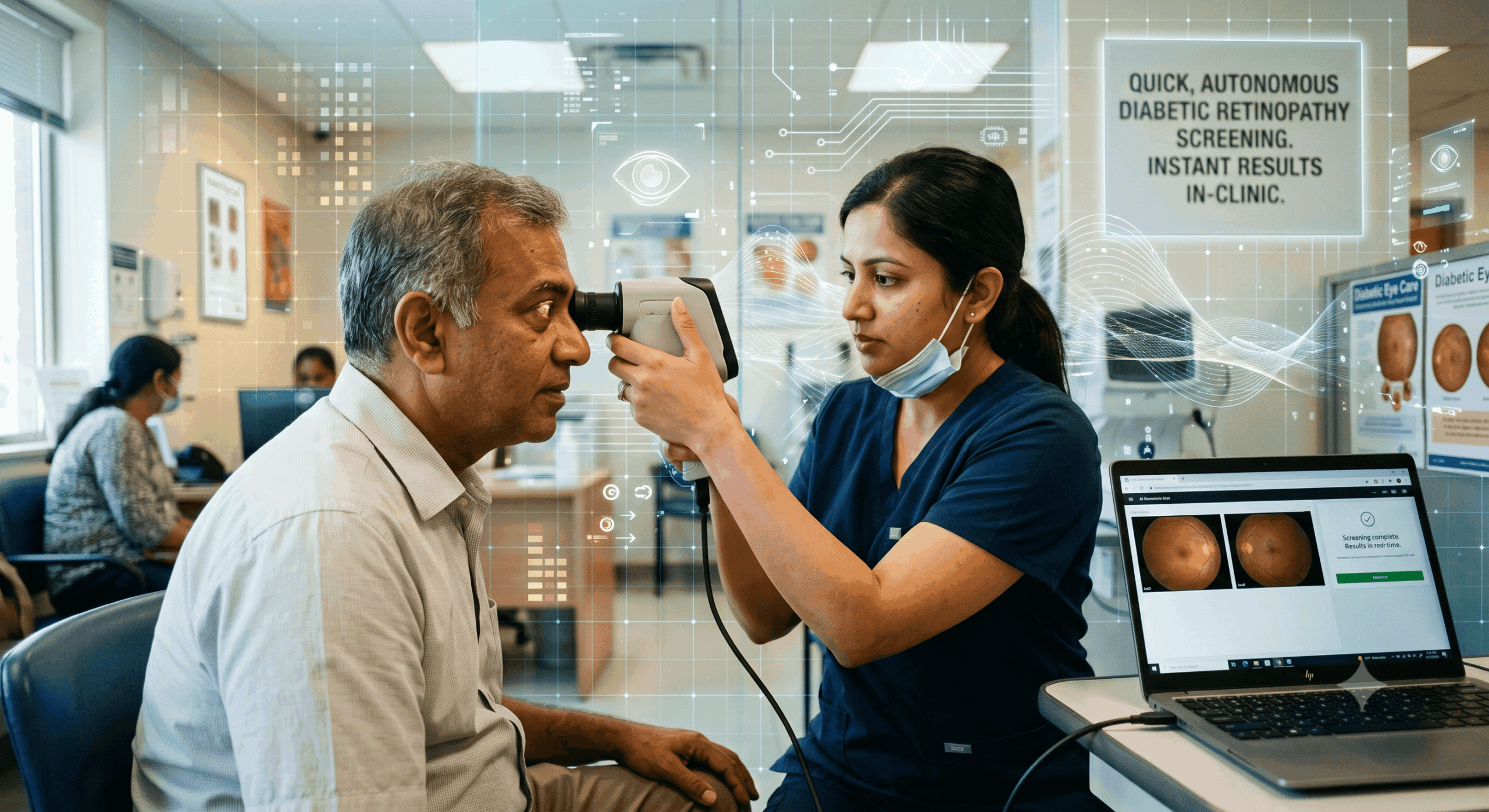
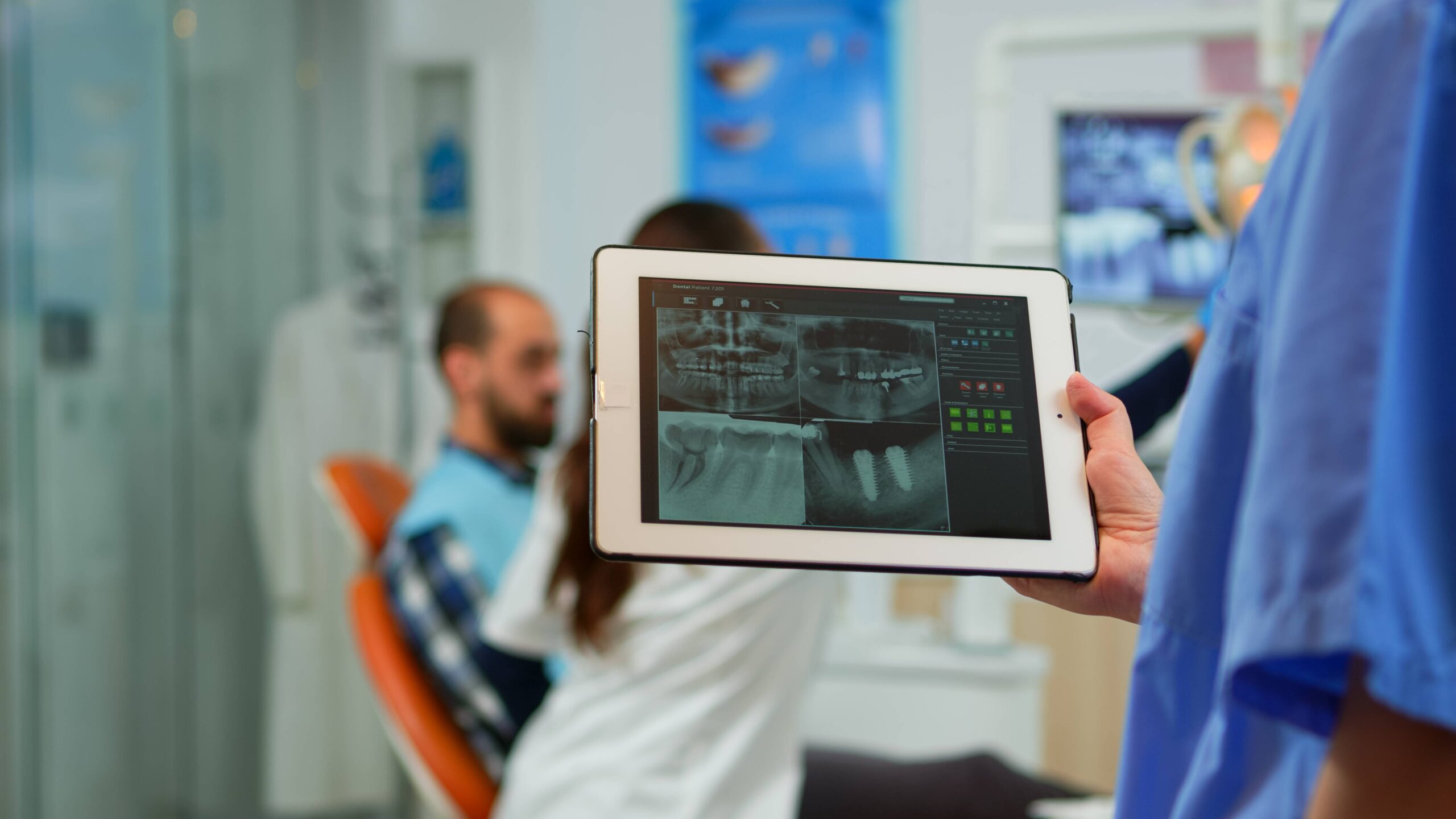
AI analyses X-rays, intraoral images, and treatment history to support faster diagnosis and treatment planning.
AR and VR in Patient Education
Patients visualise procedures before they happen. This builds confidence and improves acceptance.
Robotics in Precision Dentistry
Robotic systems support implants, surgeries, and repetitive procedures with higher accuracy.
Predictive Analytics in Healthcare
AI forecasts demand, recalls, follow-ups, and treatment timelines.
AI Copilots for Dentists
AI summarises patient histories and surfaces insights instantly.
Workflow Automation Replacing Admin Burden
Scheduling, reminders, inventory, and analytics run automatically.
AI does not replace dentists.
AI replaces inefficiency.
EasyClinic fits into this ecosystem by acting as the operational intelligence layer connecting diagnostics, workflows, analytics, and compliance.
Explore capabilities at Easy Clinic Features.
How AI-Powered Clinic Management Software Solves These Problems
Problem
Unpredictable patient flow.
AI Solution
Predictive analytics forecasts appointments and no-shows.
Result
Optimised chair utilisation and shorter wait times.
Problem
Inventory wastage and shortages.
AI Solution
Dental inventory forecasting software predicts supply needs.
Result
Lower costs and uninterrupted procedures.
Problem
Fragmented data.
AI Solution
AI-powered dental practice analytics unify records.
Result
Faster decisions and continuity of care.
Problem
Revenue leakage.
AI Solution
Automated billing audits and analytics.
Result
Protected cash flow.
AI dental clinic management software like EasyClinic is designed to deliver these outcomes at scale.
Visit EasyClinic to explore more.
Real World Use Cases Clinics Can Relate To
A Dental Clinic
Problem
Overcrowded mornings and idle afternoons.
AI Adoption
Predictive scheduling and patient flow optimisation.
Result
Balanced daily workload and higher throughput.
A Cardiology Centre
Problem
Long waiting times and staff fatigue.
AI Adoption
Predictive analytics for appointment planning.
Result
Reduced waiting times and improved patient satisfaction.
A Multi-Speciality Clinic
Problem
Unclear revenue and inventory trends.
AI Adoption
Centralised AI dashboards and analytics.
Result
Clear financial visibility.
These outcomes are becoming common as clinics adopt AI-powered systems like EasyClinic.
Robotics, AR, VR, AI, and Clinic Management Software: The Bigger Picture for Dental Clinics
Dental healthcare is no longer evolving in isolated pieces. Robotics, AR, VR, AI diagnostics, and predictive analytics are advancing rapidly, but their real power emerges only when they are connected through intelligent clinic management software.
This is the bigger picture many clinics miss.
Robotics Is Creating Data Faster Than Humans Can Process
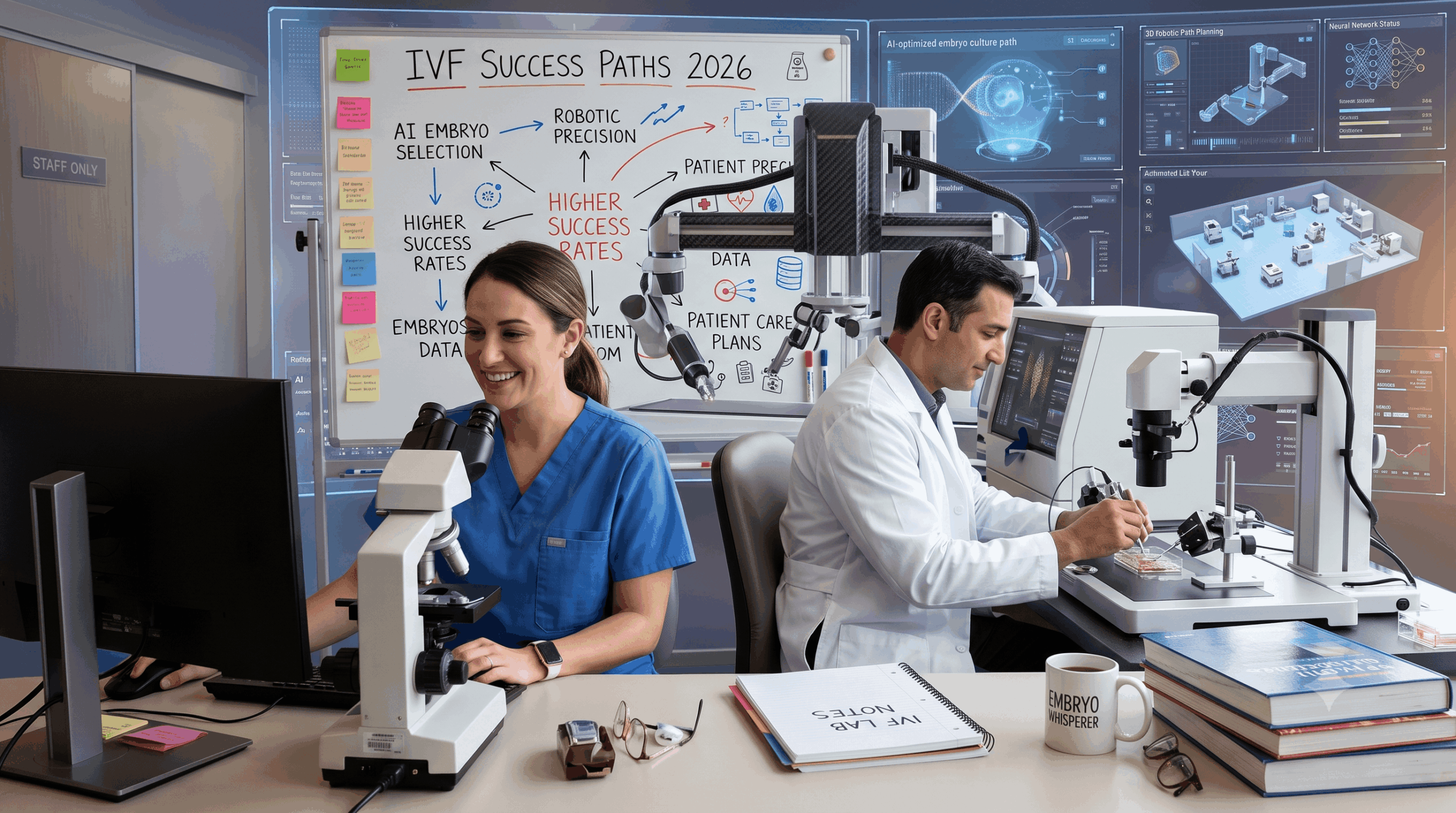
Robotic-assisted dentistry is becoming more common in implantology, oral surgery, and precision-driven procedures. These systems generate massive amounts of structured and unstructured data, including procedure timings, accuracy metrics, imaging data, and treatment outcomes.
On their own, robots improve precision.
But without intelligent software, this data remains underutilised.
Clinic management platforms transform robotic output into actionable insights by:
-
Linking procedural data to patient records
-
Tracking outcomes across treatments
-
Identifying efficiency patterns
-
Supporting quality audits and compliance
Robotics without intelligent data orchestration is incomplete.
AR and VR Are Redefining Patient Expectations
Augmented Reality and Virtual Reality are no longer just visual tools. They are decision-making enablers.
In dental clinics, AR and VR are used to:
-
Simulate treatment outcomes
-
Educate patients about procedures
-
Improve informed consent
-
Increase treatment acceptance rates
However, these experiences generate engagement data that must be captured, analysed, and linked to patient journeys. Without a central clinic management system, AR and VR remain standalone experiences rather than integrated care tools.
When connected to clinic software, AR and VR data help clinics:
-
Understand patient behaviour
-
Predict treatment drop-offs
-
Improve consultation effectiveness
-
Personalise care pathways
AI Is the Intelligence Layer That Connects Everything
AI sits at the centre of this ecosystem.
AI analyses diagnostic images, predicts patient flow, forecasts inventory needs, identifies high-risk patients, and optimises schedules. But AI models rely on clean, continuous, and connected data streams.
This is where many clinics struggle.
Disconnected systems lead to fragmented intelligence.
Integrated platforms create compounding intelligence.
AI-powered clinic management software unifies data from:
-
Appointments
-
Clinical records
-
Imaging systems
-
Inventory usage
-
Billing and revenue cycles
-
Patient engagement tools
The result is predictive, not reactive, decision-making.
Predictive Analytics Turns Data Into Foresight
Predictive analytics is the bridge between technology and business outcomes.
For dental clinics, predictive analytics enables:
-
Forecasting patient demand weeks in advance
-
Optimising chair utilisation and staffing
-
Preventing inventory shortages
-
Identifying patients at higher clinical or financial risk
-
Planning expansion with confidence
Instead of reacting to overcrowding, cancellations, or shortages, clinics anticipate and prevent them.
This shift from reactive management to proactive planning is what defines AI-first clinics.
Clinic Management Software Is the Operational Backbone
Robotics generates data.
AR and VR influence patient decisions.
AI interprets patterns.
Clinic management software operationalises everything.
Without a central platform, these technologies remain disconnected investments. With the right system, they become a unified growth engine.
AI-powered platforms like EasyClinic act as the operational backbone that:
-
Connects clinical, operational, and financial data
-
Enables predictive analytics at scale
-
Supports compliance and audit readiness
-
Prepares clinics for future robotics and AI adoption
This is not about adding more tools.
It is about building a connected, intelligent clinic ecosystem.
Why This Matters More in India
In India’s fast-growing dental healthcare market, clinics face unique pressures:
-
High patient volumes
-
Cost sensitivity
-
Workforce constraints
-
Rapid technology adoption by competitors
Clinics that invest in isolated technologies risk inefficiency and complexity. Clinics that invest in integrated AI-powered clinic management platforms gain clarity, control, and scalability.
The future of dentistry will not belong to clinics with the most devices.
It will belong to clinics with the most intelligent systems.
Robotics, AR, VR, and AI are shaping the future.
Clinic management software determines who can actually benefit from it.
This is the bigger picture.
What Clinics in India Must Do to Stay Competitive
Dental clinics must act decisively.
Digitise workflows end-to-end.
Adopt AI-first systems.
Prepare for robotics integration.
Choose scalable clinic management platforms.
EasyClinic helps dental clinics transition into AI-first operations without disruption.
Cost, ROI, and Business Impact of AI Clinic Management
The cost of not adopting AI is rising.
Wasted chair time.
Inventory losses.
Staff burnout.
Missed growth.
Research from PwC shows that predictive analytics delivers ROI through time savings, cost control, and improved patient outcomes.
Explore Pricing
Be a Breakthrough Pioneer in AI-Powered Clinic Management Software for Dental Clinics in India
Early adopters are already winning.
AI and robotics are reshaping dental healthcare now.
Talk to EasyClinic to explore how AI-powered predictive analytics for dental clinics can transform your speciality practice.
Visit Easy Clinic.
Frequently Asked Questions
1. What is predictive analytics for dental clinics
It uses AI to forecast patient demand, staffing needs, inventory usage, and risks.
2. How does AI improve patient flow
By predicting arrivals, no-shows, and peak hours.
3. Can predictive analytics reduce waiting times
Yes, by balancing schedules proactively.
4. How does AI help manage dental inventory
It forecasts supply needs using historical data.
5. Is AI suitable for small dental clinics
Yes, scalable platforms support all clinic sizes.
6. Does predictive analytics improve revenue
Yes, by reducing leakage and optimising capacity.
7. Is patient data secure
Yes, when managed through secure EMR platforms.
8. How fast can clinics adopt AI analytics
Implementation typically takes weeks.
9. Does AI replace staff
No, it supports smarter workflows.
10. Why choose EasyClinic
Because it unifies AI analytics, EMR, and automation.
Conclusion
The Future of Dental Clinics Is Already Here
AI-driven dental clinics are becoming the standard.
Predictive analytics is replacing guesswork.
AR and VR are improving patient engagement.
Robotics is enhancing precision.
AI-powered software is transforming operations.
The gap between AI-first clinics and traditional clinics is widening.
Clinics that adapt now will lead.
Clinics that delay will struggle.
EasyClinic exists to help dental clinics in India step confidently into this future.
Explore EasyClinic today:
http://143.198.231.228/
http://143.198.231.228/features/
http://143.198.231.228/pricing/
The future of dentistry is predictive, intelligent, and already here.