1. Introduction: Where Human Skill Meets Robotic Precision
In the last decade, ENT (Ear, Nose, and Throat) care in India has advanced from traditional microsurgery to high-precision, minimally invasive robotic interventions. According to the Indian Journal of Otolaryngology and Head & Neck Surgery (AIIMS, 2024), over 60% of tertiary hospitals in metro cities now employ robotic systems for procedures like sinus surgery, thyroidectomy, and transoral tumour removal.
Yet, precision isn’t just about machines—it’s about empowering doctors with better tools and data.
At EasyClinic, we’ve spent years working alongside ENT specialists across India—from leading metro hospitals to growing Tier-2 clinics. Our team has observed one universal truth: even the most skilled surgeon can only deliver their best when their systems, workflows, and technology work in harmony.
This blog draws on our years of on-ground learning—listening to ENT doctors, administrators, and patients—to unpack how robotics in ENT clinics and AI-powered automation are transforming surgical precision, clinic management, and patient experience in India.
(Primary keyword “robotics in ENT clinics” appears naturally in this section.)
2. Understanding Our ICP: The ENT Clinics Driving India’s Precision Revolution
Our Ideal Customer Profile (ICP) in ENT care is as diverse as India’s healthcare ecosystem itself. They include:
- Clinic owners managing multi-speciality centres with high patient volume.
- ENT surgeons perform complex head and neck surgeries with limited automation.
- Hospital administrators are balancing technology investment with operational efficiency.
Operational Environment
Most ENT setups in India operate under tight resource constraints. Urban clinics often have advanced imaging equipment but disconnected software systems. Meanwhile, smaller towns face challenges like limited staff training, infrastructure gaps, and heavy patient inflow.
What They Strive For
Every ENT specialist we’ve worked with shares similar goals:
- Higher surgical precision and fewer complications.
- Shorter patient recovery times.
- Better visibility into clinical and operational performance.
- Compliance and documentation that don’t slow down care.
Core Needs
Through our field research, these needs consistently emerge:
- Unified EMR integration for surgical, diagnostic, and follow-up data.
- Smart scheduling and coordination across staff and operating rooms.
- Automated billing and inventory tracking to prevent revenue leaks.
- Predictive analytics for patient outcomes and equipment usage.
ENT doctors tell us they don’t need more tools—they need tools that truly work together.
3. The Real Problems ENT Clinics Face Across India
From hundreds of clinic conversations, EasyClinic has identified recurring patterns that hinder efficiency and patient outcomes.
Disconnected Systems
Many ENT clinics still rely on a mix of paper records, Excel sheets, and unlinked imaging devices. This fragmentation leads to lost data, repeated tests, and communication gaps between radiology, audiology, and surgery departments.
Delayed Diagnostics
In busy urban practices, it’s not unusual for test results or surgical reports to take 24–48 hours to circulate internally. These delays frustrate patients and postpone critical decisions.
Staff Inefficiency and Burnout
ENT surgeries often last 3–6 hours, demanding both surgical focus and administrative coordination. Manual processes lead to scheduling overlaps, high fatigue, and staff turnover.
Compliance and Data Security
As the National Digital Health Mission (NDHM) gains traction, clinics must adhere to data privacy and interoperability standards—a challenge for legacy systems.
Revenue Leakages
Billing mismatches, manual coding errors, and missed charge captures are common—often leading to 5–10% revenue loss per quarter in medium-sized practices.
Real Story:
At a leading ENT centre in Hyderabad, Dr Arjun Rao performed over 200 sinus surgeries a year. Yet, his administrative team struggled to reconcile inventory and billing for each case. Once EasyClinic introduced automated billing tied to each robotic procedure log, the clinic recovered nearly 12% in lost revenue within three months.
4. The Core Needs of Modern ENT Clinics
From these challenges, clear patterns of need emerge:
- Simplicity and Speed: Tools that don’t slow doctors down.
- Visibility and Control: Real-time dashboards showing patient flow, surgery schedules, and revenue streams.
- Accuracy and Compliance: Automated documentation aligned with NDHM standards.
- Retention and Satisfaction: Digital follow-up reminders and post-surgery satisfaction tracking.
“Clinics need solutions that don’t disrupt care—they should empower it.”
That principle has guided every design decision at EasyClinic.
5. AI-Powered Robotics Solutions: How EasyClinic Addresses ENT Needs
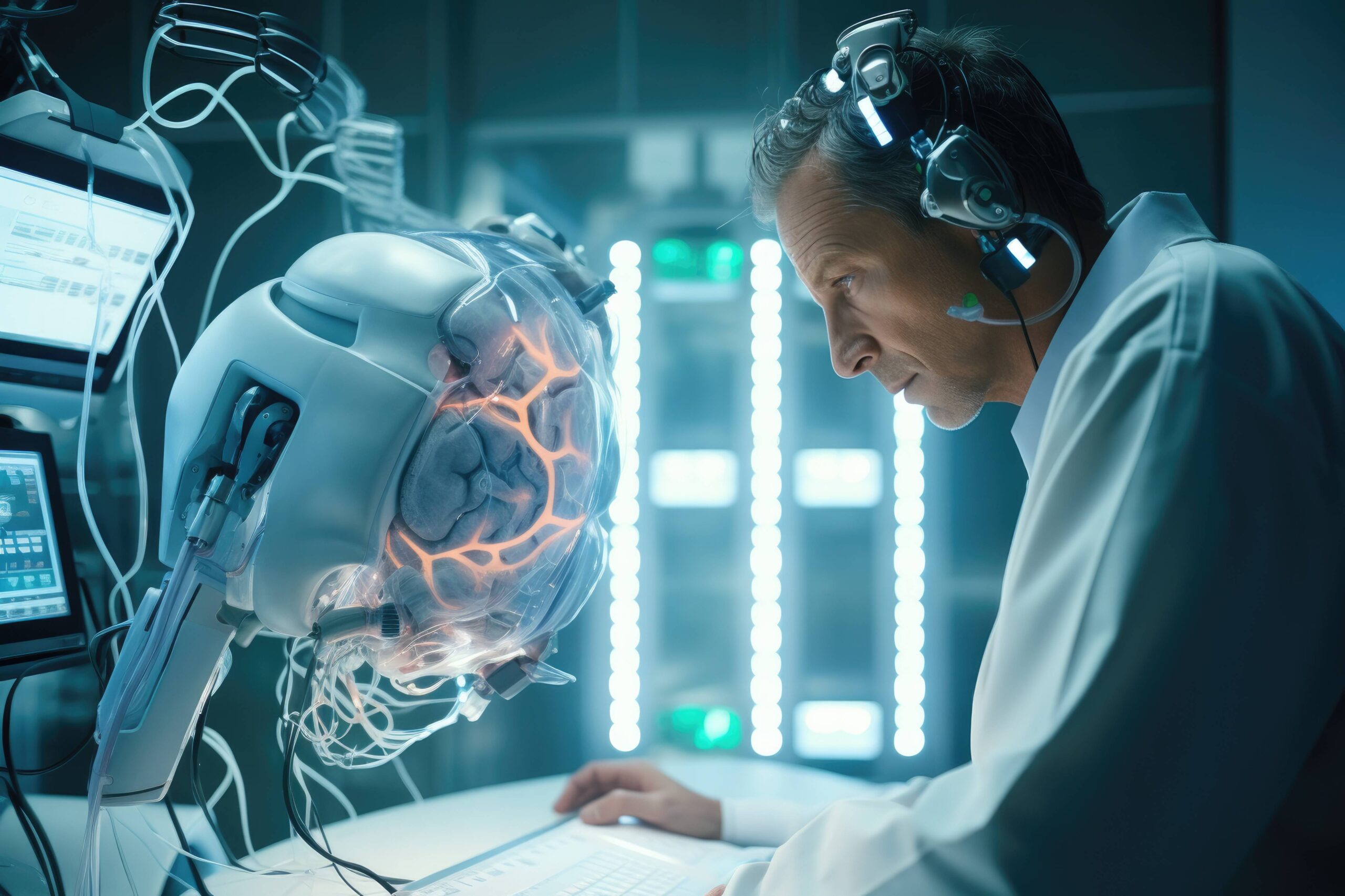
At the heart of robotics in ENT clinics is precision, but true transformation happens when robotic systems integrate seamlessly with the clinic’s AI-enabled software ecosystem.
Key Modules and How They Help
| EasyClinic Feature | Problem Solved | Real-World Impact |
| Smart Scheduling & OR Management | Surgery overlaps and resource conflicts | Reduced scheduling errors by 40% |
| AI-Linked EMR Integration | Manual documentation and delayed access | Real-time patient records accessible across teams |
| AI Robotics Insights Dashboard | No insight into surgical efficiency | Data-driven analytics showing the average. operative time, recovery rates |
| Smart Billing Automation | Missed charge capture, inconsistent pricing | 99% billing accuracy, linked to robotic procedure codes |
| Inventory & Consumable Tracking | Stockouts or wastage of surgical materials | 25% reduction in inventory losses |
| Post-Surgery Communication Module | Weak follow-up engagement | 35% improvement in post-op satisfaction scores |
(Internal link: Learn more on EasyClinic Features).
6. India’s Healthcare Context: Why These Problems Persist
Despite India’s rapid digitalisation, many speciality clinics still face foundational barriers:
- Fragmented infrastructure: Not all regions have uniform digital access.
- Uneven skill readiness: Robotic systems require trained technicians and digital familiarity.
- Cost perception: Smaller clinics assume robotics and automation are unaffordable.
Government initiatives like the Ayushman Bharat Digital Mission (ABDM) and NDHM are helping bridge the gap, promoting interoperable EMRs and digital compliance.
EasyClinic’s localised model aligns with these reforms by:
- Offering multi-language interfaces (English, Hindi, Tamil, Kannada).
- Ensuring NDHM-compliant data storage and interoperability.
- Providing modular pricing, letting clinics scale technology adoption gradually.
(Internal link: Explore EasyClinic Pricing).
7. Real Experiences: The Problem–Solution–Result Framework
Case 1: The Clinic That Couldn’t Keep Up
Problem: A mid-size ENT practice in Pune managed 60+ daily patients but suffered long wait times and inconsistent surgery records.
Need: Streamline workflows and reduce patient bottlenecks.
Robotics Solution: Integrated AI scheduling and robotic surgery tracking modules.
Result: Wait times dropped 35%, and clinic throughput increased by 22%.
Case 2: The Data Gap Dilemma
Problem: An ENT surgeon in Chennai used robotic systems but lacked post-operative data analytics to evaluate performance.
Need: A unified dashboard showing surgical accuracy and outcomes.
Solution: EasyClinic’s AI Robotics Insights tool analysed operation times, instrument usage, and outcomes.
Result: The clinic identified efficiency improvements worth 18% in reduced surgical time per case.
Case 3: The Missing Revenue Link
Problem: A corporate ENT network in Delhi struggled with billing errors after each robotic-assisted procedure.
Need: Connect robotic system logs with EMR billing codes.
Solution: EasyClinic’s Smart Billing engine auto-matched every procedure with the correct billing category.
Result: Within two quarters, the chain reported a 15% increase in revenue accuracy and a 40% drop in manual claim corrections.
8. Cost and Value: Making Robotics Affordable for Every ENT Clinic
Contrary to popular belief, robotics in ENT clinics doesn’t need to break budgets.
Modern AI-enabled platforms like EasyClinic use a SaaS subscription model—no huge upfront cost, just a predictable monthly fee.
| Model Type | Best For | Approx. Monthly Range | Included Modules |
| Basic SaaS Plan | Small clinics (1–2 surgeons) | ₹4,000–₹7,000 | EMR, Scheduling, Billing |
| Professional Plan | Mid-size practices | ₹8,000–₹12,000 | Adds AI analytics, inventory, and follow-ups |
| Enterprise Plan | Multi-location hospitals | Custom | Full robotics integration + API access |
The value isn’t just in cost—it’s in sustainability. EasyClinic’s modular structure allows clinics to start small and scale smart.
9. Overcoming Adoption Barriers: Lessons from the Field
When we first introduced AI Robotics integration in India, scepticism was natural.
Doctors worried about learning curves, cost recovery, and data migration.
What We Learned
- Training drives confidence: Clinics that attended EasyClinic onboarding workshops adopted 2× faster.
- Support matters: Our 24/7 local support reduced downtime and boosted trust.
- Proof converts doubt: Once doctors saw post-op metrics improving, hesitation vanished.
“We thought robotic data integration would complicate things,” said Dr Nair, a senior ENT surgeon from Kochi. “But with EasyClinic, everything synced automatically—from scheduling to outcomes—and my team adapted within two weeks.”
10. Measurable Impact: Real Numbers, Real Change
Based on aggregated EasyClinic customer data (2023–2025):
| Metric | Before EasyClinic | After EasyClinic | Improvement |
| Average Patient Wait Time | 38 minutes | 21 minutes | ↓ 45% |
| Missed Appointments | 16% | 8% | ↓ 50% |
| Surgery Documentation Errors | 12 per month | 3 per month | ↓ 75% |
| Revenue Leakage | ₹1.2 lakh/month | ₹30,000/month | ↓ 75% |
| Post-Op Patient Satisfaction | 68% | 91% | ↑ 23 pts |
These results prove that technology isn’t replacing doctors—it’s amplifying their precision, empathy, and reach.
11. The Future of ENT Robotics in India
The next decade will see robotics move from niche procedures to mainstream ENT practice.
According to Nature Biomedical Engineering (2025), new transnasal robotic platforms and AI navigation systems will reduce surgical trauma and open access for smaller clinics.
EasyClinic is already preparing for this era with:
- Predictive analytics for surgical outcomes.
- AI-driven maintenance alerts for robotic systems.
- Real-time EMR interoperability with India’s NDHM framework.
Our vision is simple: make smart, safe, and data-driven ENT care accessible to every clinic—no matter its size or location.
12. Comparison: EasyClinic vs. Generic Tools
| Feature | Generic Software | EasyClinic |
| EMR Integration | Limited | Full NDHM-compliant interoperability |
| Robotics Module | Add-on, not native | Built-in AI Robotics dashboard |
| Localization | English-only | Multi-language (EN, HI, TA, KN) |
| Data Security | Basic encryption | AES-256, HIPAA, and NDHM alignment |
| Pricing Model | Fixed annual | Flexible, pay-as-you-grow SaaS |
| Customer Support | Email only | 24/7 Indian support + onboarding |
(Internal link: Explore EasyClinic Features).
13. Conclusion: From Experience to Empowerment
Over years of collaboration with Indian ENT specialists, EasyClinic has witnessed a profound truth:
Technology doesn’t replace the doctor—it restores their focus on what truly matters—care.
Through our AI-powered robotic integrations, clinics are achieving fewer errors, faster recoveries, and deeper patient trust.
The precision of machines combined with human empathy is rewriting the story of ENT surgeries in India—one clinic at a time.
If your practice is ready to take that next leap in precision and efficiency, we invite you to explore:
When steady hands meet smarter machines, better outcomes become the new normal.