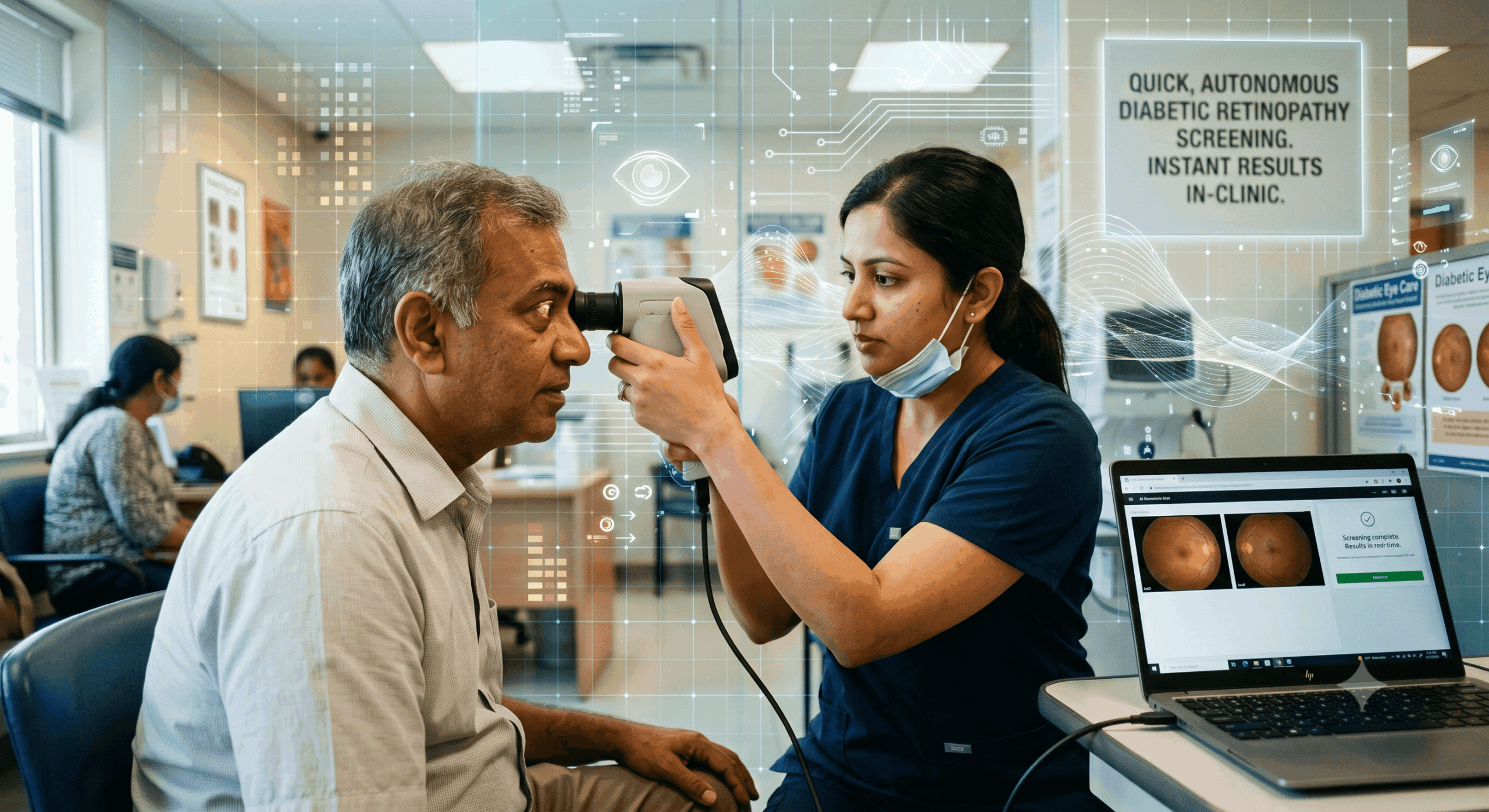
A patient walks into a clinic in India for a diabetes follow-up. The doctor asks about blood sugar levels, blood pressure, sleep, activity, and medication routine. The patient gives rough answers because most readings are either forgotten, written in different notebooks, or saved on different apps. This is exactly where smart clinics are changing patient care.
In 2026, clinics are no longer expected to manage patients only during the consultation. Patients want continuous guidance, faster decisions, digital records, and connected care. IoT in healthcare makes this possible by using smart healthcare devices, connected medical devices, and IoT patient monitoring systems to bring real-world patient data into the clinic workflow.
The rise of connected care is not just a global trend. India is also seeing wider interest in remote monitoring, telemedicine, digital health kiosks, and AI-supported care models. Recent examples include AI-supported dialysis ecosystems with remote monitoring and health kiosks capable of capturing basic vitals such as blood pressure, glucose, ECG, oxygen saturation, BMI, temperature, and pulse. (The Economic Times)
What The Core Problem Clinics Face
Most clinics still depend on point-in-time information. A patient comes in, shares symptoms, gives a partial history, and the doctor makes the best possible decision based on the available information.
But many health conditions do not behave neatly between appointments.
Blood pressure changes daily. Blood sugar varies with meals, sleep, stress, and medication routine. Oxygen saturation may fluctuate. Weight may move slowly. Symptoms may appear at home but disappear during the clinic visit.
This creates a major gap for doctors.
The clinic sees the patient for 10 minutes, but the patient’s health has been changing all week.
This is where smart clinics become important. They help clinics move from occasional care to connected care.
Common problems include:
- Incomplete patient readings
- Poor follow-up visibility
- Manual data entry from paper logs
- Patients forgetting home readings
- Difficulty tracking chronic conditions
- No single view of patient progress
- Front desk teams are handling too many calls
- Doctors making decisions with limited context
Why This Problem Is Getting Worse
Patient expectations are changing quickly in India. People now use smartphones, fitness trackers, glucose monitors, digital BP machines, and health apps. But many clinics are still not prepared to bring this data into a structured care workflow.
The growth of IoT in healthcare is being driven by remote patient monitoring, wearables, smart sensors, and connected medical devices that collect health data outside traditional clinic settings. Market research also shows strong growth expectations for the Internet of Medical Things, largely because remote monitoring and connected devices are becoming more important to healthcare delivery. (GlobeNewswire)
For clinics, the challenge is not only collecting data. The real challenge is making that data useful.
A clinic may receive readings from a smartwatch, a BP monitor, a glucometer, and a weighing scale. But if this information is not linked to patient records, appointments, prescriptions, billing, and follow-ups, it becomes noise.
That is why smart clinics need more than smart devices. They need a connected clinic management system.
Rethinking The Problem
The future of clinic care is not about replacing doctors with devices. It is about giving doctors better visibility between visits.
A traditional clinic asks, “What is happening today?”
A smart clinic asks, “What has been happening since the last visit?”
That shift changes everything.
Smart clinics use connected workflows to understand patient progress more clearly. The doctor can review trends, front desk teams can manage follow-ups better, and patients feel more supported after leaving the clinic.
This is the practical value of smart healthcare devices and IoT patient monitoring. They do not replace the consultation. They make the consultation more informed.
How EasyClinic Solves This In Practice
EasyClinic helps clinics build the digital foundation needed for connected care. A clinic may use connected medical devices, but it still needs one place to manage patient records, appointments, prescriptions, billing, follow-ups, and care history.
Imagine a patient with hypertension.
The patient visits the clinic. The doctor reviews previous consultations, recent BP readings, medication history, and follow-up notes. The front desk schedules the next visit. The prescription is recorded digitally. Billing is completed. The next time the patient returns, the clinic does not start from zero.
This is how smart clinics work in practice.
EasyClinic supports:
- Patient records
- Appointment workflows
- Digital prescriptions
- Billing management
- Follow-up tracking
- Inventory visibility
- Clinic analytics
- Multi-user coordination
Clinics can explore these workflows on the EasyClinic features page.
Smart Clinics And IoT Devices: What Changes?
| Clinic Area | Traditional Clinic Workflow | Smart Clinic Workflow |
| Patient readings | Paper logs or patient memory | Connected medical devices and digital records |
| Chronic care | Limited visibility between visits | IoT patient monitoring supports trend review |
| Follow ups | Manual reminders and phone calls | Structured digital follow-up workflows |
| Doctor consultation | Based on current symptoms | Based on history, readings, and trends |
| Front desk work | Repeated manual coordination | Better appointment and patient flow visibility |
| Patient trust | Depends mostly on consultation time | Improves through continuous support |
| Clinic growth | More patients create more pressure | Smart workflows support scale |
This is why smart clinics are not only about devices. They are about connected operations.
How IoT Devices Are Transforming Patient Care
The biggest shift created by IoT in healthcare is that patient care no longer begins and ends inside the clinic room. Connected medical devices now allow clinics to understand what is happening in the patient’s daily life between visits.
For years, doctors depended mostly on occasional consultations and patient memory. A patient might say, “My sugar was high last week,” or “My BP fluctuates sometimes,” without exact details. Today, smart healthcare devices such as digital glucometers, blood pressure monitors, pulse oximeters, ECG patches, smartwatches, and connected weighing scales are changing that experience.
In smart clinics, these devices help create a more continuous view of health instead of isolated snapshots.
For example, a patient with hypertension may appear stable during a clinic visit but show fluctuating readings at home. A diabetes patient may struggle after meals or during late-night hours without realising patterns. A heart patient may experience irregular changes that are difficult to capture during a short appointment. This is where IoT patient monitoring becomes valuable because it gives doctors more real-world context.
IoT devices are transforming patient care by helping clinics:
- Monitor chronic conditions more consistently
- Reduce dependence on patient memory
- Improve follow-up discussions with actual data
- Detect unusual patterns earlier
- Support elderly and remote patients better
- Improve communication between the doctor and patient
- Build more personalised treatment conversations
- Create stronger continuity between visits
This transformation is especially important in India, where clinics often manage large patient volumes with limited time per consultation. Connected care workflows help doctors focus faster on trends and patient history instead of spending most of the appointment collecting fragmented information.
However, devices alone are not enough. The real value appears when data from connected medical devices becomes part of a structured clinic workflow. This is where EasyClinic helps smart clinics organise patient records, appointments, prescriptions, follow-ups, and operational workflows in one connected system.
The future of patient care will not rely only on larger hospitals or more consultations. It will depend on how intelligently clinics can connect devices, doctors, data, and patient journeys.
Practical Wow Use Cases
1. The Diabetes Patient Who Cannot Remember Readings
A diabetes patient may check glucose at home but forget the exact readings during the visit. Sometimes the data is in a notebook. Sometimes it is on a device. Sometimes it is missing.
With IoT in healthcare, readings from smart devices can support better review when connected to clinic workflows. The doctor gets more context, and the patient does not feel pressured to remember every number.
2. The Hypertension Patient With Normal Clinic BP
Some patients show normal readings inside the clinic but have higher readings at home. This can make treatment discussions difficult.
IoT patient monitoring can help clinics review patterns over time instead of relying only on one reading during the visit.
3. The Elderly Patient Living Far From The Clinic
An elderly patient may not be able to visit often. Connected medical devices can help capture basic health data from home, while the clinic manages follow-up planning more clearly.
This supports better continuity without forcing unnecessary visits.
4. The Front Desk That Stops Chasing Every Follow-Up Manually
Many clinics depend on staff memory for follow-ups. As patient volume grows, this becomes unreliable.
With clinic management software, follow-ups become easier to organise, and the front desk can work with more structure.
5. The Doctor Who Wants Better Trends, Not Just Symptoms
Symptoms matter, but trends often reveal more. Weight, BP, glucose, oxygen saturation, and heart rate patterns can help doctors understand patient progress better.
This is where smart clinics create a stronger clinical conversation.
What Clinics Notice After Implementation
When clinics start moving toward smart workflows, the improvement is visible in daily operations.
Doctors spend less time asking patients to recall data. Front desk teams handle fewer repeated status questions. Patients feel more connected to the clinic. Follow-ups become easier to manage. Clinic owners see better workflow discipline.
Clinics may notice:
- Better patient history visibility
- Cleaner chronic care tracking
- Fewer missed follow-ups
- More organized consultations
- Better patient communication
- Reduced front desk pressure
- Stronger continuity of care
- Improved operational visibility
This is why smart clinics are becoming important for modern healthcare growth in India.
Patient Experience Transformation
Patients do not usually care about the technical term “IoT.” They care about whether the clinic understands them.
They want the doctor to know what happened since the last visit. They want their readings to be taken seriously. They want follow-ups to feel organised. They want fewer repeated explanations.
Smart clinics improve patient experience by making care feel more continuous.
Patients benefit through:
- Less repetition of history
- Better follow-up clarity
- More confidence in the doctor’s review
- Smoother chronic care management
- Better communication after visits
- More personalised care discussions
The strongest patient experience is not always created by fancy devices. It is created when devices, data, doctors, and workflows work together.
Why EasyClinic Is Built For This Problem
EasyClinic is built for clinics that want practical digital transformation. It helps clinics move from scattered manual work to connected workflows.
For smart clinics, this foundation matters. Connected medical devices can collect data, but clinics need a system that helps organise patient journeys.
EasyClinic helps clinics manage the operational side of connected care through:
- EMR and patient records
- Appointment scheduling
- Digital prescriptions
- Billing workflows
- Follow-up management
- Inventory and operational visibility
- Analytics for clinic owners
- Team coordination
This makes EasyClinic useful for clinics that want to adopt smart healthcare devices, IoT patient monitoring, and better digital workflows without overwhelming their staff.
Clinics can explore EasyClinic, review its features, and plan implementation through the pricing page.
Smart Clinics Need Security And Data Discipline
Connected care also comes with responsibility. More devices mean more data, and more data means clinics must think carefully about privacy, access control, and security.
Healthcare authorities and regulators globally have warned that connected patient monitors and medical devices can create cybersecurity risks if not managed properly. (Reuters)
For Indian clinics, this means smart clinics should not connect devices casually. They need clear processes for:
- Patient consent
- Data access
- Secure systems
- Staff training
- Device management
- Responsible use of patient information
Technology is helpful only when trust is protected.
How Smart Clinics Help Clinic Owners Scale
A clinic owner often sees the waiting room but not the full workflow. Are chronic patients returning on time? Are follow-ups being missed? Are doctors overloaded? Are staff members repeating work manually? Are patients calling repeatedly because communication is unclear?
Smart clinics create better visibility.
They help clinic owners understand:
- Patient flow
- Follow-up patterns
- Service demand
- Staff workload
- Chronic care engagement
- Billing and operational activity
- Growth opportunities
This turns connected care into a business advantage, not just a clinical upgrade.
FAQs
1. What are smart clinics?
Smart clinics are healthcare practices that use digital systems, connected medical devices, EMR, automation, and analytics to improve patient care and clinic operations.
2. What is IoT in healthcare?
IoT in healthcare refers to connected devices and sensors that collect, transmit, and support the use of patient health data in clinical workflows.
3. How do smart healthcare devices help clinics?
Smart healthcare devices help clinics monitor patient readings, support chronic care, reduce manual data entry, and improve follow-up discussions.
4. What are connected medical devices?
Connected medical devices are devices such as BP monitors, glucose meters, pulse oximeters, ECG devices, wearables, and smart scales that can share patient data digitally.
5. What is IoT patient monitoring?
IoT patient monitoring uses connected devices to track health readings over time, often from home or outside the clinic.
6. Are smart clinics useful for small clinics?
Yes. Small clinics can benefit from smart workflows because they often have limited staff and need better systems to manage growing patient volume.
7. Does EasyClinic connect clinic workflows?
EasyClinic helps clinics manage records, appointments, prescriptions, billing, follow-ups, and operational workflows in one connected system.
8. Can smart clinics improve chronic care?
Yes. Smart clinics can improve chronic care by helping doctors review trends, organise follow-ups, and maintain better patient history.
9. Are IoT devices enough to make a clinic smart?
No. Devices are only one part. A clinic also needs EMR, appointment workflows, billing, follow-up systems, and secure data management.
10. Where can clinics explore EasyClinic?
Clinics can visit EasyClinic, explore features, or review pricing for implementation planning.
Conclusion
Smart clinics are transforming patient care by moving from one-time consultations to connected care journeys. IoT devices, smart healthcare devices, connected medical devices, and IoT patient monitoring give doctors better visibility into what happens between visits.
But the real transformation does not come from devices alone. It comes from connecting patient data with EMR, appointments, prescriptions, billing, follow-ups, and clinic analytics.
For clinics in India, this is the next major shift. Patients want convenience. Doctors need better context. Front desk teams need smoother workflows. Clinic owners need visibility. Smart clinics bring these needs together.
To build a more connected and future-ready clinic, explore EasyClinic and its complete clinic management features.