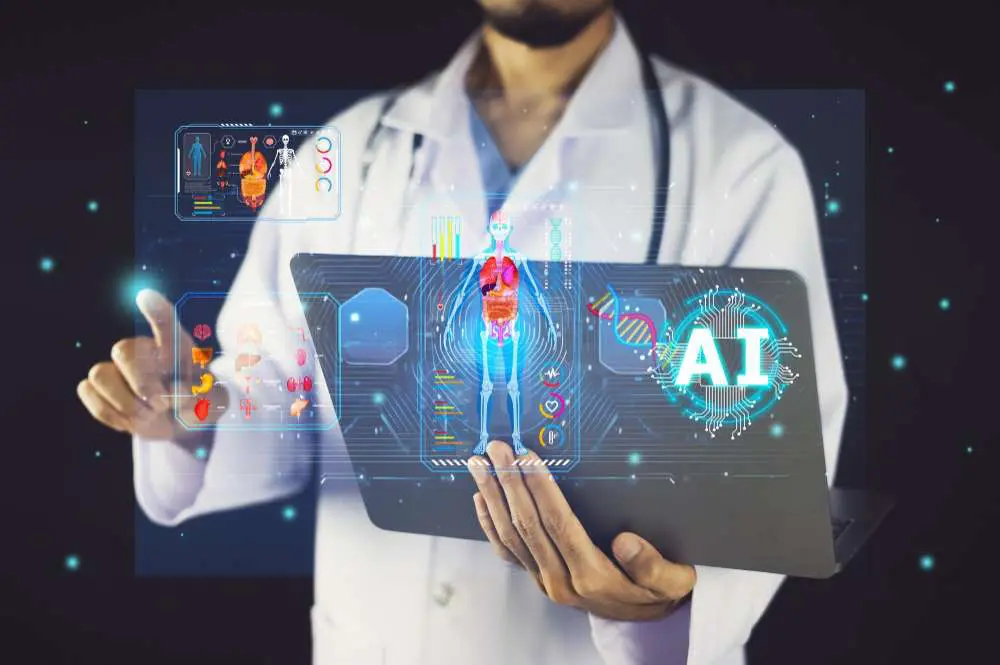
Revolutionising Diagnosis and Clinical Accuracy
AI in Healthcare is no longer a future promise. It is already reshaping how doctors detect diseases, interpret data, and make life-saving clinical decisions. From early cancer detection to predictive diagnostics and real-time clinical support, artificial intelligence is redefining diagnostic accuracy and operational efficiency across modern healthcare systems.
As patient volumes rise and diagnostic complexity increases, clinics that adopt AI in Healthcare gain a measurable edge in speed, precision, and patient outcomes. This comprehensive guide explores how AI is transforming diagnosis technology, what doctors must understand today, and how clinics can responsibly prepare for an AI-enabled future.
AI in healthcare is no longer a futuristic concept — it’s a current reality changing the way doctors diagnose, treat, and manage patient care. Medical AI and diagnosis technology are reshaping clinical workflows, improving diagnostic accuracy, and offering hope for earlier detection of life-threatening diseases. This guide explores how machine learning is driving healthcare innovation and what doctors and clinics need to know to stay ahead.
The Rise of AI in Healthcare
Medical AI applications have seen exponential growth over the last decade. From radiology to pathology, AI is now assisting healthcare providers in analysing complex medical data and uncovering patterns that human eyes might miss.
Why AI is Transforming Diagnosis
- Ability to process vast amounts of data in seconds
- Enhanced diagnostic precision and reduced human error
- Support for early intervention and preventive care
AI’s ability to learn and adapt from data allows it to continuously improve its performance, making it an indispensable tool for modern medical practice.
The Rise of AI in Healthcare
AI in Healthcare has accelerated rapidly due to three converging factors: exponential data growth, improved computing power, and advances in machine learning algorithms. Medical imaging, lab diagnostics, pathology, and clinical decision support are now powered by intelligent systems capable of analysing millions of data points in seconds.
Healthcare providers are no longer limited by human cognitive capacity alone. AI systems augment clinical expertise by detecting patterns invisible to the naked eye and flagging risks earlier in the care journey.
Why AI in Healthcare Is Transforming Diagnostic Accuracy
AI in Healthcare dramatically improves diagnostic accuracy by eliminating variability, fatigue-related errors, and incomplete data analysis.
Key reasons this transformation matters:
-
AI processes structured and unstructured data simultaneously
-
Diagnostic consistency improves across providers and facilities
-
Early disease detection becomes more reliable
-
Clinical confidence increases through data-backed insights
Rather than replacing clinicians, AI strengthens their ability to make faster and safer decisions.
How Machine Learning Powers Modern Diagnosis Technology
Machine learning models are trained on vast datasets including medical images, EMRs, lab values, and patient histories. Over time, these models learn correlations between symptoms, biomarkers, and outcomes.
Core processes behind AI in Healthcare diagnostics:
-
Data ingestion from multiple clinical sources
-
Pattern recognition across populations
-
Predictive modelling of disease progression
-
Continuous learning from real-world outcomes
This enables diagnosis technology to improve continuously as more clinical data becomes available.
What Makes AI in Healthcare More Reliable Than Traditional Methods
Traditional diagnostics rely heavily on manual interpretation and clinician experience. AI in Healthcare enhances this by introducing consistency and scalability.
AI-powered systems:
-
Reduce inter-observer variability
-
Highlight subtle abnormalities early
-
Support differential diagnosis
-
Flag missing or contradictory data
This creates a safety net that improves both speed and accuracy in high-pressure clinical environments.
How AI in Healthcare Improves Early Disease Detection
Early detection is where AI in Healthcare delivers its most profound impact. Algorithms trained on longitudinal data can identify disease markers years before symptoms appear.
Examples include:
-
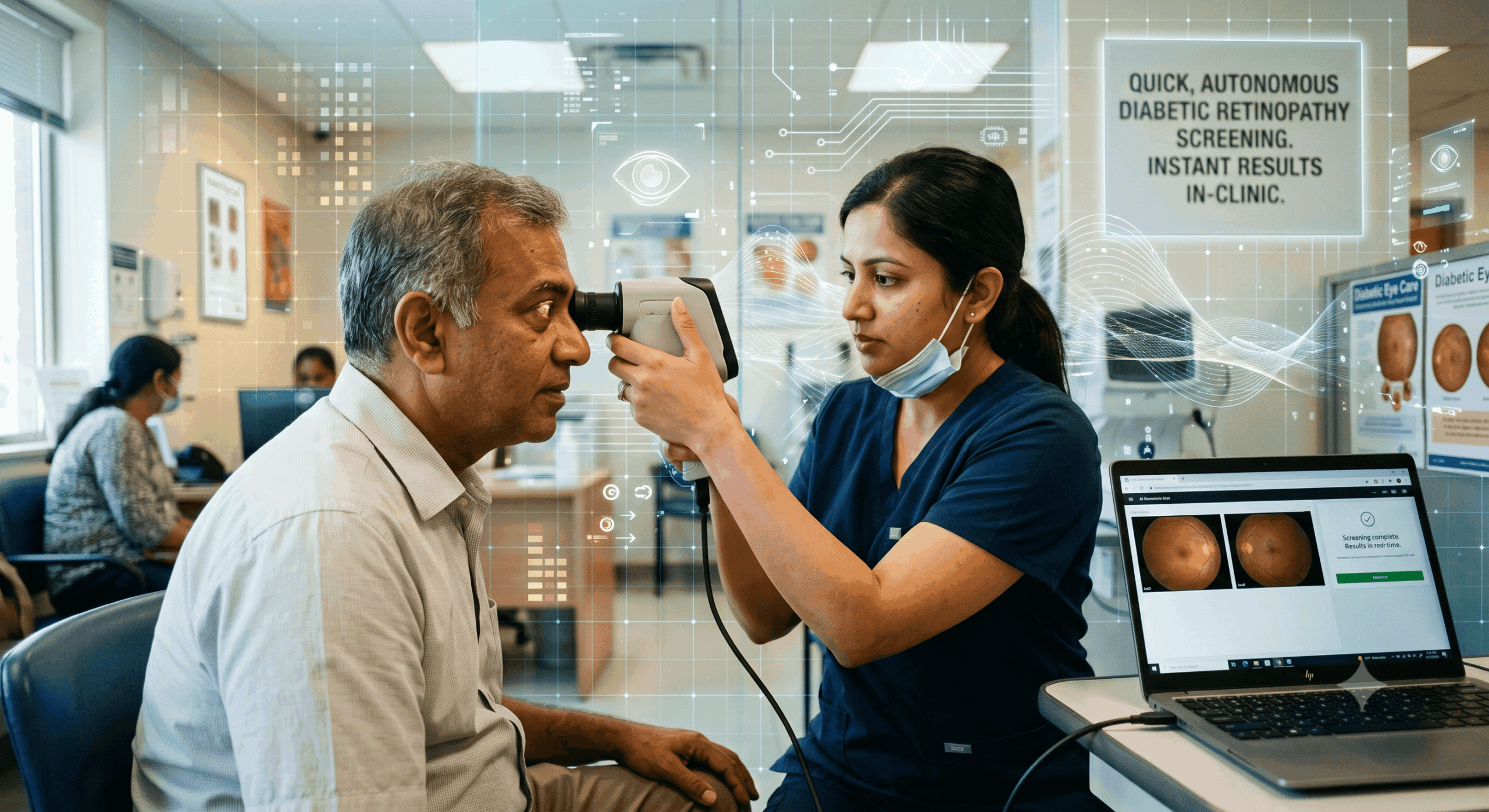
Early cancer detection through imaging analysis
-
Cardiac risk prediction from ECG patterns
-
Neurological disorder screening via subtle behavioural changes
-
Diabetic complication forecasting from lab trends
Earlier detection leads to lower treatment costs and better survival outcomes.
What Clinical Specialities Benefit Most from AI in Healthcare
AI in Healthcare delivers value across nearly every medical speciality.
High-impact areas include:
-
Radiology and imaging diagnostics
-
Pathology and histology analysis
-
Dermatology and skin cancer detection
-
Cardiology risk stratification
-
Oncology treatment planning
-
Neurology and stroke prediction
Each speciality benefits from faster analysis, reduced error rates, and better clinical confidence.
How AI in Healthcare Supports Personalised Treatment Planning
One of the most powerful outcomes of AI in Healthcare is personalisation. AI systems analyse genetics, lifestyle, comorbidities, and historical response data to recommend individualised treatment paths.
This enables:
-
Precision dosing recommendations
-
Reduced adverse drug reactions
-
Smarter therapy selection
-
Continuous treatment optimisation
Personalised care moves medicine from reactive to proactive.
When AI in Healthcare Enhances Clinical Workflow Efficiency
AI in Healthcare improves more than diagnosis. It streamlines workflows by automating time-intensive tasks.
Key workflow improvements include:
-
Automated report generation
-
Intelligent triage prioritisation
-
Clinical documentation assistance
-
Predictive scheduling optimisation
This reduces clinician burnout and allows doctors to focus on patient care.
Why Ethical AI in Healthcare Is Critical for Long-Term Trust
Ethics remain central to successful AI adoption. AI in Healthcare must be transparent, unbiased, and clinically supervised.
Ethical priorities include:
-
Data privacy and security
-
Bias detection and mitigation
-
Explainable AI models
-
Human-in-the-loop decision making
Responsible implementation ensures AI strengthens trust rather than undermining it.
How AI in Healthcare Integrates with Modern EMR Systems
AI delivers its full value only when integrated into clinical systems. Modern EMRs enable AI insights to appear directly within clinician workflows.
Platforms such as EasyClinic embed AI-powered decision support, analytics, and diagnostic assistance directly into daily clinical operations without disrupting care delivery.
What the Future Holds for AI in Healthcare Diagnostics
The next phase of AI in Healthcare includes:
-
Explainable AI for clinician confidence
-
AI-powered genomics and molecular diagnostics
-
Remote diagnostics through telemedicine
-
Predictive population health modelling
These innovations will redefine preventive care and chronic disease management globally.
How Doctors Can Prepare for the AI in Healthcare Era
Clinics that prepare early gain long-term advantages.
Preparation strategies:
-
Invest in AI-ready EMR systems
-
Train staff on AI-assisted workflows
-
Start with pilot programs
-
Maintain strong clinical oversight
AI adoption is a journey, not a switch.
Frequently Asked Questions About AI in Healthcare
1. What is AI in Healthcare used for today?
AI in Healthcare is used for diagnostics, imaging analysis, predictive risk modelling, and workflow automation.
2. Can AI in Healthcare replace doctors?
No. AI in Healthcare supports clinical decision-making but does not replace human judgment.
3. How accurate is AI in Healthcare diagnostics?
When trained on high-quality data, AI diagnostics often match or exceed human accuracy in specific tasks.
4. Is AI in Healthcare safe for patients?
Yes, when implemented with proper governance, validation, and human oversight.
5. How does AI in Healthcare improve early detection?
AI identifies subtle data patterns that appear long before symptoms emerge.
6. Does AI in Healthcare increase clinic costs?
Initial investment exists, but long-term savings from efficiency and accuracy outweigh costs.
7. Can small clinics use AI in Healthcare?
Yes. Cloud-based platforms make AI accessible to clinics of all sizes.
8. What data is required for AI in Healthcare?
EMRs, imaging, lab results, and patient histories form the core datasets.
9. How is patient privacy protected?
Through encryption, access controls, and strict compliance standards.
10. What is the future of AI in Healthcare?
Predictive, personalised, and preventive medicine powered by continuous data learning.
How Machine Learning Works in Diagnosis Technology
Machine learning algorithms are trained using large datasets comprising images, medical records, lab results, and more. These systems “learn” patterns that indicate specific diseases or anomalies.
Key Processes Involved
- Data Collection: Aggregating clinical data from diverse sources.
- Pattern Recognition: Identifying trends and indicators in patient data.
- Predictive Modelling: Forecasting disease progression or treatment outcomes.
By mimicking human learning, machine learning models can detect subtle signs of illness earlier and more accurately than traditional methods.
Benefits of AI in Diagnosis
Embracing AI in healthcare brings a multitude of benefits for both doctors and patients.
Major Advantages
- Early Detection of Diseases: AI models can identify early-stage cancer, heart diseases, and neurological disorders before symptoms manifest.
- Improved Treatment Planning: With accurate data, doctors can develop customised treatment plans tailored to individual patient needs.
- Operational Efficiency: Automating administrative and diagnostic tasks allows healthcare providers to focus more on patient care.
AI doesn’t replace doctors; it empowers them to make more informed, quicker, and more confident decisions.
Real-World Applications of Medical AI
AI in healthcare is already delivering real-world value across multiple specialities:
- Radiology: AI-powered imaging tools analyse X-rays, MRIs, and CT scans with exceptional accuracy, assisting radiologists in faster diagnoses.
- Pathology: Machine learning algorithms detect abnormalities in tissue samples, enhancing pathology reports.
- Dermatology: AI apps assist in identifying skin cancer and other dermatological conditions based on photographic analysis.
These applications highlight how AI is complementing the expertise of medical professionals, not replacing them.
Challenges of Integrating AI in Healthcare
Despite the promise, implementing AI in clinical practice comes with challenges.
Key Barriers
- Data Privacy Concerns: Handling sensitive patient data requires robust security measures.
- Integration Complexities: Seamlessly embedding AI tools into existing healthcare systems can be technically demanding.
- Ethical Considerations: AI decision-making needs to remain transparent and free from biases.
Doctors and clinics must adopt a cautious yet proactive approach, ensuring that medical AI solutions enhance patient trust and care.
The Future of Diagnosis Technology
The future of diagnosis technology is intertwined with advances in AI. Trends to watch include:
- Explainable AI: Systems that provide transparent reasoning behind diagnoses to build clinician confidence.
- AI-Powered Genomics: Personalised treatments based on genetic profiling and AI analysis.
- Remote Diagnostics: AI facilitating accurate diagnosis through telemedicine platforms.
As AI technology matures, it will play an even bigger role in preventive healthcare and chronic disease management.
How Doctors Can Prepare for the AI Revolution
Doctors and clinics must adapt to benefit from the coming AI wave. Strategies include:
- Continuous Education: Stay updated with advancements in medical AI and diagnosis technology.
- Collaborate with Technology Experts: Work with AI developers to ensure clinical relevance.
- Pilot New Tools: Start integrating small-scale AI solutions and expand as confidence grows.
Preparation is key to ensuring that AI serves as a valuable ally rather than a disruptive force.
Conclusion: AI in Healthcare is Here to Stay
AI in Healthcare is not a passing trend. It is the foundation of modern diagnosis technology, enabling earlier detection, higher accuracy, and smarter clinical decisions. Clinics that embrace AI today position themselves at the forefront of medical innovation while delivering safer, more personalised patient care.
The future of diagnosis is intelligent, data-driven, and clinician-led — and AI in Healthcare is the engine powering that transformation.
AI in healthcare is redefining the diagnosis landscape with greater accuracy, efficiency, and predictive power. Medical AI and diagnosis technology offer doctors new tools to save lives, enhance patient experiences, and streamline clinical workflows. Embracing these innovations today ensures a healthier, smarter future for both practitioners and patients alike.
Ready to upgrade your clinic with smarter solutions? EasyClinic offers AI-powered tools and telehealth innovations that help you streamline operations, enhance patient care, and grow your practice. Learn more about our EMR features, AI-enabled EMR, and telemedicine solutions, or contact us for a personalised demo.