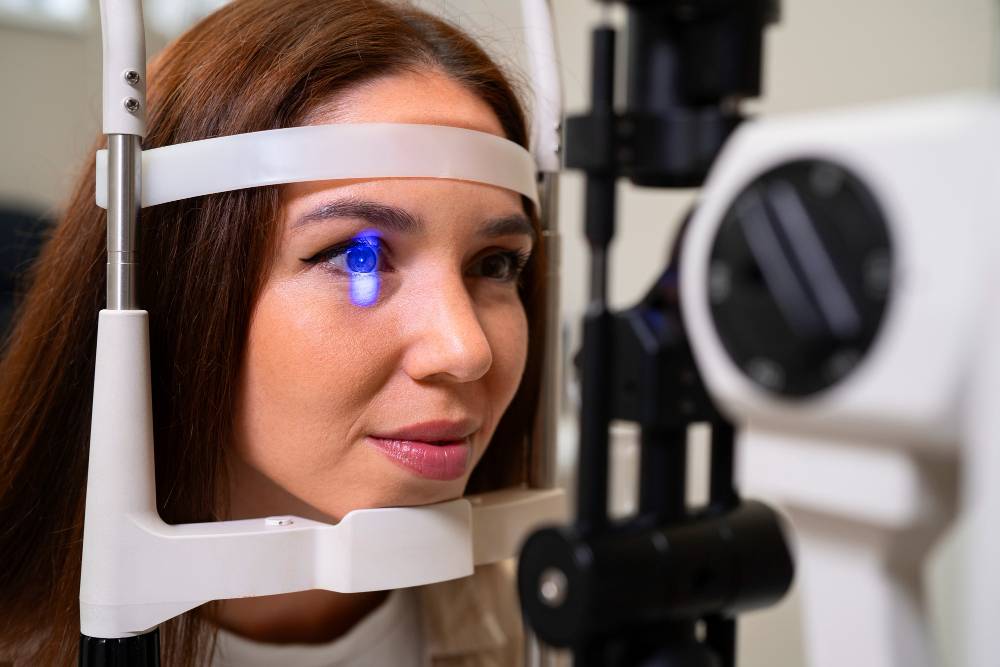
If you run a refractive practice, the latest LASIK technology is now a choice between three families of treatment, not one. You can offer femtosecond-assisted LASIK, topography or ray-tracing guided ablations, and flapless lenticule extraction such as SMILE Pro. Each needs different hardware, training and service support.
This guide is for ophthalmologists and eye clinic owners in India who are planning a laser purchase or an upgrade in 2026. It explains how the procedures differ, lists verified specs for the main platforms, and gives you a cost checklist to take into vendor meetings. It does not rank machines or quote prices, because both depend on your case mix and on what vendors offer you in writing.
What counts as the latest LASIK technology in 2026?
Short answer: the current refractive suite combines faster lasers, better centration and more detailed pre-operative data. The main developments are:
- Femtosecond flap creation (femto LASIK), which replaces the mechanical microkeratome.
- Customised ablation guided by corneal topography (for example Alcon’s Contoura Vision) or by whole-eye ray tracing (Alcon WaveLight Plus).
- High-repetition excimer lasers, such as the 500 Hz WaveLight EX500 and the 1050 Hz SCHWIND AMARIS 1050RS.
- Lenticule extraction (KLEx), such as SMILE Pro on the ZEISS VisuMax 800, which corrects myopia without a flap or an excimer laser.
- Assisted centration and cyclotorsion control, such as CentraLign and OcuLign on the VisuMax 800.
All of these act on the cornea. None of them involve the retina. Patient education material from your clinic should say the same.
Femto LASIK, SMILE Pro and guided LASIK: how the procedures differ
Vendors often group everything under “LASIK” in marketing. For planning and for patient consent, keep the categories separate.
Femto LASIK
In femto LASIK, a femtosecond laser cuts the corneal flap. The surgeon lifts the flap, an excimer laser reshapes the stromal bed, and the flap is repositioned. It needs two lasers, either as separate units or as a linked suite. Most “bladeless LASIK” offers in Indian cities refer to this approach.
SMILE and SMILE Pro (lenticule extraction, not LASIK)
SMILE and SMILE Pro belong to keratorefractive lenticule extraction, or KLEx. A femtosecond laser creates a thin lenticule inside the cornea, and the surgeon removes it through a small incision. ZEISS describes it in those terms on its VisuMax 800 page. There is no flap and no excimer ablation. A March 2026 ESCRS EuroTimes article calls KLEx “a mature, flapless procedure involving a very small incision” and reports that long-term results are at least equivalent to PRK and LASIK, with none of the three shown to be superior (ESCRS).
Other KLEx platforms exist, including SCHWIND SmartSight, Ziemer CLEAR and Johnson & Johnson Vision SILK (CRST, August 2026). Check which are approved and supported in India before you shortlist.
Topography-guided LASIK and Contoura Vision
Topography-guided LASIK uses corneal shape data to plan the ablation. Contoura Vision is Alcon’s branded topography-guided LASIK. Alcon states that it is performed on the WaveLight Allegretto Wave Eye-Q or WaveLight EX500 excimer laser with the WaveLight Topolyzer Vario diagnostic device (Alcon/Novartis release). If you already own an EX500, ask Alcon what you need to add for Contoura Vision.
Ray-tracing guided LASIK: WaveLight Plus
Alcon launched WaveLight Plus in the US and Canada in September 2025. Alcon says it combines wavefront, biometry and corneal tomography into a 3D “Digital Eye Twin” and uses ray tracing, powered by the Sightmap diagnostic device, to plan each treatment (Alcon). Indian availability and approval status should be confirmed with Alcon India.
How the main options compare
| Approach | Flap? | Lasers involved | Example platforms |
| Femto LASIK | Yes, femtosecond flap | Femtosecond + excimer | WaveLight EX500 with a femtosecond laser; SCHWIND AMARIS with a femtosecond laser |
| Topography-guided LASIK | Yes | Excimer + topographer (flap by femtosecond or microkeratome) | Contoura Vision on WaveLight EX500 with Topolyzer Vario |
| Ray-tracing guided LASIK | Yes | Excimer + Sightmap diagnostic | Alcon WaveLight Plus |
| Lenticule extraction (KLEx) | No, small incision | Femtosecond only | ZEISS VisuMax 800 with SMILE Pro; SCHWIND SmartSight; Ziemer CLEAR |
| Surface ablation (PRK, TransPRK) | No flap, epithelium removed | Excimer | Most excimer platforms |
Latest LASIK technology platforms: verified LASIK machine specs
The table below lists only specs we could confirm on the manufacturer’s own page or, for NIDEK, in a trade journal. Treat it as a starting point and ask each vendor for the current India specification sheet.
| LASIK machine / platform | Type | Verified specs | Source |
| ZEISS VisuMax 800 with SMILE pro | Femtosecond laser (KLEx) | 2 MHz pulse rate; lenticule creation in under 10 seconds (ZEISS data on file, myopia, 6.5 mm optical zone); CentraLign centration; OcuLign cyclotorsion correction | ZEISS |
| Alcon WaveLight Plus | Ray-tracing guided LASIK system | Digital Eye Twin from wavefront, biometry and tomography; ray-tracing plan via Sightmap | Alcon |
| Alcon WaveLight EX500 | Excimer laser | 500 Hz repetition rate; 1050 Hz eye tracker; Wavefront Optimized range sphere -12.0 D to +6.0 D, cylinder -6.0 D to +5.0 D | Alcon |
| SCHWIND AMARIS 1050RS | Excimer laser | 1050 Hz repetition rate; ablation time 1.3 seconds per dioptre (myopic LASIK, 6 mm optical zone); 7D eye tracking; SmartSurfACE with SmartPulse | SCHWIND |
| NIDEK EC-5000 CX III | Excimer laser | Scanning ablation; 200 Hz active eye tracker; PRK and LASIK; OPDCAT aspheric treatment | CRST Europe, 2012 |
ZEISS VisuMax 800 with SMILE Pro
The VisuMax 800 is the ZEISS femtosecond platform for SMILE Pro. If you also want it for LASIK flaps, confirm that indication with ZEISS India. Its main selling points are speed and centration aids. Two published studies give context. Saad and colleagues reported 152 eyes treated with SMILE Pro; at three months, 91% were within ±0.5 D of the attempted spherical equivalent and 99% within ±1.0 D (Saad et al., International Ophthalmology, 2024). Kim and colleagues compared VisuMax 500 and VisuMax 800 in 662 eyes and found 84% versus 71% of eyes within ±15° of the intended astigmatism axis, favouring the VisuMax 800 (Kim et al., Diagnostics, 2025). The authors note possible bias because both lasers come from one manufacturer.
Alcon WaveLight EX500 and WaveLight Plus
The EX500 is Alcon’s 500 Hz excimer laser and the base for Contoura Vision. Alcon describes it as the most installed excimer laser worldwide (its data, 2022). WaveLight Plus is Alcon’s newer ray-tracing system. If you own an EX500 today, ask Alcon about the upgrade path and what diagnostics it requires.
SCHWIND AMARIS 1050RS
SCHWIND lists a 1050 Hz repetition rate, which it calls one of the highest on the market, plus 7D eye tracking. The same platform supports SmartSurfACE, a no-touch TransPRK approach. Clinics with many surface ablation cases may find this relevant.
NIDEK EC-5000 CX III
The EC-5000 CX III is an older excimer platform with a 200 Hz eye tracker and OPDCAT aspheric treatments. Many clinics still run it. If you are buying refurbished or taking over a centre, confirm that NIDEK or an authorised partner still supports parts and software for your unit.
How to choose the best LASIK machine for your clinic
There is no single best LASIK machine. The right choice depends on what you treat and how you will run the service. Work through these questions before you request quotes:
- Case mix: What share of your candidates are myopic, hyperopic, astigmatic or have thin or irregular corneas? KLEx platforms mainly treat myopia and myopic astigmatism, while excimer platforms cover a wider range.
- Procedure menu: Do you want femto LASIK, KLEx, surface ablation, or all three? A femtosecond laser that also cuts flaps can serve two menus.
- Diagnostics: Which topographer, tomographer or aberrometer does the planning software need? Factor that into the budget.
- Upgrade path: Can the laser take new software modules later, and at what cost?
- Training: How much surgeon and technician training is included, and where does it happen?
- Service in your city: How fast can an engineer reach you, and are spare parts held in India?
- Approvals: Ask the vendor to confirm in writing the device’s regulatory status and approved indications in India.
For new refractive centres, it often makes sense to start with the procedures your current patients already ask for, then add modules as volumes grow.
LASIK machine cost factors to ask vendors about
Prices for lasers in India vary with configuration, bundled diagnostics, service terms and negotiation. Published price lists are rare, and figures online are often out of date. Instead of comparing headline numbers, ask every vendor to quote against the same list:
| Cost factor | What to ask the vendor |
| Capital cost | What exactly is included: laser, workstation, diagnostics, software modules, installation? |
| Annual maintenance contract (AMC) | Which years are covered by warranty, what the AMC includes, and response time guarantees. |
| Per-procedure or licence fees | Is there a click fee, card or licence per treatment? Does it differ by procedure type? |
| Consumables | Patient interfaces, contact glasses, gases and other single-use items per eye. |
| Training | Surgeon certification, technician training, refresher training and who pays for travel. |
| Site requirements | Room size, temperature and humidity control, power backup, gas supply and any civil work. |
| Financing or leasing | Lease, deferred payment or usage-linked options, and the total cost over the contract period. |
Compare total cost over five to seven years, not just the purchase price. Then match it against your realistic monthly case volume.
What to tell patients about the latest LASIK technology in India
Patients who read about the latest LASIK technology now search for terms like “SMILE Pro” and “Contoura Vision” before they visit. Your counselling and website copy should stay accurate and cautious:
- Suitability: Whether a patient can have LASIK, KLEx or surface ablation depends on a full clinical evaluation, including corneal thickness and shape. Avoid blanket statements about high power or “everyone qualifies”.
- Recovery: Recovery timelines differ between patients and procedures. Give the timeline your surgeons actually observe, and explain follow-up visits.
- Dry eye: Published reviews suggest KLEx may cause less early dry eye than LASIK because it may disrupt corneal nerves less, but evidence varies and dry eye can follow any corneal refractive surgery (ESCRS, CRST).
- Outcomes: Do not promise 20/20 vision or a specific result. Share your own audited outcomes, if you track them, with the right context.
These points are general information for clinics. They are not treatment advice, and your surgeons should approve all patient-facing wording.
Running a refractive practice: where clinic software fits
The latest LASIK technology decides what you can treat. Your clinic system decides how well you track each patient from first enquiry to the last post-op review. Refractive patients need several touchpoints: screening, detailed work-up, counselling, surgery day and a series of follow-ups.
Easy Clinic’s ophthalmology EMR supports the administrative and documentation side of that pathway:
- Vision and eye examination records with customisable specialty templates.
- Appointment scheduling for consultations, work-ups and follow-ups.
- Pre-op and post-op reminders through WhatsApp, SMS and email.
- Billing, payments and insurance or payor claims.
- Reports and dashboards to see procedure volumes, follow-up compliance and revenue by service.
Easy Clinic is clinic management software. It does not control lasers, and you should not expect it to pull data directly from refractive or diagnostic devices. Keep device data in the platform the manufacturer provides and record the clinical summary in the EMR.
FAQs on the latest LASIK technology
What is the latest LASIK technology in 2026?
The latest LASIK technology includes femtosecond flap creation, topography-guided and ray-tracing guided ablation (such as Contoura Vision and WaveLight Plus), and high-repetition excimer lasers. Many clinics also offer SMILE Pro, which is lenticule extraction rather than LASIK.
Is SMILE Pro the same as LASIK?
No. SMILE Pro is a keratorefractive lenticule extraction (KLEx) procedure. A femtosecond laser creates a lenticule inside the cornea, which is removed through a small incision. There is no flap and no excimer laser step.
What is femto LASIK?
Femto LASIK uses a femtosecond laser to cut the corneal flap instead of a mechanical blade. An excimer laser then reshapes the cornea under the flap.
What is Contoura Vision?
Contoura Vision is Alcon’s topography-guided LASIK treatment. Alcon states it runs on the WaveLight EX500 or Allegretto Wave Eye-Q excimer laser with the Topolyzer Vario diagnostic device.
Which is the best LASIK machine for an Indian eye clinic?
No machine suits every clinic. Choose based on your case mix, the procedures you want to offer, diagnostic compatibility, training, local service support and confirmed regulatory status in India.
How much does a LASIK machine cost in India?
Costs vary with configuration and contract terms, so ask for written quotes. Compare capital cost, AMC, per-procedure or licence fees, consumables, training, site work and financing options over the full contract period.
Is the latest LASIK technology in India suitable for high myopia?
It depends on the individual eye. Corneal thickness, shape and other findings decide which procedure, if any, is appropriate. Only a full evaluation by an ophthalmologist can answer this for a patient.
Can clinic software connect to my laser?
Treat this as a separate question for each vendor. Easy Clinic handles documentation, scheduling, reminders, billing and reports. It is not a laser control system and does not claim device integration.
Conclusion: planning your 2026 laser investment
The latest LASIK technology gives Indian clinics more options than ever: femto LASIK, guided ablations and flapless lenticule extraction. The right platform is the one that fits your patients, your surgeons and your service network, not the one with the biggest headline number. Verify specs on manufacturer pages, compare vendors on total cost, and keep patient communication cautious and accurate.
Once the laser is in place, a reliable EMR and clinic management system helps you run the pathway around it. If you want to see how Easy Clinic handles ophthalmology records, scheduling and follow-up reminders, book a demo.