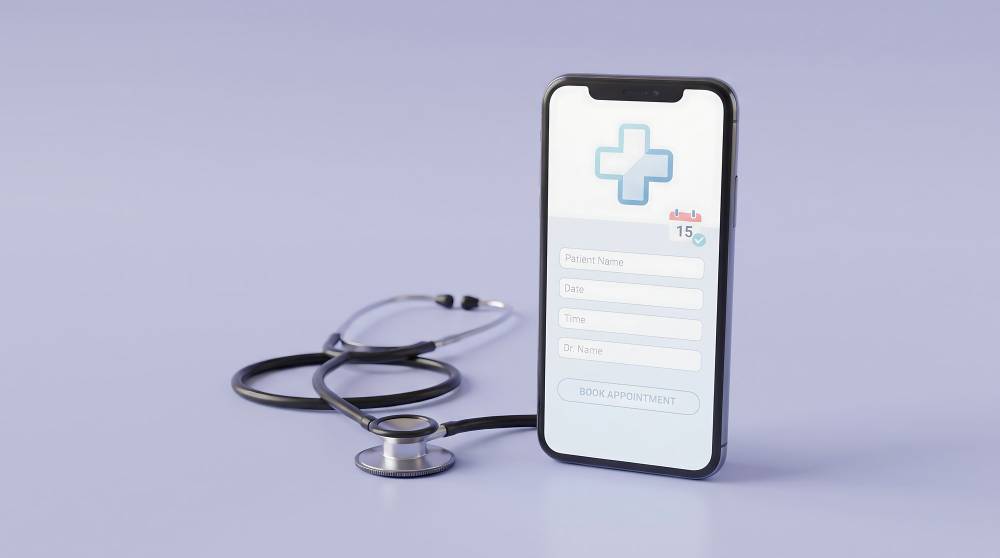
A doctor with three minutes between patients does not need fifty apps. They need three or four good ones. The best medical apps for doctors do four jobs: check a drug, look up a condition, run a clinical score, and compare what a presentation looks like.
The short answer: Medscape and MDCalc are free and cover drug lookups and clinical scores for most clinicians. UpToDate or DynaMed are the deeper references, usually through a subscription or an institution. VisualDx helps with skin presentations. If you practise in India, add the ICMR Standard Treatment Workflows app so your reference matches national guidance.
Below you will find what each of these medical apps for doctors does, what access costs, and how to pick the right set for your clinic. We checked each app’s publisher pages and app store listings in October 2026. Features and prices change, so confirm in your app store before you subscribe.
Medical apps for doctors at a glance
The table compares all 10 medical apps for doctors by main job, access cost and publisher.
| # | App | Main job | Access | Publisher |
|---|---|---|---|---|
| 1 | Medscape | Drug reference, interaction checker, condition overviews | Free, registration required | WebMD |
| 2 | Epocrates | Drug reference, pill identifier | Free version, paid upgrades | athenahealth |
| 3 | UpToDate Lexidrug (formerly Lexicomp) | Detailed drug information | Subscription, individual or institutional | Wolters Kluwer |
| 4 | UpToDate | Evidence-based clinical topics | Subscription, individual or institutional | Wolters Kluwer |
| 5 | DynaMed | Evidence-based clinical topics | Subscription, app included | EBSCO |
| 6 | PEPID | Clinical and drug reference, emergency focus | Subscription, free trial | PEPID |
| 7 | Skyscape Medical Library | Library of clinical titles and calculators | Free download, paid titles | Skyscape Medpresso |
| 8 | MDCalc | Clinical scores and calculators | Free, registration required | MDCalc |
| 9 | VisualDx | Visual differential diagnosis | Subscription | VisualDx |
| 10 | Prevention TaskForce | US preventive care recommendations | Free | US Agency for Healthcare Research and Quality |
Best medical apps for drug reference
1. Medscape
Medscape is the free all-rounder. It covers drug monographs, condition overviews, procedures and medical news. Its drug interaction checker compares up to 30 drugs, herbals and supplements at once.
Registration is free. You can download content to your phone and use it without a connection.
Best for: general practitioners and specialists who want one free app for drug and condition lookups.
Watch for: the drug database is built around the US market. Check that the brands and formulations you prescribe are listed.
2. Epocrates
Epocrates has been a mobile drug reference since 1998 and has been part of athenahealth since 2013. The free version includes drug information, an interaction checker, a pill identifier and medical calculators. Paid tiers add more content.
Best for: quick drug and interaction checks during a consultation.
Watch for: like Medscape, it reflects the US drug market.
3. UpToDate Lexidrug (formerly Lexicomp)
If you are looking for Lexicomp, this is it. Wolters Kluwer renamed Lexicomp to UpToDate Lexidrug in 2024, and the mobile app is still available. It is a detailed drug reference covering adult, paediatric and geriatric use, with interaction analysis, drug identification, calculators and patient handouts in 20 languages.
Best for: doctors and pharmacists who need full drug monographs.
Watch for: it needs a paid subscription. Ask your hospital or medical college library whether it already provides access.
Doctor apps for clinical reference and decision support
4. UpToDate
UpToDate offers evidence-based clinical topics for decisions at the point of care. The mobile app needs an individual subscription or institutional access. It runs on up to two devices and is available in most countries.
Individual subscribers can download content for offline use through UpToDate MobileComplete. Its generative AI feature, UpToDate Expert AI, is currently limited to US individual subscribers and selected enterprise accounts.
Best for: detailed management questions and checking current evidence.
Watch for: cost for solo practitioners. Check for institutional access first.
5. DynaMed
DynaMed, from EBSCO, is the main alternative to UpToDate. Topics range from full condition reviews to focused questions on evaluation, differential diagnosis and management. Key recommendations appear first, with the underlying evidence below.
The mobile app is included with a personal or institutional subscription.
Best for: clinicians who want concise summaries with the evidence one tap away.
Watch for: you need a subscription to see content.
6. PEPID
PEPID is a clinical and drug reference with a strong emergency medicine focus. Its suites cover emergency medicine, paediatric emergency medicine and primary care. Tools include drug interaction and drug allergy checkers, dosing calculators, a differential diagnosis generator and a lab manual.
Access is by subscription, and PEPID offers free trials.
Best for: emergency departments and urgent care clinics.
Watch for: make sure the suite matches your specialty before you pay.
7. Skyscape Medical Library
Skyscape is one of the oldest names in medical apps. It now ships as Skyscape Medical Library from Skyscape Medpresso. The app offers more than 350 titles from medical publishers, including well-known therapeutics and diagnosis manuals, plus a clinical calculator and a clinical consult reference.
The app is free to download and ad-supported. Individual titles are paid in-app purchases.
Best for: doctors who want specific textbooks on their phone.
Watch for: costs add up title by title.
Medical apps for doctors: calculators and diagnosis support
8. MDCalc
MDCalc is the standard free app for clinical scores. It lists more than 900 calculators, risk scores and decision tools. Each tool shows the evidence behind it and notes from experts, with links to the original studies.
It works offline, and registration is free.
Best for: every clinician. If you install only one free app from this list, make it MDCalc or Medscape.
Watch for: check the population each score was validated in. Some scores may not have been studied in patients like yours.
9. VisualDx
VisualDx helps you build a differential diagnosis from symptoms, findings and images. It is most used for skin presentations. VisualDx states that 28.5% of its images show Fitzpatrick skin types IV to VI, which is relevant for clinics across India and Africa.
Its DermExpert add-on can analyse a photo of a skin lesion and suggest possible diagnoses to consider. Access is by paid subscription.
Best for: general practitioners who see skin complaints and want help before referring.
Watch for: before you photograph a patient’s skin in any third-party app, get consent and check where the image is stored.
Preventive care
10. USPSTF Prevention TaskForce
This free app comes from the US Agency for Healthcare Research and Quality. It lets primary care clinicians search US Preventive Services Task Force recommendations by age, sex and selected risk factors. It covers screening, counselling and preventive medication.
Best for: understanding the evidence behind common screening decisions.
Watch for: these are US recommendations. Screening ages, intervals and priorities can differ under your national programmes, so check local guidance before you apply them.
Do not skip your national treatment guidelines
International medical apps for doctors do not know your national formulary, programmes or referral pathways. Several governments publish their own guidance digitally.
- India: the Indian Council of Medical Research (ICMR), with the National Health Authority and the WHO India office, has developed 157 Standard Treatment Workflows across 28 specialties. They are free on the ICMR website and in an Android and iOS app. In September 2025 the National Medical Commission asked medical colleges to promote their use.
- South Africa: the National Department of Health publishes its Standard Treatment Guidelines and Essential Medicines List in an app, “S.A. Clinical Guidelines and EML”. Search for it in your app store.
- Any country: the WHO electronic Essential Medicines List can be searched on a phone or computer. More than 150 countries use the WHO list to build their own national lists.
In Kenya, Nigeria, Malaysia and other markets, check your Ministry of Health website for the current version of national guidelines.
How to choose medical apps for doctors and clinic teams
Run these six checks before you install or pay for doctor apps.
- Check the source. Who writes the content, and when was it last updated?
- Check local fit. Does it list the drugs and brands sold in your country? Does it match national guidance?
- Check the real cost. Free, freemium or subscription? Your hospital, college or professional association may already provide access.
- Check offline use. This matters in clinics with unreliable connectivity and on outreach visits.
- Keep patient data out. Do not enter names, phone numbers or identifiable photos into apps that are not approved for patient data. Follow your national data protection law, such as India’s Digital Personal Data Protection Act, 2023 or Kenya’s Data Protection Act, 2019.
- Keep the set small. One drug reference, one clinical reference, one calculator and your national guidelines cover most needs.
Where doctor apps stop and your EMR starts
Doctor apps like these answer a clinical question. They do not keep a record of what you decided.
Example (hypothetical): a GP checks an interaction in Medscape before adding a second drug for a patient on long-term treatment. The app answers the question. But the new prescription, the reason for the change and the follow-up date still need to go into the patient’s record. Otherwise the next doctor who sees the patient will not know why the treatment changed.
That record lives in your electronic medical record (EMR). Easy Clinic’s EMR and clinic management features include customisable specialty templates, AI-assisted documentation, prescriptions, lab reporting, pharmacy and inventory. Follow-ups can go out by WhatsApp, SMS or email. Reference apps like the ones above work alongside an EMR, not inside it, unless a vendor confirms a specific integration.
If you practise in India, see how Easy Clinic works as EMR software in India. Dermatology practices can review the dermatology EMR.
FAQs about medical apps for doctors
What is the best medical app for doctors? There is no single best app. For most doctors, Medscape (free drug reference) plus MDCalc (free clinical scores) covers daily needs. Add UpToDate or DynaMed if you have access, and your national treatment guidelines.
Are there free medical apps for doctors? Yes. Medscape, MDCalc, the Epocrates free version, Prevention TaskForce and the ICMR Standard Treatment Workflows app are free. Skyscape Medical Library is free to download, with paid titles.
Is Lexicomp still available? Yes. Lexicomp was renamed UpToDate Lexidrug in 2024. The mobile app is still available with a paid subscription.
Is UpToDate free? No. You need an individual subscription or access through an institution. Each user can install the app on up to two devices.
Which medical apps for doctors work offline? MDCalc works offline. Medscape lets you download content to your device. UpToDate offers offline access to individual subscribers through MobileComplete. Check the other apps before you rely on them in low-connectivity settings.
Is it safe to enter patient information into medical apps? Reference apps are for looking things up, not for storing patient records. Avoid names, contact details and identifiable photos unless the app is approved for patient data and the patient has consented. Record clinical decisions in your EMR.
Can medical apps replace clinical judgement? No. They support decisions; they do not make them. The Prevention TaskForce app, for example, states that it is not meant to replace clinical judgement and individualised patient care.
Conclusion: choosing the best medical apps for your practice
The best medical apps for doctors are the ones you will actually open between patients. For most clinicians that means a free drug reference, a free calculator, a deeper reference if you have access, and your national guidelines. Review your set once a year, because names, prices and features change, as Lexicomp’s rename shows.
When you want the decisions you look up to land in one organised patient record, see how Easy Clinic’s clinic management software fits your clinic type, or book a short demo.